u/Beach-Independent owned a device repair shop for 16 years.
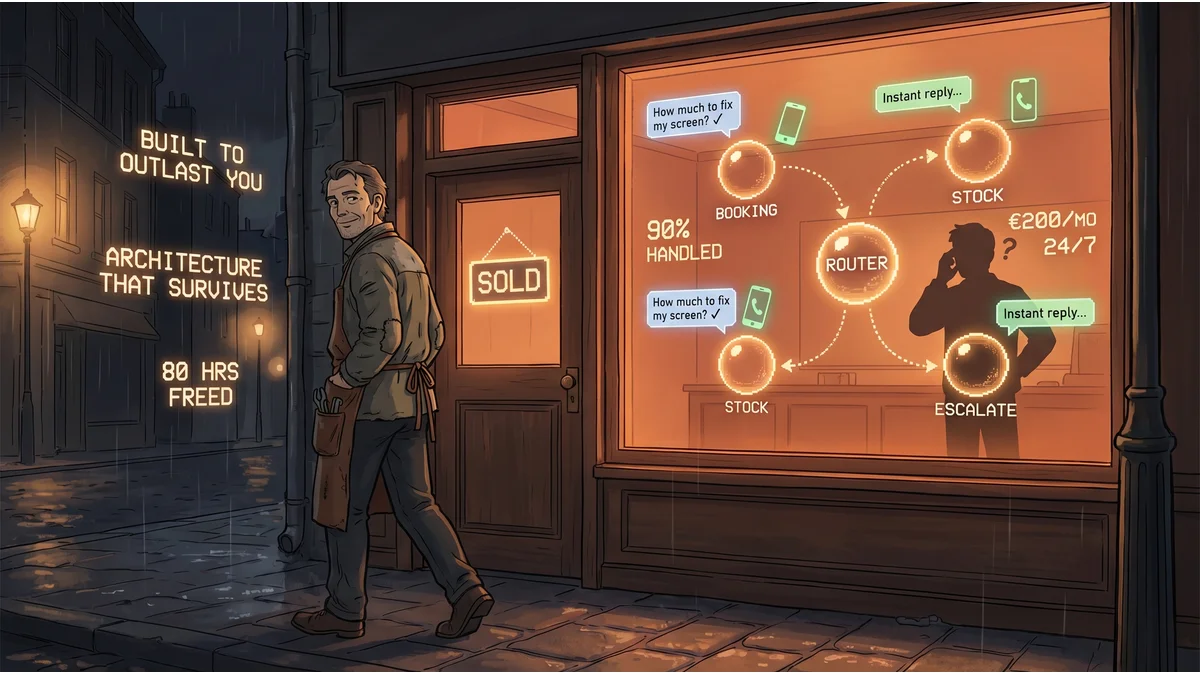
Every month, he lost more than 80 hours answering the same WhatsApp messages. “How much to fix my screen?” “When can I pick it up?” “Do you have this part?” He knew the answers. His customers knew approximately what the answers would be. But someone still had to type the reply, one by one, during store hours.
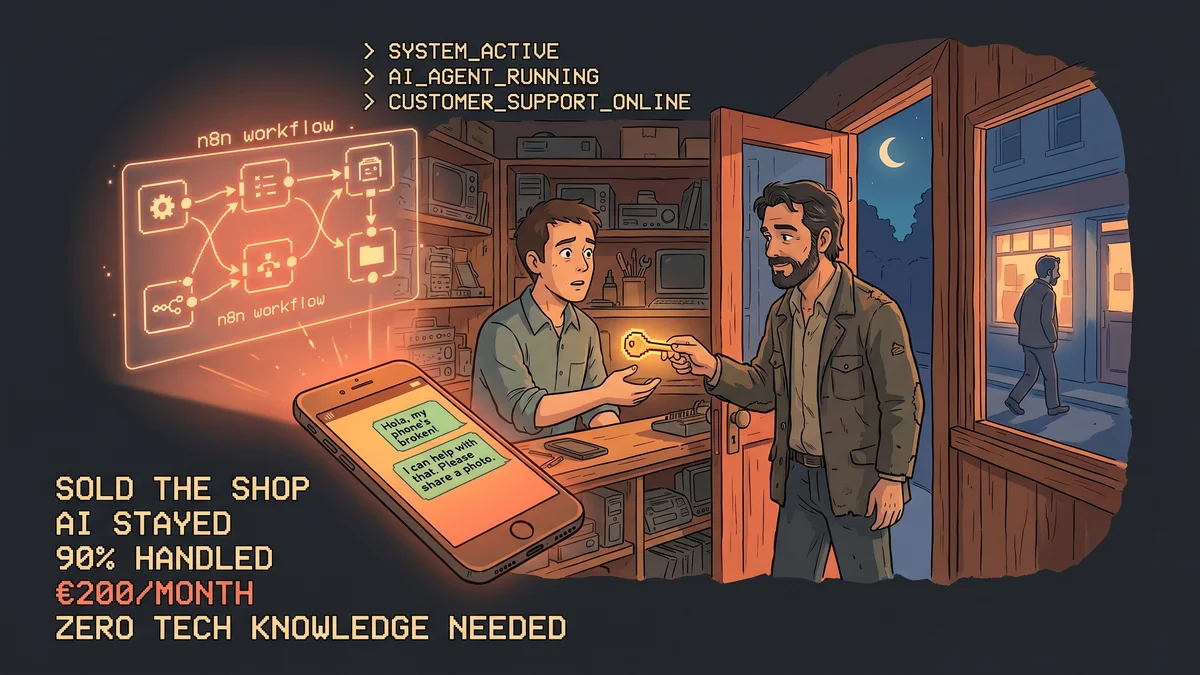
So he built an agent to do it instead. It ran for over a year in production before the real test arrived: he sold the business, and the buyer had no technical knowledge whatsoever.
The AI kept running without him. That’s when he knew the architecture was right.
What He Built
The system handles both WhatsApp messages and voice calls. An n8n router sits at the center, classifying incoming requests and routing to one of four specialized sub-agents:
- Booking agent: Checks real availability, confirms the appointment slot
- Quote agent: Looks up the actual device model and repair type in the database, returns accurate prices
- Stock agent: Checks live inventory, places internal orders when parts are missing
- Escalation agent: Hands off to a human with full conversation context when none of the above applies
Voice calls go through ElevenLabs. The sub-agents don’t care whether input arrived by text or by phone — same logic, different entry point. Airtable serves as the single source of truth for prices, bookings, and stock, so every agent is always working from real data.
The Decisions That Mattered
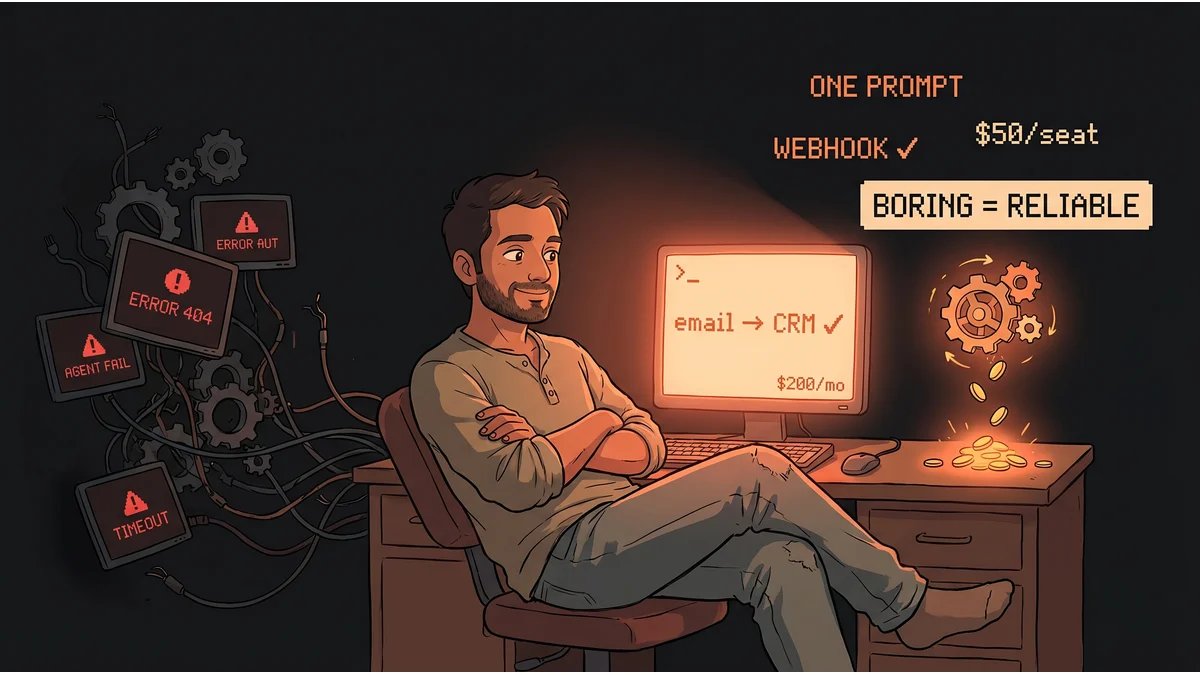
A year in production taught him that the structural choices mattered more than the AI choices.
Using a different model per agent cut costs significantly. The booking agent doesn’t need a powerful model — it’s parsing “next Tuesday at 3pm,” not reasoning through an ambiguous situation. A fast, cheap model works fine. The quote agent needs accuracy and gets the better model. Right-sizing the model to the task is where the running costs stay low.
Pseudo-streaming on WhatsApp made a bigger perceived difference than expected. Instead of sending one complete message, the system splits responses into sentences and sends them one by one. Users see typing indicators. It feels like a conversation rather than a database lookup. That friction reduction matters.
The router’s think tool — forcing it to reason before picking a tool chain — cut routing errors by roughly half. Making the decision-making visible before the action is a pattern that shows up across agent architectures. Skipping it feels faster; not skipping it works better.
The Numbers
After 12 months in production:
- ~90% of customer interactions handled without a human
- ~80 hours/month freed from answering routine messages
- Under €200/month total running cost
- Under 30 seconds average response time
- 24/7 availability instead of store hours
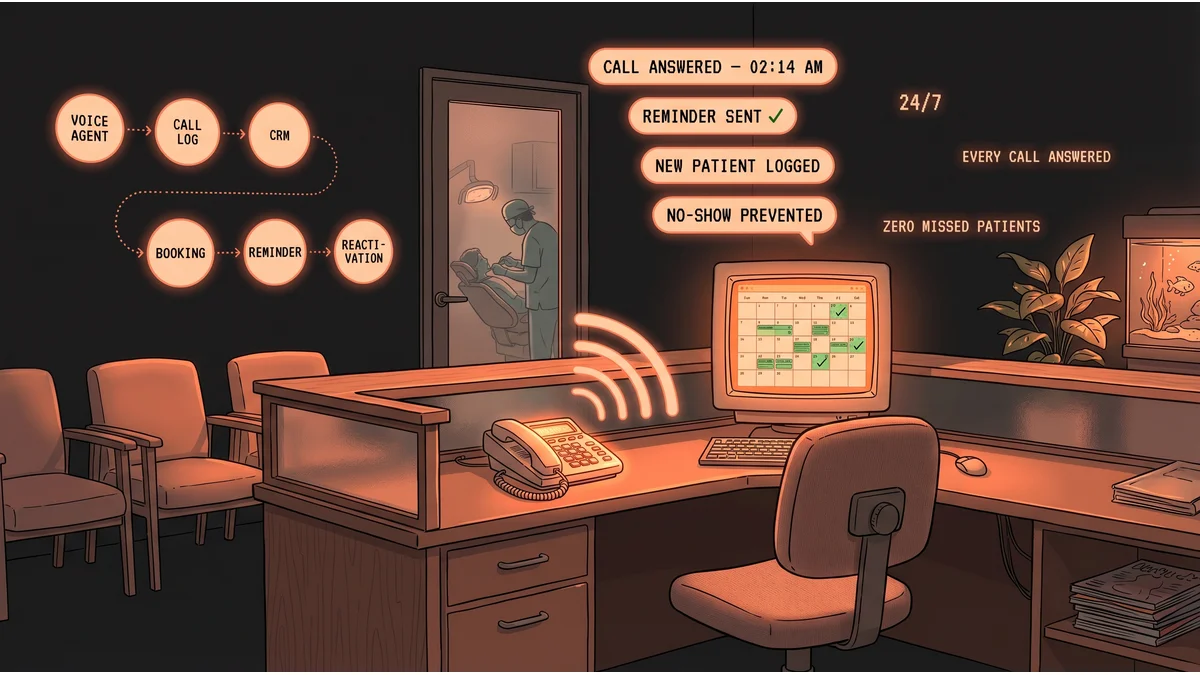
The 24/7 number is worth sitting with. A device repair shop, like most local service businesses, loses customer inquiries every evening and weekend. A customer who messages at 9pm and gets a useful reply in 30 seconds is a customer who probably books. One who messages at 9pm and hears nothing until morning may not be.
The Real Test
The business sold in 2025.
The new owner had zero technical knowledge — couldn’t modify n8n workflows, couldn’t debug an API call, couldn’t reconfigure a sub-agent. None of that was necessary. The WhatsApp agent, the voice agent, the inventory automations — they kept running.
This is the hardest thing to engineer in a small business automation: durability that doesn’t depend on the builder. Most systems work fine when the person who built them is still around. The test is whether they survive without that person — a new hire, a different shift, an owner who just wants to run a repair shop.
His post on r/n8n has 324 upvotes and 63 comments. He open-sourced the workflows at github.com/santifer/jacobo-workflows.
What He’d Change
Two things he’d do differently today:
Claude instead of GPT for the router. In his experience, better at structured tool calling.
Observability from day one. He relied on n8n execution logs during the build. A proper observability layer would have made debugging faster and handoff easier.
The 80 hours a month matters. But the sale matters more as a proof point. It’s one thing to say “I automated my customer service.” It’s another to say “I built something robust enough that someone who has never seen the code can own it, pay for it, and run a business on top of it.”
That’s the bar for whether an automation is actually done.