TL;DR
- A developer built a 6-module AI automation system for a dental clinic, replacing the most failure-prone parts of front-desk operations
- The system answers every call 24/7 in a natural voice, books and reschedules appointments, analyzes call transcripts automatically, and syncs every booking to a live calendar
- It sends automated voice reminder calls the morning before every appointment and follows up with patients 2 hours after their visit
- Weekly: it scans for patients silent for 90+ days and triggers automatic reactivation calls
- Stack: n8n, ElevenLabs/vapi, GPT-4, Calcom, Supabase
Dental clinics don’t lose patients because they lack clients.
They lose them because of five things that happen every single day: the receptionist is on another call and the phone keeps ringing. A patient calls at 7pm and gets voicemail. Nobody sends a reminder, the patient forgets, and there’s an empty chair. The appointment finishes with no follow-up and the patient books their next cleaning somewhere closer. And somewhere in the database, there are 200 patients nobody has contacted in over a year.
Every one of those is a revenue leak. None of them require a bad dentist — just an overloaded front desk.
This is what one developer built to plug them.
The Voice That Answers Every Call
The starting point is the obvious one: a phone that never goes unanswered.
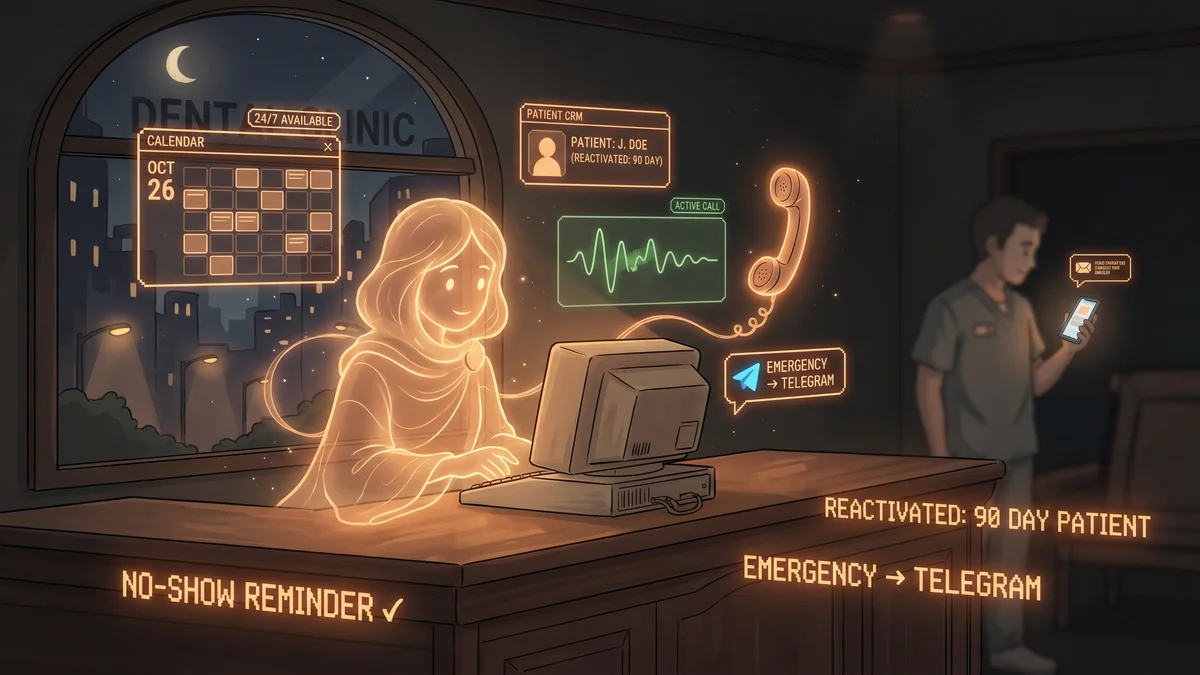
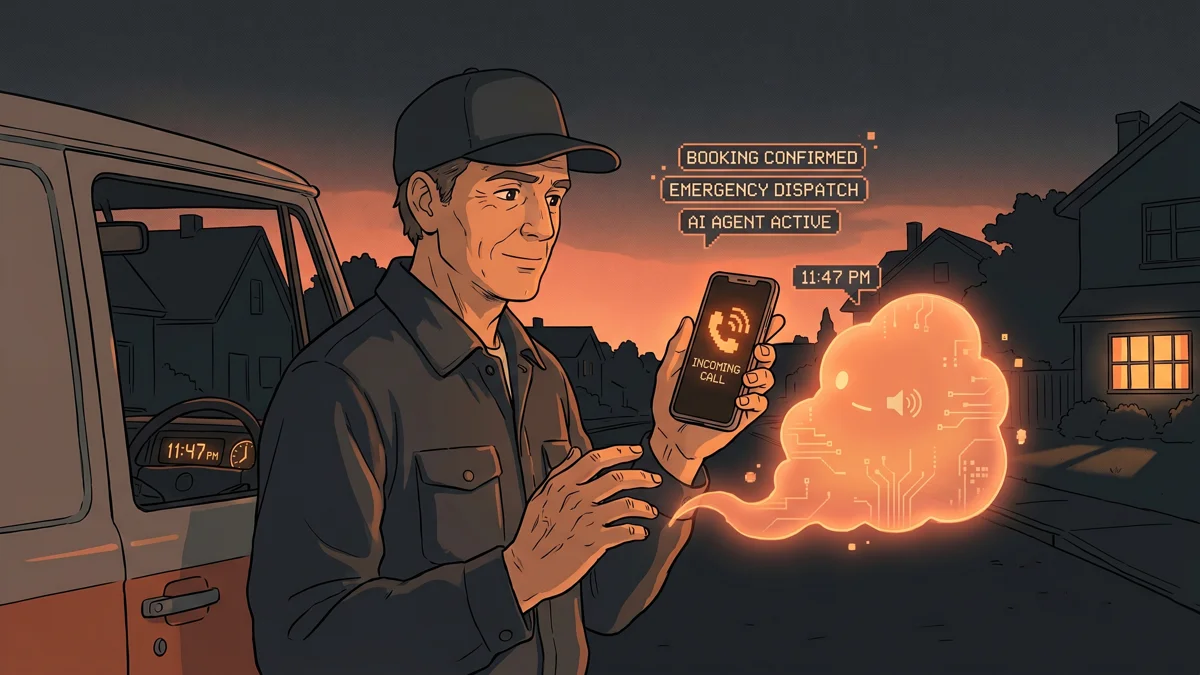
The AI voice agent — powered by ElevenLabs or vapi — picks up every call instantly, in a natural-sounding voice. It books new appointments, reschedules existing ones, handles cancellations, checks available slots, and answers the standard questions every receptionist gets asked twenty times a day.
If a caller describes something that sounds like an emergency, the system doesn’t try to handle it — it immediately sends an alert to the dentist via Telegram.
For the clinic owner, this means one thing: no call goes to voicemail. Not at 8pm, not when the receptionist is with another patient, not on holidays. Every call either gets resolved or escalates to a human who actually needs to be involved.
What Every Call Teaches the System
After each call, GPT-4 reads the full transcript and extracts three things: what the patient wanted (booking, inquiry, cancellation, emergency), how they sounded (positive, neutral, negative), and a one-sentence summary of the entire interaction.
All of it goes into the database automatically.
This matters because call information in most clinics lives in one place: the receptionist’s head, or a Post-it note that doesn’t survive the shift. Here, every call becomes a structured data point — searchable, reviewable, and available the next time that patient calls.
The CRM That Builds Itself
Every person who calls is automatically logged: name, phone number, language, timezone, patient type, last contact date, and full call history.
Returning patient? The system recognizes them and updates their record with the new interaction. First-time caller? A profile is created before the call ends.
No manual entry. No spreadsheet to update at end of day. The patient database grows with every call, without anyone touching it.
Bookings That Can’t Get Lost
The voice agent and the calendar are kept in sync through Calcom. Every booking, reschedule, or cancellation made during a call updates the live calendar immediately — no lag, no duplicate appointments, no “I thought you cancelled that” moments.
There’s one source of truth, and it’s always current.
The Reminder That Kills No-Shows
Every morning at 9am, the system scans for appointments scheduled for the following day. For each one, it automatically places a voice reminder call to the patient.
Once a reminder is sent, the database records it — so the same patient never gets called twice for the same appointment.
The clinic doesn’t set this up each day. It just runs. And no-show rates drop because patients are reminded, in a real voice call, the day before they’re supposed to come in.
The Patients You Almost Lost Forever
Two hours after every appointment, the patient receives an automatic follow-up message.
And once a week, the system runs a scan for patients who haven’t been contacted in 90 days or more. Each one gets an automated reactivation call — a touchpoint that, in most clinics, would require someone to manually pull a list, remember to do it, and actually make the calls.
That doesn’t happen. Most of those patients just drift away.
The module exists specifically for this: the patients who aren’t angry, didn’t complain, just haven’t been back. They’re recoverable. They just need someone to reach out.
What This Actually Covers
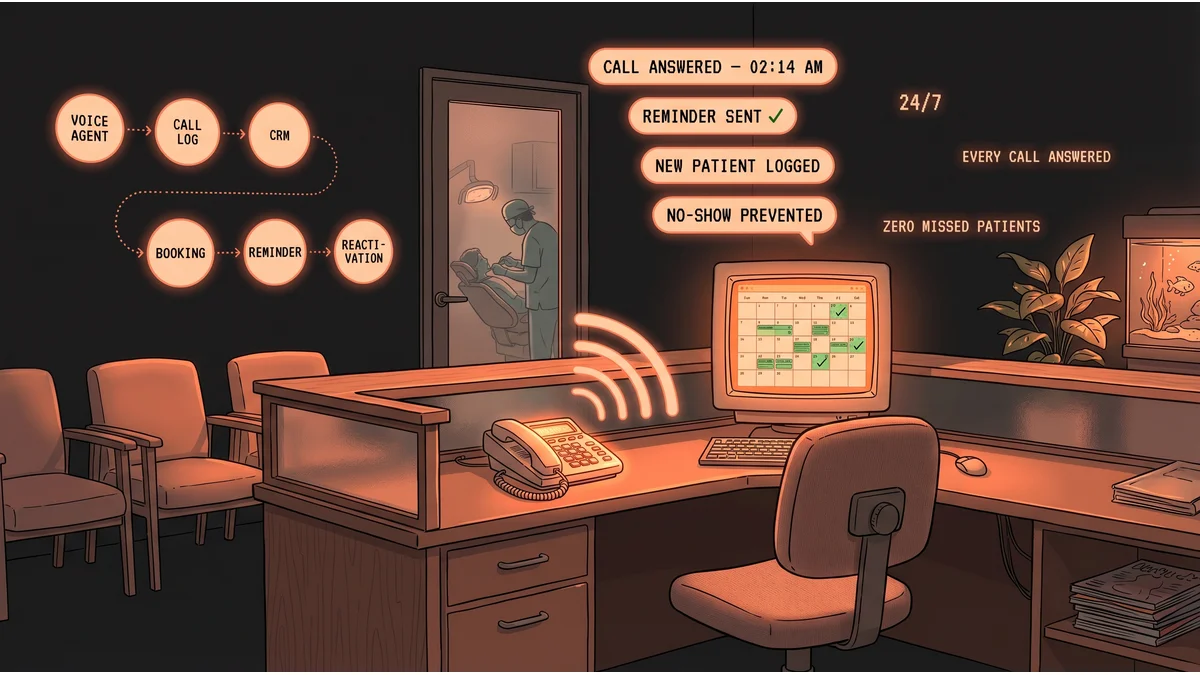
The builder’s framing is worth repeating: first call → booking → reminder → appointment → follow-up → reactivation. Six stages of the patient relationship, each automated, each passing to the next without human intervention.
For a clinic owner, the shift isn’t “I saved time on phone calls.” It’s closer to: the front desk no longer determines whether patients come back. The system handles that. The dentist handles dentistry.
That’s the operational gap the system closes — not one task, but the whole chain.