Dental clinics lose patients in ways that have nothing to do with the quality of dental work.
A patient calls after hours—no answer, doesn’t leave a message. A no-show happens because the reminder didn’t go out. A patient who came in eight months ago hasn’t been back—no one followed up. These are not clinical failures. They’re operational gaps. And each one is a revenue leak.
A developer named u/anassy1 mapped every one of those gaps and built a system to seal them. The result is a six-module AI platform running on off-the-shelf tools that replaces the receptionist function entirely—and adds capabilities no human receptionist could maintain at scale.
What the System Actually Does
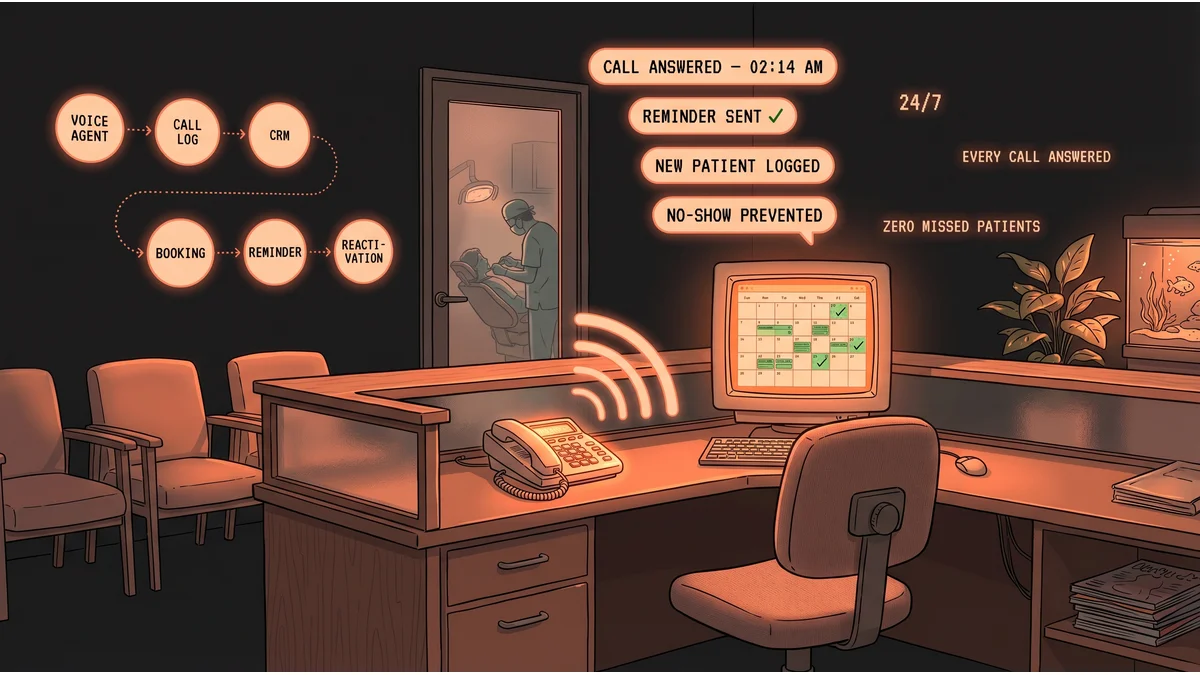
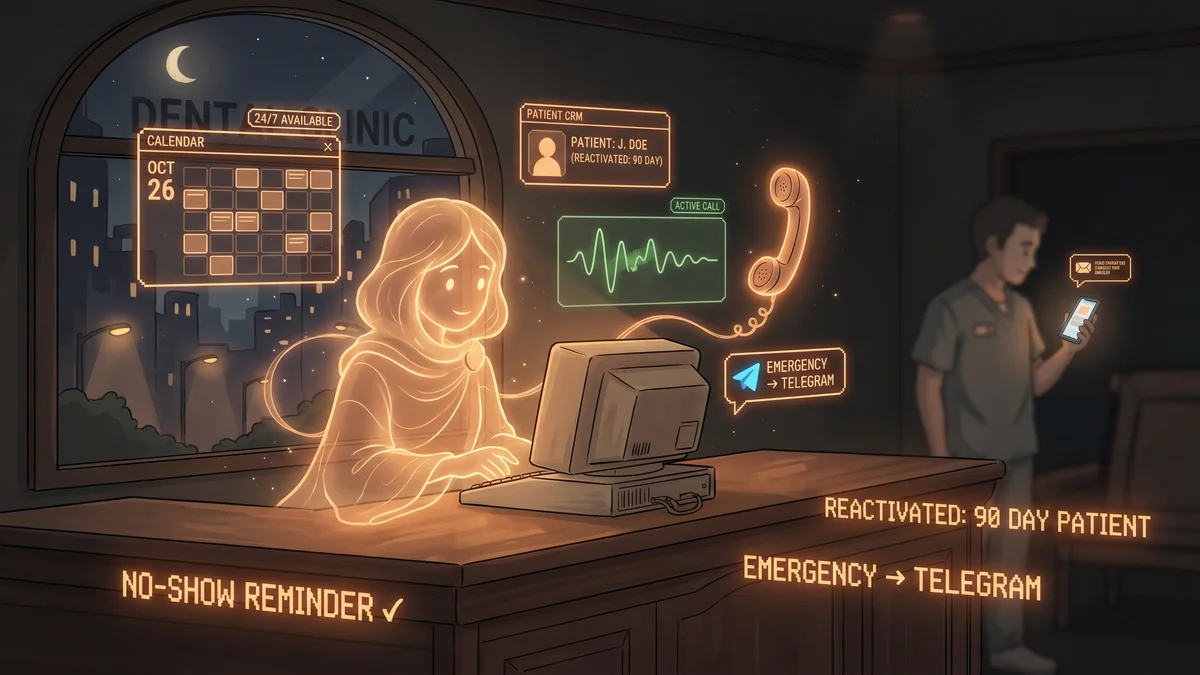
Module 1: Voice agent, always on. An AI voice agent with a natural-sounding voice answers every call instantly, regardless of time. It handles new appointment bookings, reschedules, cancellations, slot availability, and common questions. When it detects an emergency—a patient describing acute pain or an accident—it sends an immediate Telegram alert to the dentist. No call goes unanswered.
Module 2: Automatic call classification. After every call, GPT-4 analyzes the full transcript and extracts three things: patient intent (Booking, Inquiry, Cancellation, or Emergency), sentiment (Positive, Neutral, or Negative), and a one-sentence call summary. All of it gets stored in the database automatically. The dentist doesn’t read transcripts—they see a clean classification for every interaction.
Module 3: CRM that builds itself. Every patient is automatically logged with name, phone number, language, timezone, patient type, last contact date, and full call history. A returning patient is recognized and their record is updated. A new patient profile is created on first contact. The CRM doesn’t need a staff member entering data—the system does it on every call.
Module 4: Real-time booking sync. Every booking, cancellation, and reschedule syncs instantly with Cal.com and Supabase. There’s one source of truth. Double bookings become structurally impossible.
Module 5: Automated appointment reminders. Every morning at 9 AM, the system scans for appointments scheduled for the following day and triggers a voice reminder call to each patient. After the reminder is sent, the record is updated so the call never goes out twice. No-show rates drop with zero human involvement.
Module 6: Follow-up and reactivation. Two hours after every completed appointment, the patient receives an automatic follow-up message. Once a week, the system scans for patients with no contact in the past 90 days and triggers an outreach call. This is the module the builder flags as the most financially significant—it recovers patients who would otherwise be permanently lost.
The Stack
n8n handles all the workflow logic, self-hosted on a standard server. ElevenLabs or Vapi provides the voice layer. GPT-4 handles call analysis and classification. Cal.com manages the actual appointment calendar. Supabase serves as both the database and the CRM backbone. Telegram handles emergency escalations.
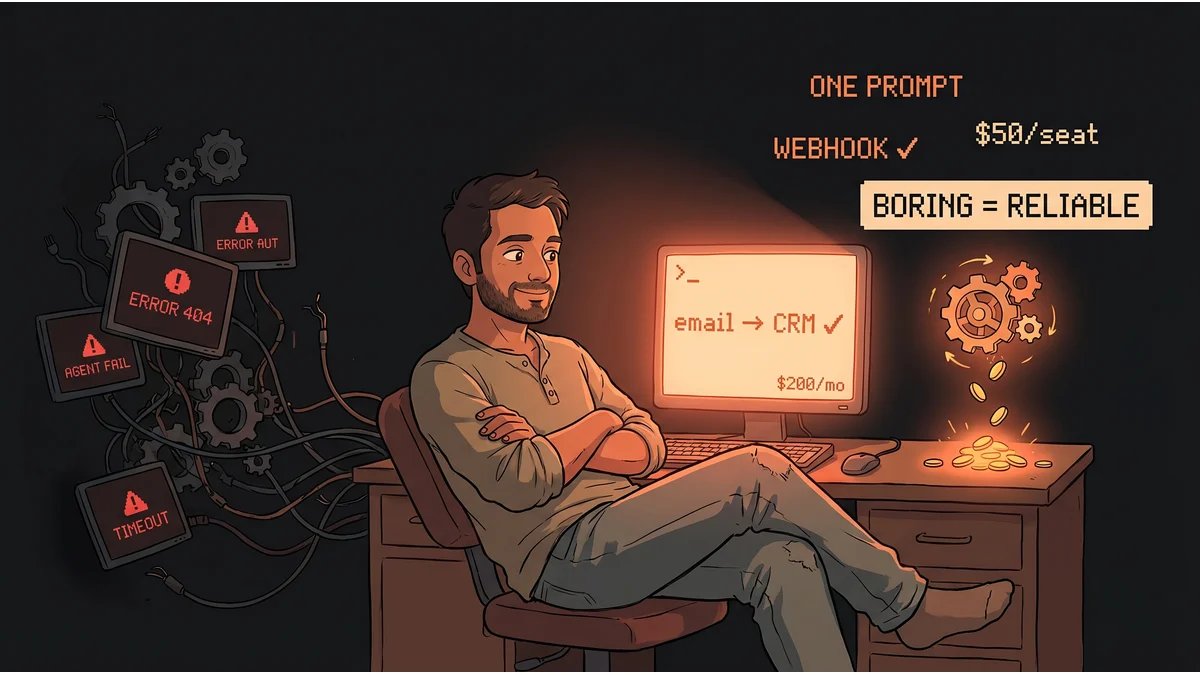
None of these tools requires custom code to integrate. n8n connects them visually, through a workflow editor that non-technical operators can read and modify.
Why Dental Clinics Specifically
The dental clinic context makes this example more useful than a generic “AI receptionist” story. Dental practices have predictable, repeatable patient interactions—appointment booking, reminders, follow-ups—that map cleanly onto automation. The patient relationship is recurring by design (cleanings, checkups), which means the reactivation module has a natural target pool to work with.
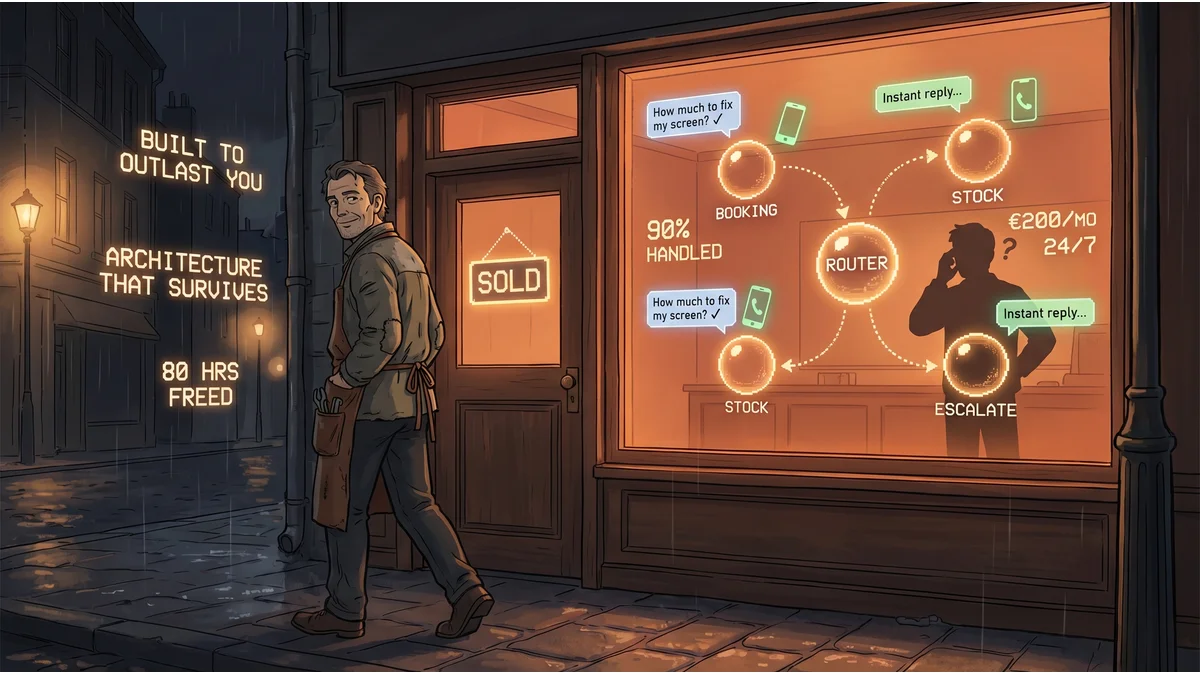
The same architecture applies to any local service business with scheduled appointments: physiotherapy, veterinary care, hair salons, optometry. The modules don’t change—only the appointment types and the follow-up scripts do.
The operational logic is universal: every unanswered call, every no-show, every forgotten patient costs money. A system that seals those gaps pays for itself before anyone has to think about ROI calculations.