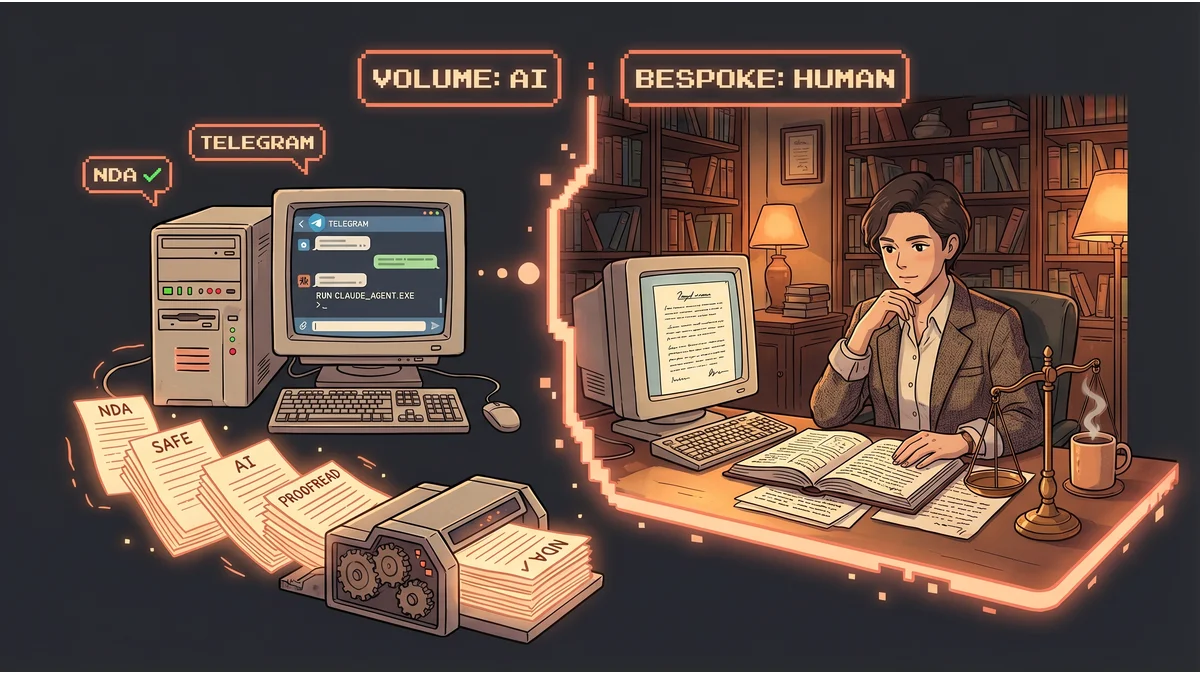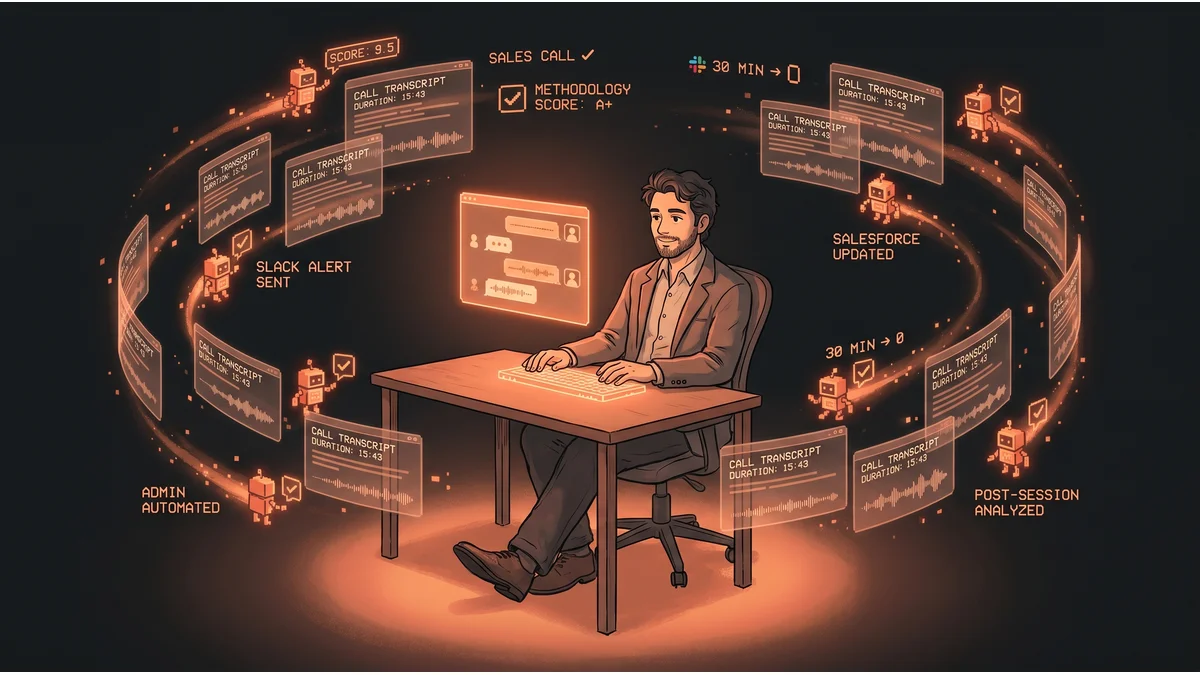
TL;DR
- Mark Pike, Associate General Counsel at Anthropic, built a self-serve legal review tool in Slack — zero coding, zero engineering team
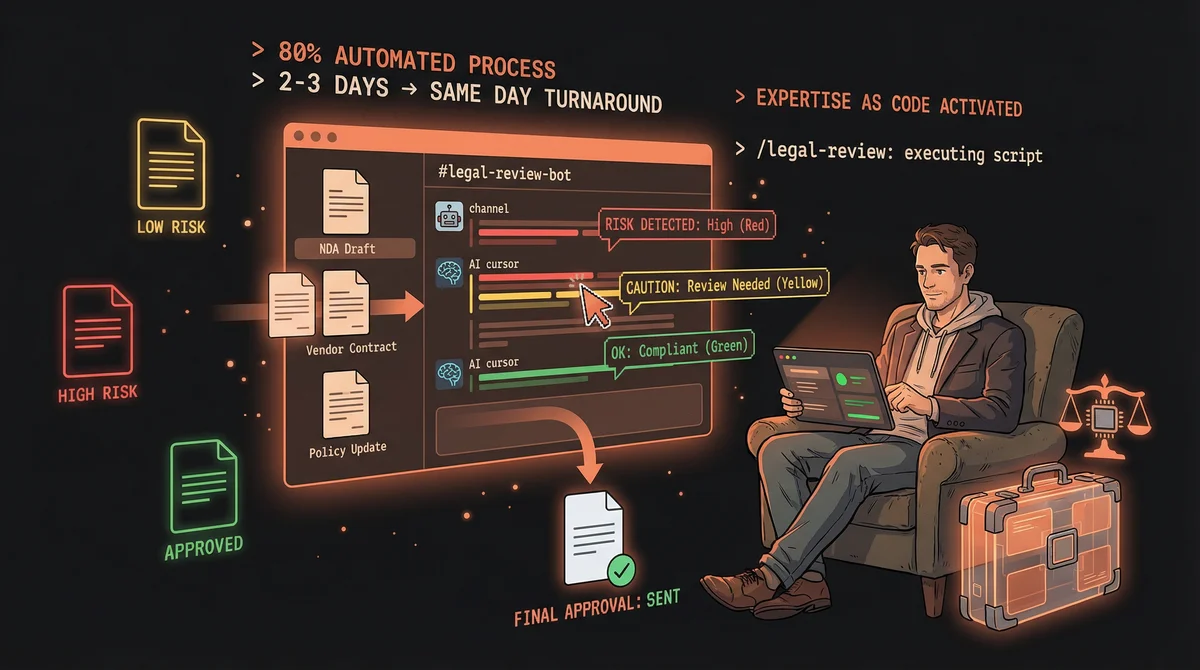
- Pre-launch legal reviews that took 2-3 days and 2-3 revision rounds now resolve same-day
- 80% of legal grunt work automated: overstated claims, trademark gaps, compliance issues screened before a human reads the content
- Built with Claude Skills — structured expertise written in plain language, not code
- The model: AI runs the repeatable checks, the lawyer handles what actually requires judgment
The most expensive bottleneck in a product launch isn’t engineering. It’s the night before, when legal reads everything word by word.
Every product launch at Anthropic used to follow the same loop.
Marketing finishes the landing page. Writes the ad copy. Polishes the email campaign. Sends everything to legal the night before launch.
Legal reads it all. Flags the overstated claims. Notes the missing trademark symbols. Marks the statistics that need sourcing. Sends it back.
Marketing revises. Sends again.
Legal reviews the revisions.
Repeat.
“2-3+ days per launch, 2-3 rounds of back-and-forth.”
At a company valued at hundreds of billions, every product launch waited on this loop. The lawyer wasn’t slow. The process was broken.
The Person Who Fixed It
Mark Pike is Anthropic’s Associate General Counsel. His job is reviewing marketing materials for legal risk — the exact work creating the bottleneck.
He didn’t file a request with engineering. He built the fix himself, using Claude Skills, in plain language.
The result: a self-serve legal review tool, pinned in Slack, available to every marketer before they submit anything for human review.
The System
When a marketer needs legal sign-off on content — a landing page, ad copy, push notification, blog post — they paste it into the Slack tool.
Claude reads the content and checks it against Anthropic’s actual legal guidelines. Not generic AI caution. Anthropic’s specific standards, as Pike wrote them.
Every issue gets a risk level:
- Low risk: Missing trademark symbol on a product name
- High risk: A claim like “Claude is the most secure AI on the market” — overstatement that creates legal liability
For each flag, the tool tells the marketer exactly what to fix. They fix it themselves. By the time the content reaches Pike, the obvious problems are already gone.
“80% of grunt work — catching obvious mistakes, easy fixes — automated. Pike still reviews everything, but only spends time on what actually requires legal judgment.”
The Part That Makes It Work
Most people who hear this story focus on the time savings. The bigger innovation is what Pike put inside the Skill.
He didn’t write a generic prompt saying “review this content for legal issues.” That produces cautious, consensus output — the kind that flags everything and illuminates nothing.
Instead, Pike codified his actual review process:
- Which specific types of claims count as overstatements in AI contexts
- Which product names require trademark symbols, and which symbols
- When a statistic needs a citation versus when it’s recognized general knowledge
- What language creates liability exposure versus what’s acceptable competitive framing
“It’s Pike’s expertise and the team’s accumulated guidance, codified into a system that runs the same checks they would.”
The Skill doesn’t simulate legal review. It runs Pike’s review criteria. There’s a difference.
One observer in the thread described the underlying shift:
“Pike was the person who understood the exact failure points in the process, so he fixed them. Vibe coding made domain expertise directly executable without the engineering translation layer. A lawyer who can describe exactly what needs to change can now build the change. Used to require convincing an engineering team it was worth scheduling.”
The bottleneck used to be: expert identifies problem → explains to engineering → engineering schedules it → engineering builds it → expert reviews and corrects → repeat. Now the expert builds directly. The translation layer is gone.
What Actually Changed
The time reduction — 2-3 days to same-day — is the number everyone cites. The more significant shift is what Pike’s job became.
Before: Read everything. Flag everything. Approve or reject. The gatekeeper.
After: Review final versions after pre-screening. Focus on edge cases and judgment calls. The decision-maker.
When the story spread, a general counsel at another company reacted publicly:
“Forwarded this to our General Counsel at 8am. She read it, closed her laptop, and said ‘so I’m the marketer now?’ I said no, you’re the judgment layer. AI does the grunt work. She said the grunt work was 91% of her job. We ended the meeting early.”
91% grunt work. 9% judgment. Pike’s system changed the ratio.
The Broader Pattern
What Pike built has a name that’s gaining traction: expertise institutionalization.
Every organization has domain experts whose knowledge lives in their heads. When they’re overwhelmed, workflows stall. When they leave, the knowledge walks out with them.
Claude Skills change the equation. The expert writes down how they think about a problem — precisely, the way they’d explain it to a competent junior. That description becomes a system that runs those checks consistently, without the expert in the loop for every instance.
“Every department has a Pike — someone whose expertise lives in their head. The companies that win the next 5 years will be the ones that figure out how to extract and codify that institutional knowledge before those people leave.”
The expert’s judgment doesn’t disappear. It scales.
Getting Started
If you’re a domain expert with a review or screening process, the same pattern applies.
The core process:
- Write down the criteria you actually apply — not “is this good?” but the specific things you check for, the categories that matter, the lines that can’t be crossed
- Structure those criteria as a Claude Skill (Claude can help you format it)
- Connect it where work comes in — Slack, a shared form, a project in Claude
What Pike used:
- Claude with Skills enabled
- Slack as the submission and delivery interface
- No engineering team, no code
The right frame:
You’re not replacing your expertise. You’re deploying it at a scale you couldn’t reach manually. The Skill runs your checks automatically. You spend your time on the exceptions that genuinely need you.
“Not just automation — institutionalized judgment.”