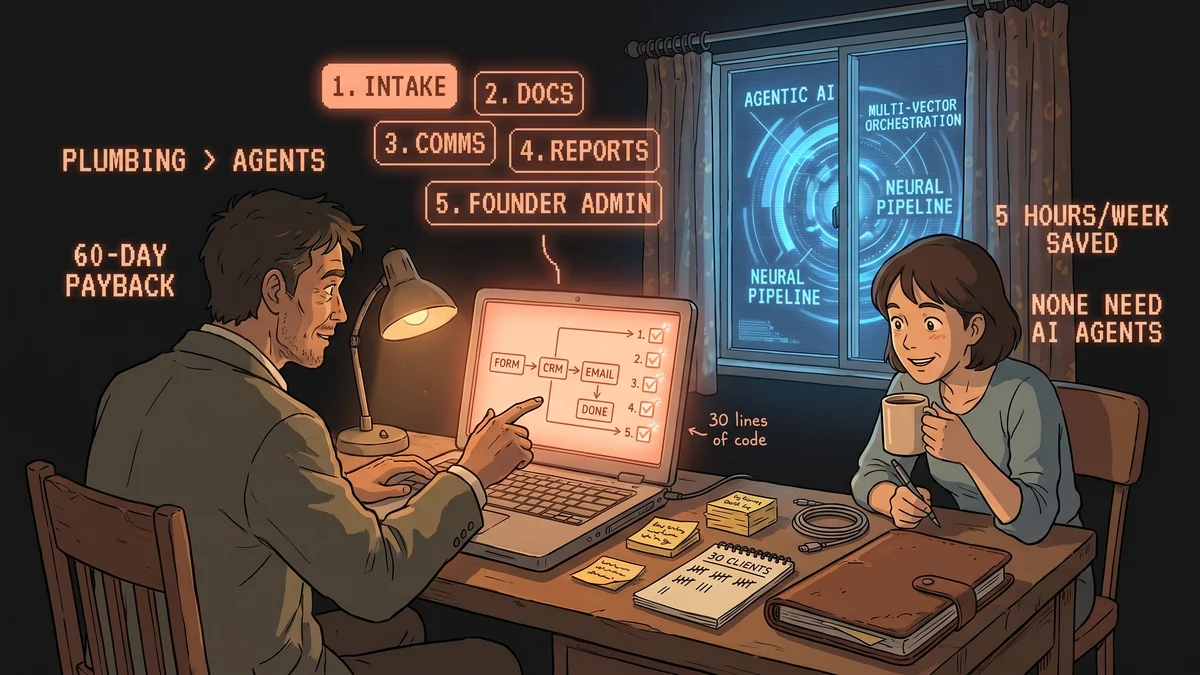
After shipping automation projects for more than 30 professional services firms — law firms, accounting practices, recruiting agencies, marketing shops — a practitioner on Reddit noticed something. Around project number 12, the same five tasks kept appearing. A year later, the list hadn’t grown.
The insight isn’t that AI is overhyped (though it is). It’s more specific: the gap between what gets demoed and what actually pays back is costing small businesses real money. Not because they bought the wrong tool, but because the hype made the right tools look too boring to bother with.
The Five Tasks That Show Up Every Time
None of them require AI agents. They require plumbing.
Intake. Lead fills out a form. Then a human creates the CRM record. Another human schedules the call. Someone sends the confirmation email. A third person updates the partner spreadsheet. Most firms have four or five people touching a process that a 30-line script can handle entirely. The automation costs less than a month of admin salary. The work disappears overnight.
Document generation. Engagement letters, NDAs, proposals, retainer agreements. A paralegal edits a Word template for every new client. Replace that with a form that fills the template, emails the signed PDF, and logs the client automatically. Saves 5–10 hours per week per admin — and the admin moves to work that actually develops their career.
Recurring client communication. Status updates. Renewal reminders. “We haven’t heard from you in 30 days” nudges. Every firm has someone whose job partly involves remembering to send these on schedule. A workflow watching a date column in a spreadsheet and triggering the right email template replaces that entirely — with more consistent output than any human.
Internal reporting. Weekly partners meeting, monthly billing summary, Friday pipeline report. A junior person spends two hours pulling numbers from three systems and pasting them into a deck. The systems have APIs. The numbers can pull themselves. The junior person can do work that matters.
Founder admin. The biggest win and the most awkward conversation. Most owners are doing 8–12 hours a week of work that shouldn’t be on their plate: reviewing timesheets, approving expenses, chasing invoices, drafting follow-up emails, updating the pipeline tracker. They do it because they don’t trust anyone else. A workflow that handles the boring 80% and only escalates when judgment is actually needed gets a founder a day per week back — time that usually goes into sales or client work.
What Vendors Pitch Instead
Alongside those 30+ projects, the same consultant has watched the same demos fail at similar-sized businesses.
AI customer support agents keep getting sold to small operations handling six calls a day. The business would be better served by cleaning up the CRM the agent is supposed to read from. Predictive analytics dashboards get pitched to businesses with under 500 customers — where the owner already knows who’s at risk because they personally talked to that person last month. Voice AI for inbound calls sounds compelling until the bad calls start. Most small operations dial it back to “take a message and a human calls back” within 60 days, because the customer trust damage costs more than the saved hours are worth.
The pattern has a clean explanation: flashy automations are designed to be sold. Boring automations are designed to be used.
A working invoice-followup sequence is invisible until you turn it off and revenue drops eight percent. Nobody builds a slide deck around it. But it consistently delivers the highest ROI of anything you can install in a small business.
The Math That Actually Closes
Quote and proposal generation compressed from 40 minutes per document down to two. For a business producing 20 quotes a week, that pays back the build cost in under two months.
Notification routing that catches overdue jobs and unanswered quotes before they become lost revenue. Structured CRM follow-up sequences that recover deals quietly dying because nobody had time to chase them. Invoice numbers that stop getting manually retyped from email into QuickBooks.
None of this makes a good conference demo. All of it makes money.
The Test Worth Running First
Before hiring a consultant or evaluating any vendor, the most useful exercise is simpler: walk around the office on a Friday afternoon and ask three employees what their most annoying repetitive task is that week.
The answers will almost never match what a vendor would pitch. They will almost always be the right place to start.
The automation that pays back isn’t the one that looks most impressive in a 20-minute demo. It’s the one that someone in your office has been doing by hand, every week, for three years — and would genuinely cheer if it disappeared.