TL;DR
Your phone is leaking money. Trades businesses miss 27% of calls. Dental practices miss 30–35%. Most of those callers don’t leave voicemail — they just call your competitor. AI phone agents now answer every call, day or night, for under $300/month. A few businesses ran the numbers. Here’s what they found.
The Plumber Who Stopped Missing Emergencies
A plumbing company with one office manager and six field technicians was losing 15–20 calls a day during peak hours and after-hours. Not because the manager was bad at her job. Because one person can’t answer a ringing phone while she’s dispatching a van, taking an invoice call, and handling a warranty complaint at the same time.
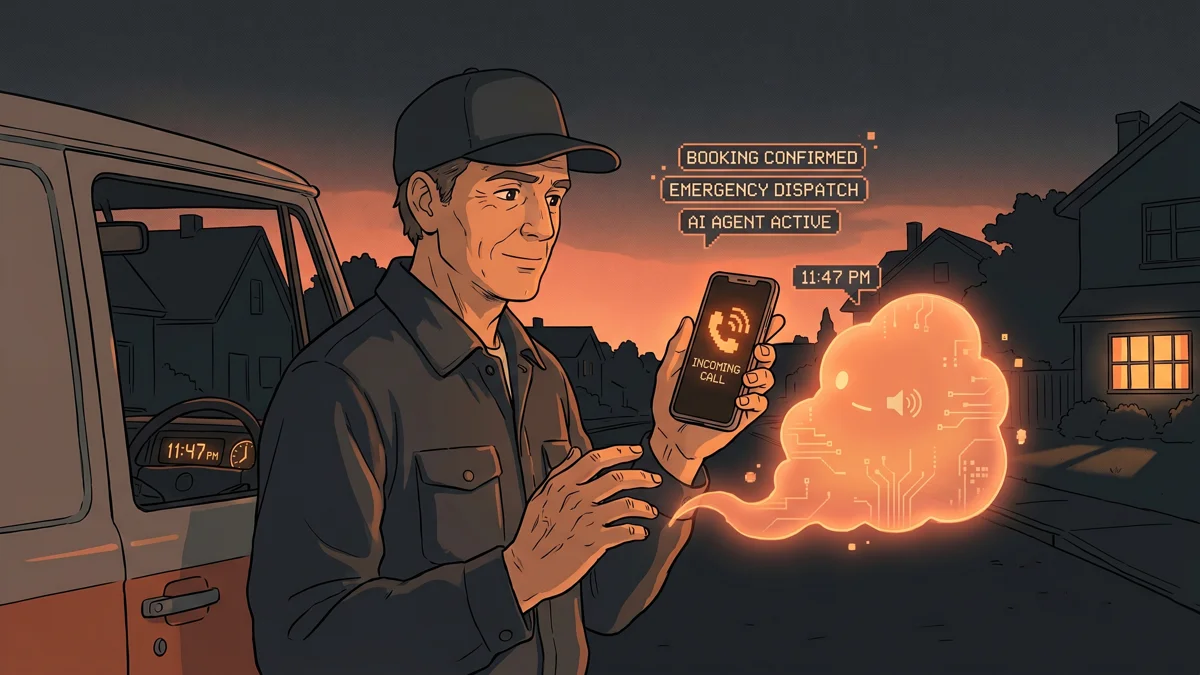
They set up a Retell AI voice agent for $100/month. It answers every call. It books appointments, confirms times, handles emergency dispatch, and gives callers an ETA. The office manager went from firefighting the phone to actually running operations.
The financial outcome: after-hours emergency call capture alone added $4,200/month in revenue. Net benefit after the tool cost: $4,100/month. The ROI was visible within the first week — a January furnace emergency call, the kind worth $8,000+ in parts and labor, doesn’t wait for business hours.
The bigger shift: the office manager reclaimed three hours a day. That time moved to dispatching, invoicing, and follow-ups — work that actually compounds.
Dental Practices: 75% of Missed Callers Never Try Again
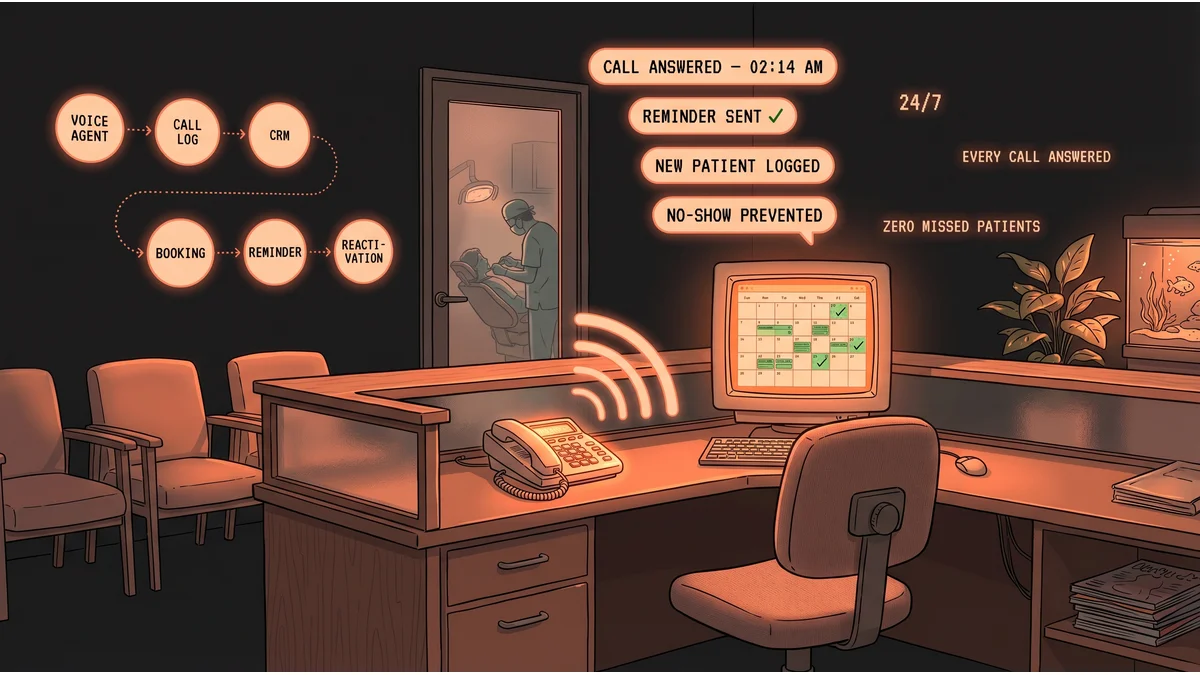
Dental offices run on a specific kind of pressure. The front desk handles check-ins, insurance verification, follow-ups, and treatment coordination — all while the phone rings. During a busy morning, 30–35% of calls go unanswered. That’s not a staffing failure. That’s physics.
The number that changes the calculation: 75% of patients who reach a missed call or voicemail don’t call back. They book elsewhere.
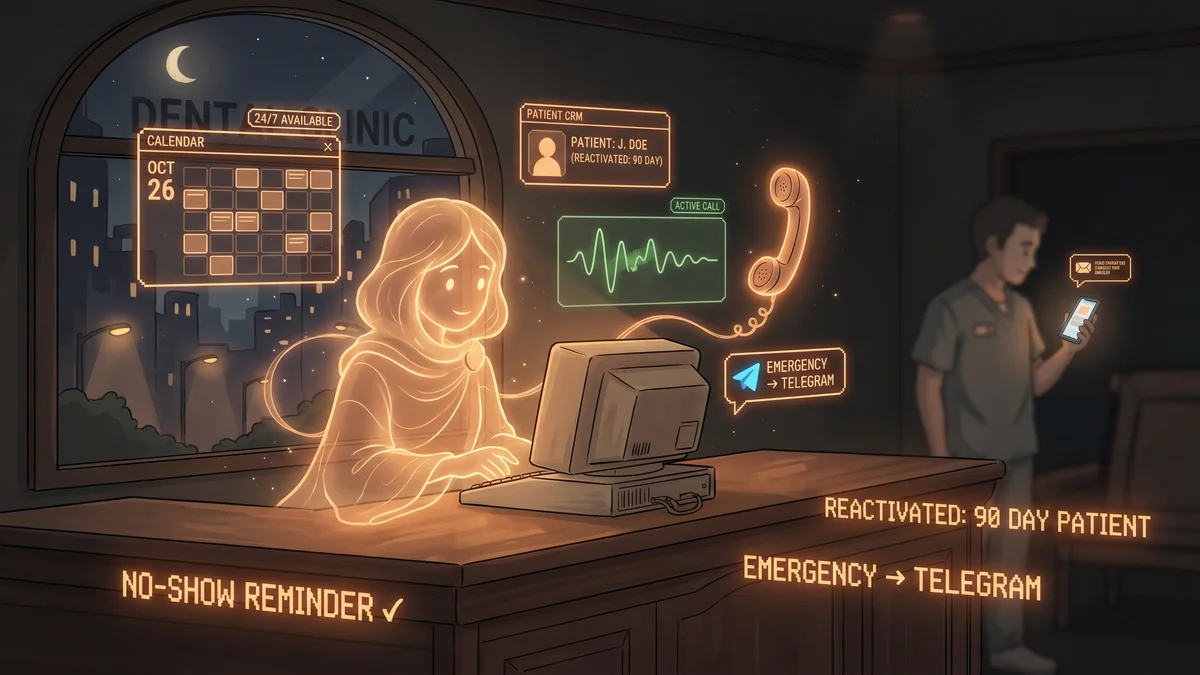
Each new dental patient is worth $4,500–$7,500 in lifetime value. Practices that have added AI phone answering report 90%+ answer rates, $8,000–$12,000 in additional monthly revenue, and ROI within 30–90 days. The AI handles routine scheduling and new patient intake — everything that doesn’t require clinical judgment.
A human receptionist costs $33,960–$55,000 a year in salary. An AI phone agent costs $2,400–$12,000 a year and never calls in sick, never takes lunch, and never puts someone on hold to answer another line.
Home Services: 85% of Callers Don’t Leave Voicemail
The pattern repeats across HVAC, electrical, and roofing. The industry-wide missed call rate sits around 27%. But the more revealing statistic: 85% of callers who reach voicemail hang up without leaving a message.
That’s the compounding problem. You don’t just lose the call. You lose the call AND any chance of recovery. The caller moves down the search results and books with whoever answers.
For context on what’s at stake: a missed HVAC install call isn’t a $30 restaurant order. It’s a $30,000–$40,000 job. Avoca, an AI startup that raised $125 million to serve this exact market, built their pitch around that gap. Physical services businesses have been underserved by software for decades — and the missed call problem is why.
Businesses that deployed AI phone answering in home services report 40–60% improvement in lead capture and 40% more bookings from evening and weekend calls. Those are the hours when emergencies happen and nobody is staffed.
The Pattern
These aren’t tech-forward businesses. They’re a plumber, a dentist’s office, an HVAC company. None of them hired engineers. None of them built anything.
The common thread: they had a front desk problem, not a business problem. The phone was the bottleneck. AI removed the bottleneck.
The jobs that required a receptionist — answering, scheduling, dispatching — are the exact jobs that AI handles well. Predictable scripts, time-sensitive decisions, high volume. The human judgment still lives with the technician, the dentist, the business owner.
What changed is that the first interaction — the one where a caller decides whether to book or move on — now happens every single time, at any hour, without exception.