TL;DR
- A software dev manager with 14 years of experience gave 4 interns access to Claude Code on day one of their internship
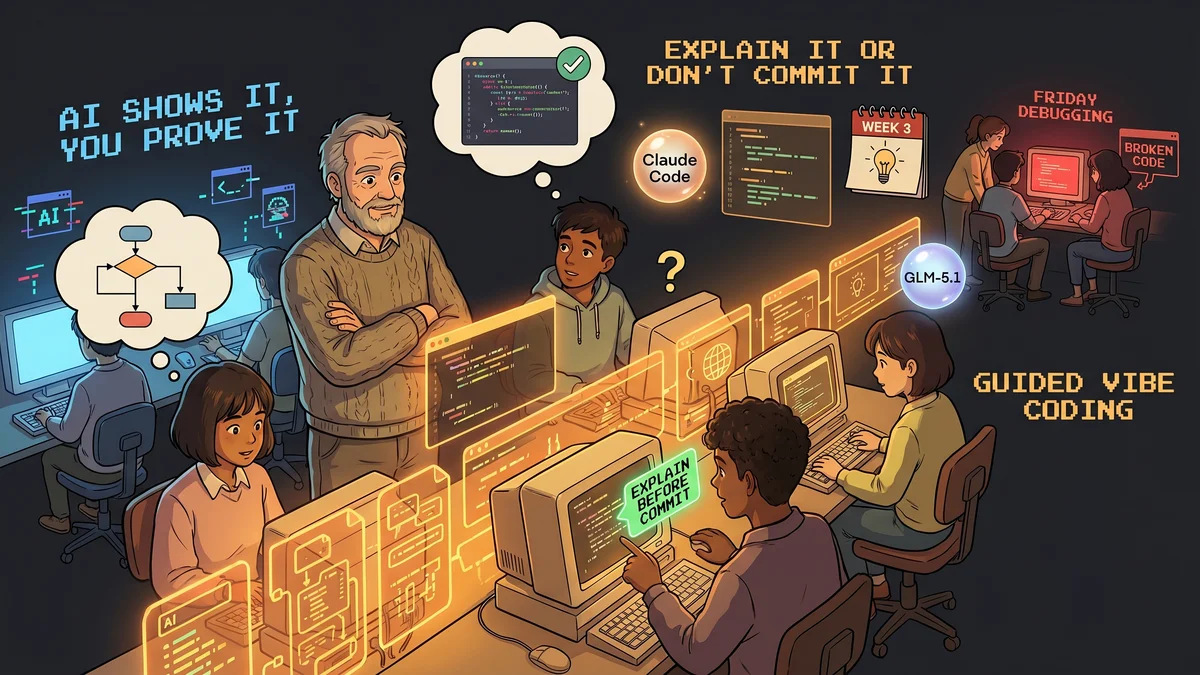
- He added 4 strict guardrails: explain before committing, graduated independence, weekly “no AI” debugging sessions, and learning notes
- After 2 months, they were learning faster than any intern group he’d managed
- The turning point came in week 3, when the interns stopped thinking vibe coding was easy
Most discussions about vibe coding focus on one person: a solo founder shipping fast, a non-technical marketer building a prototype. The team dimension — what happens when you introduce AI coding tools to a junior developer who’s supposed to be learning — gets almost no attention.
A software developer with 14 years of experience recently shared what happened when he made a different bet.
The Setup
When four new interns joined his team, he made a decision he knew would be controversial: let them vibe code on real projects from week one, using Claude Code and GLM-5.1 together.
His reasoning was simple. Throwing them in with no guidance would be a disaster — they’d hit enter, watch things work, and assume they were developers. Something would eventually break and they’d have no idea why. But banning AI tools entirely felt like preparing them for a world that no longer exists.
The solution was structure.
The 4 Rules
Rule 1: Explain before you commit. Before any AI-generated code got pushed, the intern had to explain what it did. Not a summary — an actual explanation. If they couldn’t, they couldn’t use it. This single rule forced engagement with every line the AI produced.
Rule 2: Graduated independence. Early on, almost nothing got merged without the manager’s review. As interns demonstrated they understood what they were committing — and why — the scope of what they could do solo expanded. Trust was earned incrementally.
Rule 3: Friday debugging sessions, no AI allowed. Every Friday, the manager intentionally broke their code. Then he watched them fix it without touching Claude Code or GLM-5.1. He calls it “brutal.” It worked. There’s no better way to find out if someone understands a system than to watch them debug it cold.
Rule 4: Notes on every new concept. Not formal documentation — quick notes. Every time vibe coding exposed a concept the intern hadn’t seen before (how auth tokens flow, how API routes connect, how error handling propagates), they wrote it down. A record that learning was actually happening, not just code being accepted.
What Happened
Week one: all four interns thought this was the easiest job they’d ever had. The AI handled the code, they approved it, things worked.
Week three: that attitude collapsed.
The Friday debugging sessions, the requirement to explain every line, the growing complexity of real projects — it all converged. The interns started realizing how much they didn’t know. The manager considers this the real beginning of learning. “That’s when the real learning started,” he wrote.
By the end of two months, the results were clear. The interns were absorbing concepts faster than any group he’d worked with in 14 years. Auth flows, API structure, error handling — material that normally takes weeks to click through textbooks was clicking in days, because they could see it working in real code and then had to explain it.
Why This Works
Vibe coding, done wrong, creates the illusion of competence. The code runs. The intern feels capable. Nobody asks them to explain anything. Then a production bug hits and they’re helpless.
The guardrails flip the dynamic. The AI becomes a generator of working examples — richer, more varied, and faster than any textbook. The human’s job shifts from “write this code” to “understand this code well enough to defend it.” That’s actually a harder cognitive task than typing syntax from memory.
The tools (Claude Code + GLM-5.1) accelerated exposure. The rules ensured the exposure translated into understanding.
The Takeaway for Teams
Vibe coding isn’t going away. The question isn’t whether junior developers will use AI tools — they will, with or without permission. The question is whether you build a structure that makes that useful.
The manager’s framework is replicable: explain before committing, earn independence, practice without the AI, document new concepts. Four rules. Two months. Faster learning than anything he’d seen before.
“Vibe coding as a learning tool with someone experienced watching over? Genuinely powerful.”