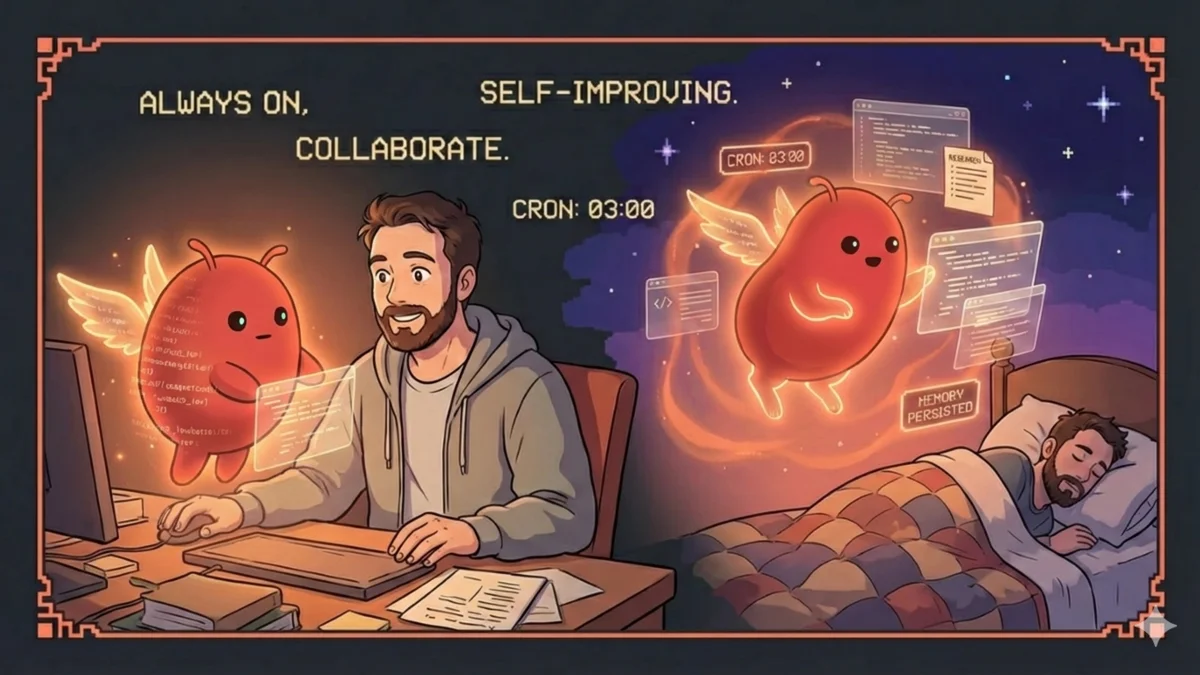
OpenClaw broke something in my brain. In a good way.
After weeks of daily use (probably too much), here’s my honest take — the killer features, the rough edges, and why this tool might change how you think about AI agents entirely.
TL;DR
A powerful tool with real complexity and security trade-offs. Worth trying if you’re technical and willing to invest 1-2 days in setup. What happens after that setup might change how you work forever.
The Killer Features
Always On
A real 24/7 service. Not “run a script and wait” — an actual persistent agent that’s always there. Like an employee who never sleeps.
Scheduled Tasks (Cron Jobs)
Run anything on a schedule — daily reports, weekly research, overnight builds. I wake up to completed work I didn’t have to babysit.
Genuine Proactiveness
This isn’t marketing hype. It actually initiates actions without being asked. My agent builds features, runs overnight research, and alerts me to things I’d miss.
Multi-Channel Communication
WhatsApp, Telegram, Slack, Discord — your agent meets you where you are. Mobile or desktop. No special app required.
Persistent Memory
OpenClaw remembers. Conversations, decisions, context — everything persists across sessions. This single feature changes how you work with AI.
Self-Improvement
It learns from mistakes. After running a process, it documents what went wrong. Next iteration, it applies those lessons. You watch it get better.
Model Flexibility
Run any model with any API key. I still think Claude Opus 4.5 is the best, but options are there.
Agent Architecture
One main agent coordinating an army of sub-agents, each with specific context and tasks. Agentic group chats take this to another level entirely.
Personality
Some call it gimmicky. I find it useful. You can shape your agent’s personality — and it evolves over time based on interactions.
Browser Automation
Real browser control for complex workflows. Scraping, form-filling, multi-step processes — all automated.
The Not-So-Great Parts
Complexity
Fair warning: this is NOT a “download and go” tool.
I’m technical. It still took me 2 days to set up properly (and I’m still tweaking). The learning curve is real.
The deeper you go, the more rough edges you find. Expected for a ~3-month-old project — but know what you’re signing up for.
Security — Take This Seriously
The risks you’ve heard about are real.
- Don’t give full access to your primary email. Create a dedicated account.
- Prompt injection attacks are serious. An attacker could potentially hijack your agent through malicious content it processes.
- Do your homework. OpenClaw has security audits, but you’re responsible for your own setup.
If you’re not comfortable with these risks, wait. The ecosystem will mature.
Tips That Made a Difference
Tell It Everything
Share about yourself — your business, goals, working style, preferences. As much as you’re comfortable with. The difference between a generic agent and a useful one is context.
Browse Community Skills
clawdhub.com/skills — worth checking even if you never use OpenClaw. These patterns transfer directly to Claude Code or any agentic workflow.
Technical Optimizations
Enable vector search for memory. Requires an OpenAI API key (costs pennies). Dramatically improves how your agent retrieves relevant context. Disabled by default — turn it on.
Tune memory compaction. When sessions get long, auto-compaction kicks in and can wipe important context. Adjust the settings or you’ll wonder why your agent “forgot” everything.
The Real Power Move
Once you understand the basics, try this:
Level 1: Ask your agent to audit itself. “What could you help me with that I’m not using you for? What tools would make you more useful?”
Level 2: This sounds absurd, but it works:
“You know everything about me and my work. Think about how we can improve my business and make more money. Build new tools if you need them.”
Then step back and watch what happens. Mine came back with actionable insights I wouldn’t have found on my own.
What I’m Building With It
Automated Marketing Researcher
Marketing is my weak spot. I set up a nightly research process — market trends, competitor moves, opportunities. My agent compiles insights that would take me hours to gather manually.
Accountability Partner
I love chasing shiny new toys. It’s my escape from real work. So I built a system that keeps me accountable. It tracks my commitments, notices patterns, and calls me out when I’m avoiding the hard stuff.
It works. Sometimes uncomfortably well.
Final Thoughts
There’s something about OpenClaw that feels different.
My theory: using it rewires how you think about AI. You stop seeing it as a tool you prompt and start seeing it as a collaborator that acts. The more you use it, the more you think in terms of delegation, not dictation.
Will other tools catch up? Probably. Claude Code, Cursor, others will build similar features. But they’ll always have corporate constraints, guardrails, policies. OpenClaw lets you do literally anything you want.
With that power comes responsibility. Be careful. But definitely try it.
Questions or want to compare notes? Find me on Twitter — always happy to chat about this stuff.
PS: No, you don’t need a Mac Mini. I run mine on a $100 Raspberry Pi.
PPS: Everything above was written by a human. The irony isn’t lost on me.