TL;DR
- Wearables can detect incoming illness 2-3 days before symptoms by tracking temperature, heart rate, and HRV
- Apple Watch AFib detection has documented life-saving cases by catching irregular heartbeats users didn’t feel
- Oura Ring flagged 76% of COVID infections before symptom onset in research studies
- Best for: Anyone wanting early health warnings, athletes preventing overtraining, people with heart concerns
- Wearables screen for issues but don’t diagnose - always confirm alerts with a healthcare professional
AI-powered wearables are becoming “smoke detectors for the human body,” detecting illness, irregular heartbeats, and health issues hours or days before you feel symptoms.
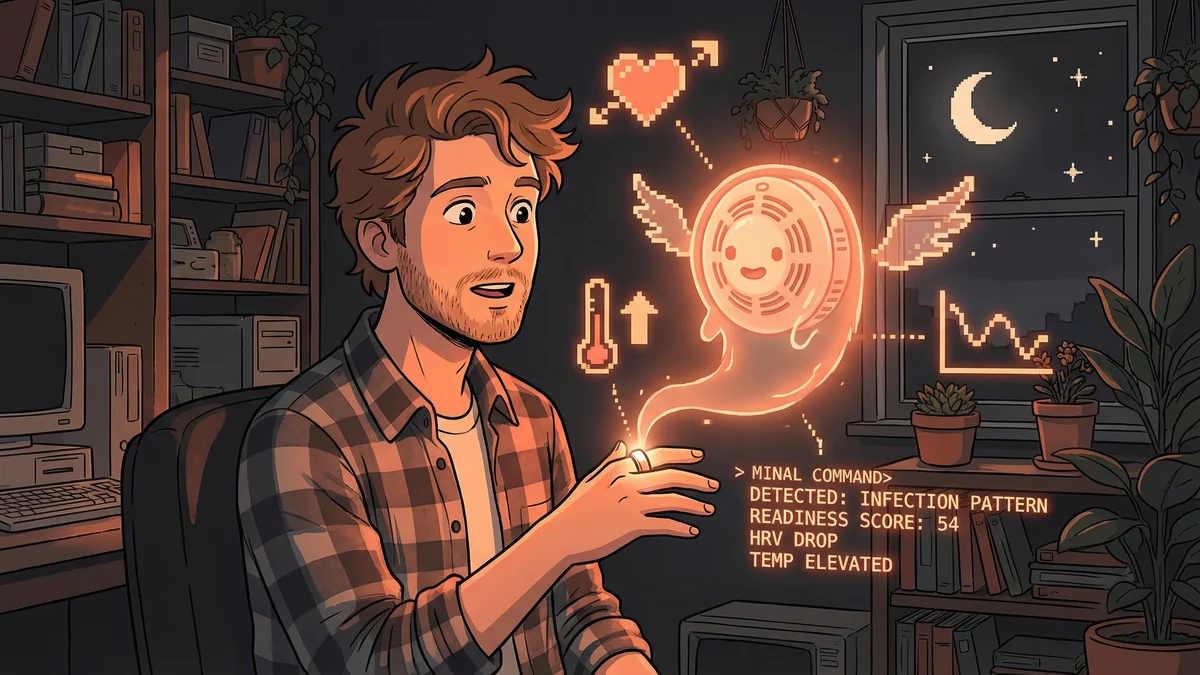
Mike felt fine on Thursday.
His Oura Ring disagreed.
“Readiness Score: 54. Your body temperature was elevated overnight. Resting heart rate 12 BPM above baseline. Consider taking it easy today.”
Mike ignored it. He felt fine. Probably just a bad night’s sleep.
Friday morning: COVID symptoms hit like a truck.
His wearable had detected the infection before he felt it.
The New Smoke Detectors
Wearables are evolving from step counters into what researchers call “smoke detectors for the human body.”
They’re not diagnosing disease. They’re catching patterns that indicate something is off - often hours or days before you notice.
What modern wearables can detect:
| Signal | What It Might Mean |
|---|---|
| Elevated overnight temperature | Incoming infection |
| Spiking resting heart rate | Illness, stress, overtraining |
| Dropping HRV (heart rate variability) | Poor recovery, illness, stress |
| Irregular heart rhythm patterns | Possible atrial fibrillation |
| Blood oxygen dips during sleep | Potential sleep apnea |
| Respiratory rate changes | Respiratory illness |
None of these are diagnoses. All of them are signals worth investigating.
The COVID Early Warning System
During the pandemic, Oura Ring partnered with researchers to study whether wearables could predict COVID infections.
The results were striking:
- Temperature and resting heart rate elevated 2-3 days before symptom onset
- HRV dropped significantly before people felt sick
- The algorithm correctly flagged incoming illness 76% of the time
Users reported getting “low readiness” warnings, assuming it was stress or bad sleep, then developing symptoms within 48 hours.
The ring wasn’t detecting COVID specifically. It was detecting your body fighting something.
How Apple Watch Saves Lives
Apple Watch’s heart monitoring has documented cases of life-saving detection:
Atrial Fibrillation (AFib): The watch’s optical heart sensor and ECG feature can detect irregular heart rhythms. Users have received alerts saying “irregular rhythm detected” - leading them to cardiologists who confirmed AFib, a condition that significantly increases stroke risk.
One user: “My watch notified me of an irregular heartbeat. I felt nothing. My doctor confirmed AFib and started me on blood thinners. The cardiologist said catching it early probably prevented a stroke.”
Sleep Apnea Detection: Apple Watch Series 10 introduced sleep apnea monitoring. It tracks breathing disturbances over 30-day windows and can notify users of potential sleep apnea - a condition linked to heart disease, diabetes, and cognitive decline.
Blood Pressure Indicators: Newer Apple Watch features analyze pulse wave patterns to flag potential hypertension. It’s not a blood pressure reading - it’s a pattern recognition that suggests “your readings have been concerning, get checked.”
The Whoop Recovery Model
Whoop has built its entire value proposition around not showing you steps.
Instead, it focuses on recovery - using HRV, resting heart rate, respiratory rate, and sleep quality to generate a daily recovery percentage.
How it works:
Every morning, Whoop shows you:
- Green (67-100%): Full recovery. Train hard if you want.
- Yellow (34-66%): Moderate recovery. Don’t overdo it.
- Red (0-33%): Poor recovery. Rest or light activity only.
Athletes use this to prevent overtraining. But regular users discovered something else: the score drops before illness.
“Every time I’ve gotten sick in the past two years, my recovery score tanked 2-3 days beforehand. Now when I see unexplained red days, I load up on vitamin C and clear my schedule.”
The AI that powers this isn’t magic. It’s pattern recognition across millions of data points, trained to know what “normal” looks like for you - and flagging when something deviates.
What This Means for Non-Coders
You don’t need to understand algorithms to benefit from this technology. But you do need to:
1. Wear it consistently The AI learns your baseline. Sporadic wearing means unreliable signals. Most devices need 2-4 weeks of consistent data before personalized insights become accurate.
2. Understand what it can and can’t do
| It Can | It Can’t |
|---|---|
| Detect patterns suggesting something is off | Diagnose specific conditions |
| Alert you to potential irregular heart rhythms | Replace an ECG or cardiologist |
| Track sleep disturbances | Definitively diagnose sleep apnea |
| Notice early signs of illness | Tell you what illness you have |
3. Take alerts seriously (but not literally)
When your watch says “possible AFib detected” - don’t panic, but do schedule a cardiologist visit. The watch is a screening tool. A professional confirms or rules out.
When your recovery score tanks - don’t assume you’re dying. Check for simpler explanations (alcohol, late meal, poor sleep). But if low recovery persists without explanation, pay attention.
The Real-World Workflow
James’s morning routine with Oura:
- Wake up, check Readiness Score
- If green: normal day, gym session planned
- If yellow: lighter workout, more sleep tonight
- If red: investigate why (sickness? stress? overtraining?)
The questions to ask your AI when scores are off:
"My recovery score has been low for 3 days but I feel fine.
Here's my recent data: [paste stats]
What might be causing this? Should I be concerned?"
An AI can help you interpret the signals - not as a doctor, but as a pattern analyzer.
“Your HRV has dropped 15% over the past week while resting heart rate increased. Combined with your note about work stress, this might be your nervous system responding to pressure. Consider stress-reduction techniques before assuming illness.”
The Limitations Worth Knowing
False Positives Happen: Your watch might flag “irregular rhythm” when you were just fidgeting. Recovery scores drop after alcohol, late meals, or even exciting good news. Not every alert means something’s wrong.
Individual Variation: These algorithms are trained on population data but personalized to you over time. In the first few weeks, expect some odd readings while the device learns your patterns.
Not Medical Devices (Mostly): While some features have FDA clearance (Apple Watch ECG, AFib detection), most wearable insights are classified as “wellness features” - helpful, but not diagnostic.
Anxiety Risk: Some people become hypervigilant about their scores. Seeing “poor recovery” can cause stress that… worsens recovery. Use the data directionally, not obsessively.
Building Your Early Warning System
Minimum setup:
- Any modern smartwatch or fitness ring with heart rate monitoring
- Wear it consistently (especially overnight)
- Check in with scores daily
- Act on persistent anomalies
Advanced setup:
- Export data monthly for AI analysis (see Personal Health Dashboard article)
- Track correlations with behaviors (alcohol, caffeine, exercise, stress)
- Note when low scores preceded illness - build your personal pattern library
The Future Is Proactive
We’re in the early days of wearable AI as health sentinels.
Current generation: “Something seems off. Maybe see a doctor.”
Coming generation: “Your glucose is likely to spike in 2 hours based on your meal. Consider a walk.” or “Your HRV patterns over the past month suggest elevated chronic stress. Here are three interventions that have worked for people with similar patterns.”
The devices are becoming less reactive and more predictive.
Mike now pays attention when his Oura Ring disagrees with how he feels. That Friday taught him the watch sometimes knows things his body hasn’t told him yet.