TL;DR
- A busy mom turned rambling voice notes into a weekly newsletter with 3,000 subscribers
- Claude Code transcribes, finds themes, organizes arguments, and writes in your authentic voice
- No coding required; just record, drop files in a folder, and give one natural language command
- Best for: anyone with ideas trapped in voice notes, aspiring writers who struggle with blank pages
- Key lesson: Voice notes are writing; AI bridges the gap between raw thoughts and polished output
A non-coder transformed scattered morning walk voice notes into a thriving newsletter by asking Claude Code to “find the article hiding in this ramble.”
The terminal interface? Overwhelming. The word “Code” in the name? Terrifying. “What if I don’t have a coding project?” That was the question Helen kept asking herself.
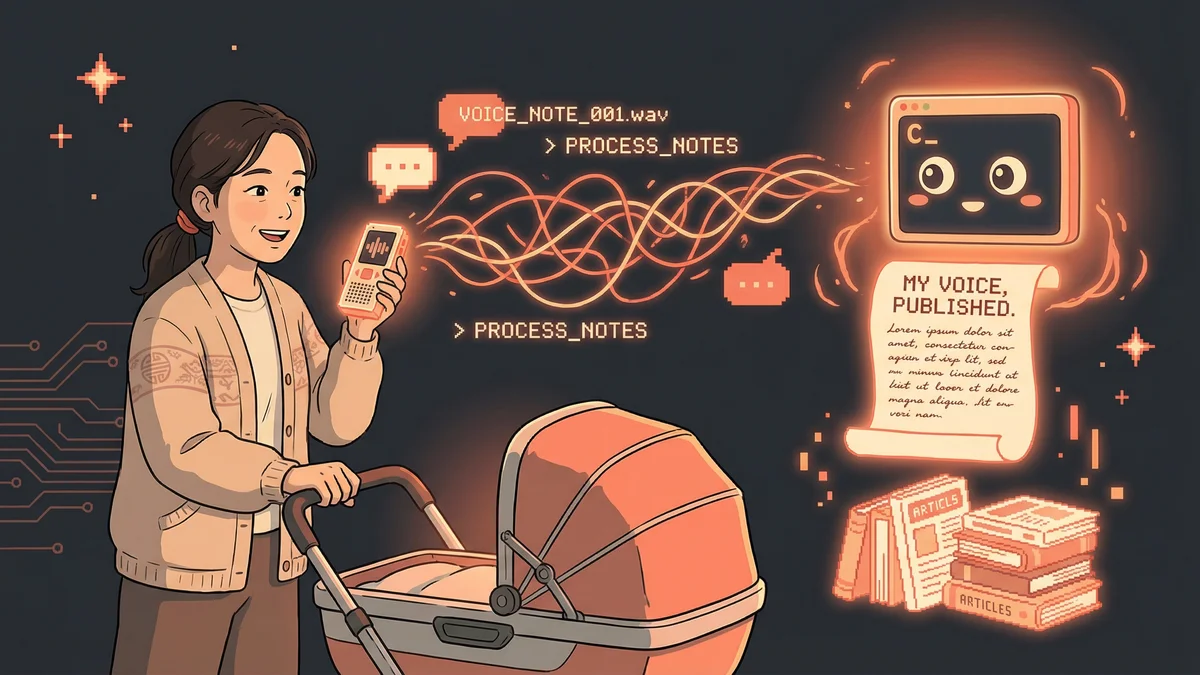
She’s a mom. Not a developer. Most mornings, she’s pushing a stroller through the neighborhood, brain buzzing with ideas she can’t capture fast enough. Voice notes pile up in her phone - random thoughts, half-formed insights, things she wants to write about someday.
The problem: someday never comes.
The Breaking Point
Helen had been struggling for three weeks. Scattered notes everywhere. Ideas trapped in voice recordings that sat unopened. The gap between having something to say and actually publishing it felt impossibly wide.
She knew she had good ideas. Friends told her “you should write about that.” But sitting down at a blank document? The cursor mocking her? The thoughts evaporating the moment she tried to type them out?
She felt like a fraud. Someone who talked about writing but never actually wrote.
The 5-Second Moment
One morning, she decided to try Claude Code anyway. Not because she felt ready. Because she was tired of waiting to feel ready.
She typed: “I have 12 voice notes from this week. They’re messy, rambling thoughts about remote work culture. Can you help me turn them into something?”
What happened next changed everything.
Claude didn’t just transcribe her voice notes. It found the themes she hadn’t consciously seen. It pulled together threads from different recordings into a coherent argument. It organized her scattered thoughts into research categories.
And then - this is the part that gave her chills - it wrote an article in her exact voice.
Not corporate-speak. Not AI-sounding. Her voice. The way she actually talks when she’s excited about an idea.
The Workflow That Changed Everything
Here’s what Helen does now:
Morning walk (with stroller): Record voice notes as ideas hit. No structure. Just talking. Sometimes she’s arguing with herself. Sometimes she’s telling a story. Doesn’t matter.
Back home: Drop the audio files in a folder. One command to Claude Code:
"Process these voice notes. Find the main themes.
Identify what I'm really trying to say.
Draft an article outline, then write it in my voice."
Result: A complete draft by the time her kid wakes up from the nap.
What Really Happened Here
This isn’t really a story about technology. It’s about identity.
Helen wanted to be someone who writes. Who shares ideas. Who doesn’t let good thoughts die in voice note graveyards.
The obstacle wasn’t technical skill. It was the transformation step - turning raw thoughts into polished output. Claude Code became the bridge.
Now she publishes weekly. Her newsletter has 3,000 subscribers. People tell her they can hear her voice in her writing.
The Actual Prompts
For processing voice notes:
I have audio recordings from my morning walks.
They're stream-of-consciousness thoughts about [topic].
Please:
1. Listen to each one and pull out the key ideas
2. Find connections I might have missed
3. Organize them into a logical argument
4. Draft an article that sounds like me - casual,
   direct, like I'm talking to a friend
For finding your voice:
Here are 5 things I've written before: [paste samples]
And here are my voice notes on [new topic].
Write about this topic in my authentic voice.
Not formal. Not "content-y." Just me.
The Part Nobody Talks About
What surprised Helen most: Claude Code caught patterns in her thinking she’d never noticed. Recurring themes. Ideas she kept circling back to. Arguments she was building without realizing it.
It became like having an editor who knew her brain.
“I always wanted to write,” she said later. “I just didn’t know I already was. Every voice note was writing. I just needed help seeing it.”
Getting Started
What you need:
- Claude Code (Pro subscription)
- Voice recording app (built into your phone)
- 15 minutes of unfiltered talking
Your first attempt:
- Record yourself explaining something you care about for 5 minutes
- Transfer the audio file to your computer
- Drop it in a folder Claude can access
- Ask Claude to “find the article hiding in this ramble”
The first time you see your scattered thoughts turned into something coherent, something that sounds like you - that’s the moment you’ll understand why Helen couldn’t stop telling people about this.