TL;DR
- Vodafone UK saved £2.2 million and 5,000 person-days through security workflow automation
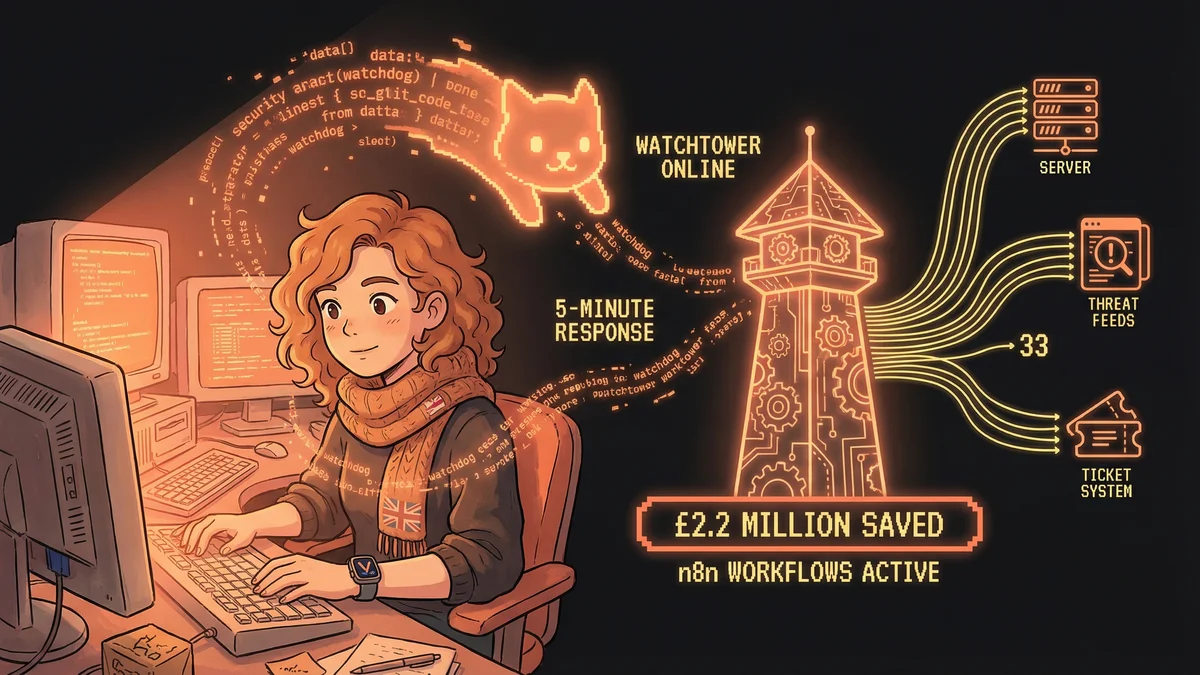
- 33 automated workflows now check threat feeds every 5 minutes vs once per shift
- Built on n8n (open-source) rather than expensive enterprise SOAR tools
- Best for: Enterprise security teams drowning in alerts and feeds
- Key insight: Integration with existing systems beats specialized security-only tools
Vodafone UK automated 33 security workflows to achieve 5-minute threat detection, saving £2.2 million in six months while redirecting analysts from feed-watching to actual security work.
Vodafone UK’s security team had a visibility problem.
Cyber threats don’t announce themselves politely. They appear in logs, alerts, anomalies—buried in the noise of millions of data points. Finding real threats meant analysts spending hours sifting through feeds that updated constantly.
“We were always reacting. By the time we spotted something, damage was already done.”
The telecom giant needed to watch everything, all the time. But hiring enough analysts to monitor every security feed? Financially impossible.
The automation gamble
Traditional security orchestration tools existed. IBM Resilient. Tines. Splunk SOAR.
Vodafone tried them. None fit.
“The SOAR tools were built for security-only workflows. We needed something that could connect security monitoring to the rest of our operations—ticket systems, communication tools, cloud infrastructure.”
They turned to n8n, an open-source workflow automation platform. Not a traditional security tool. That was the point.
Building the watchtower
Since August 2024, Vodafone’s security team built 33 automated workflows.
Each workflow handles a specific security task:
Threat feed monitoring checks critical sources every five minutes. New vulnerabilities, active exploits, emerging attack patterns—the system catches them before they become crises.
Automatic triage classifies incoming alerts by severity. Low-priority items get logged. High-priority threats trigger immediate escalation.
Incident response kicks off predefined playbooks when known attack patterns appear. While analysts review the situation, automation has already started containment.
“What used to require a security engineer watching dashboards all day now happens automatically in the background.”
The numbers
The results after six months:
5,000 person-days saved. Work that would have required analysts sitting at screens, watching feeds, manually processing alerts—now handled automatically.
£2.2 million in cost avoidance. Not theoretical savings. Actual budget that didn’t need to be spent on additional headcount.
£300,000 per month in ongoing savings as the workflows continue running.
“We didn’t lay anyone off. We redirected our security team to actual security work instead of feed-watching.”
The five-minute advantage
One workflow captures the transformation perfectly.
Critical security feeds—the ones that announce newly discovered vulnerabilities in software Vodafone uses—get checked every five minutes. Automatically.
Before: An analyst might check the feed once per shift. A critical vulnerability announced at 9:05 AM wouldn’t be seen until someone thought to look.
After: Any relevant vulnerability triggers an alert within five minutes. Response starts before most companies know the vulnerability exists.
“In security, time is everything. Getting five-minute visibility into critical feeds changed our posture entirely.”
What traditional tools missed
Vodafone’s choice of n8n over traditional SOAR reveals something about enterprise automation.
Security doesn’t exist in isolation. A security incident affects IT operations, customer communications, regulatory reporting, management escalation. Traditional SOAR tools handle security workflows. n8n connects security to everything else.
“When we detect a breach, the workflow doesn’t just alert security. It opens tickets in ServiceNow, notifies relevant stakeholders, updates status pages, and logs everything for compliance—all automatically.”
The 33 workflows aren’t just security automation. They’re operational integration with security awareness built in.
The model for others
Vodafone proved something important for enterprise security teams:
Open-source can win. n8n isn’t the most expensive or prestigious tool. It’s flexible, customizable, and good enough to save millions.
Integration beats specialization. A tool that connects everything beats a tool that does one thing perfectly but talks to nothing else.
Automation compounds. One workflow saves hours. Thirty-three workflows transform operations.
“Every security team is understaffed. Automation isn’t about replacing analysts—it’s about giving the analysts you have superpowers.”
The watchtower never sleeps.