TL;DR
- Zero exposed secrets reached production since deploying AI security scanning
- Nightly codebase audits plus PR-level reviews catch vulnerabilities before merge
- Based on OWASP Top 10 with severity classification (critical to low)
- Best for: continuous security monitoring, secret detection, dependency auditing
- Key advantage: AI understands context, reducing false positives that erode trust
AI-powered security scanning with Claude Code can eliminate exposed secrets and catch vulnerabilities at the PR level, shifting security from reactive to proactive.
The security breach came from a line of code nobody reviewed.
A developer had committed an API key to a configuration file. The file wasn’t in .gitignore. The key ended up in the public repository. Three weeks later, someone found it.
Mira’s team spent two days rotating credentials and auditing for damage.
“We had security reviews. We had linters. But humans miss things. Especially obvious things that hide in plain sight.”
She built a system that never missed.
The Security Landscape
Modern codebases have countless potential vulnerabilities:
Exposed secrets: API keys, passwords, tokens accidentally committed.
Injection vulnerabilities: SQL injection, command injection, XSS from unsanitized input.
Insecure dependencies: Libraries with known CVEs, outdated packages with patches available.
Authentication flaws: Weak session handling, improper access controls, password storage issues.
Logic vulnerabilities: Business logic that can be exploited, race conditions, improper validation.
“Security scanning tools exist. But they’re noisy. Hundreds of findings, most false positives. Engineers learn to ignore them.”
Mira wanted intelligent scanning. Fewer alerts, more accurate, with remediation guidance.
The OWASP Foundation
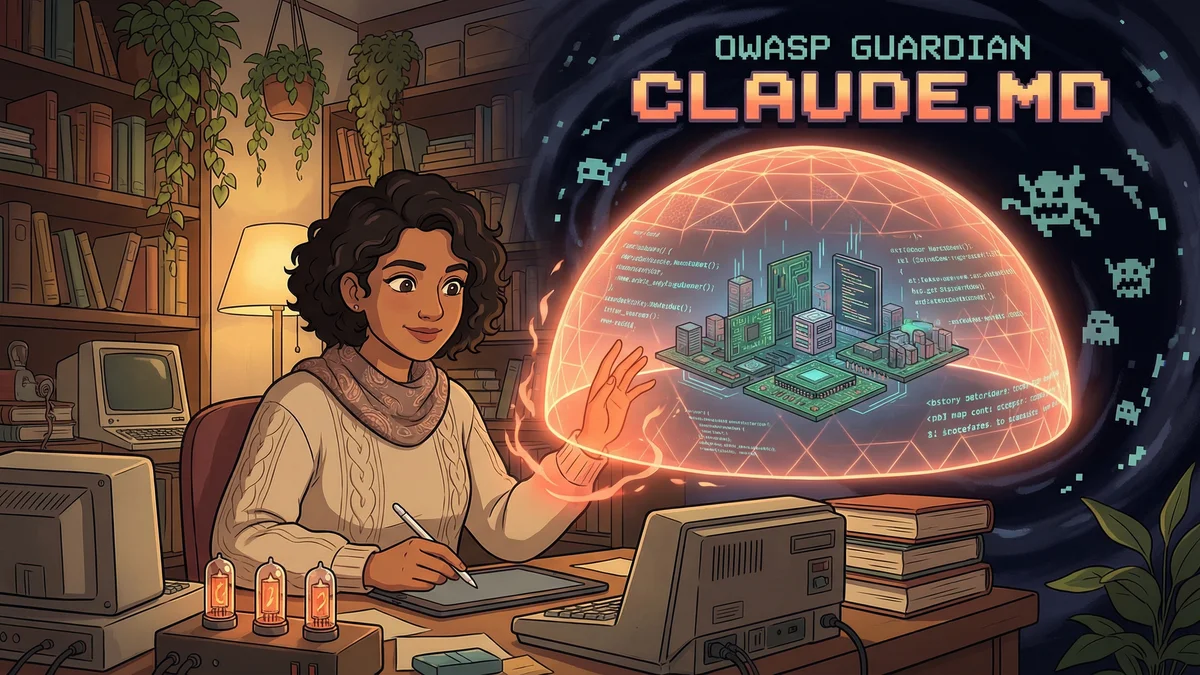
She based the system on OWASP guidelines.
The Open Web Application Security Project maintains standards for secure development. The OWASP Top 10 lists the most critical vulnerability categories.
“Instead of scanning for everything and drowning in noise, I focused on what actually matters. OWASP priorities.”
The scanning rules mapped to OWASP categories:
- A01: Broken Access Control
- A02: Cryptographic Failures
- A03: Injection
- A04: Insecure Design
- A05: Security Misconfiguration
Each category got specific detection rules.
The Claude Integration
Traditional security scanners use pattern matching. They find things that look like vulnerabilities.
Claude could reason about code. It could understand intent and identify when intent diverged from implementation.
“I gave Claude the OWASP rulebook. Then I said: ‘Analyze this codebase. Find anything that violates these principles. Explain why each finding matters.’”
The explanations were key. Not just “vulnerable line found” but “this line is vulnerable because X, which could allow Y, remediation is Z.”
The Severity Classification
Not all vulnerabilities are equal.
Claude classified findings by severity:
Critical: Exposed secrets, SQL injection with database access, authentication bypass. Fix immediately.
High: XSS vulnerabilities, insecure session handling, sensitive data exposure. Fix before next release.
Medium: Missing input validation, weak cryptographic choices, verbose error messages. Fix in normal cycle.
Low: Non-critical information disclosure, missing security headers, minor hardening opportunities. Fix when convenient.
The classification helped prioritize. Teams addressed critical first, didn’t ignore low indefinitely.
The Daily Audit
Mira configured the system to run nightly.
Every night at 2 AM, Claude scanned the entire codebase. By morning, a security report appeared in Slack.
“Most nights: no new findings. That’s good. When something did appear, we knew immediately.”
The consistent baseline meant new vulnerabilities were caught quickly. The window of exposure shrank from weeks to hours.
The PR Integration
Beyond nightly scans, every pull request got security review.
Before code merged, Claude examined the diff for security implications.
“A developer adds a new endpoint. Claude checks: is authentication required? Is input validated? Are there injection vectors?”
Security issues blocked merge. Developers fixed them before the code reached the main branch.
The False Positive Problem
Early scans had too many false positives.
Claude flagged code that looked vulnerable but wasn’t. Constants that looked like API keys. Test data that looked like credentials.
“False positives erode trust. If engineers see ten bogus alerts, they stop reading the eleventh — which might be real.”
Mira built a refinement loop.
When Claude flagged something incorrectly, she added context: “Code in /test directories is test data, not production secrets.” “This pattern is an intentional configuration, not a vulnerability.”
The CLAUDE.md for security grew detailed. False positives dropped.
The Secret Scanner
The most valuable detection: exposed secrets.
Claude looked for patterns: high-entropy strings, known credential formats, strings assigned to variables named “key” or “password” or “token.”
“But pattern matching catches test data too. Claude could distinguish real secrets from placeholder values.”
The difference: context. Claude understood that api_key = "sk-1234567890..." in a configuration file was likely real, while api_key = "test_key_placeholder" in a test file probably wasn’t.
The Dependency Audit
Third-party libraries were another attack surface.
Claude examined package files: package.json, requirements.txt, Gemfile. It checked versions against known vulnerability databases.
“Library X version 2.1 has a CVE. You’re using version 2.0. Recommendation: upgrade to 2.2 or later.”
The reports included remediation paths. Not just “this is vulnerable” but “here’s how to fix it.”
The Remediation Guidance
Every finding came with suggested fixes.
“SQL query vulnerable to injection. Current code uses string concatenation. Replace with parameterized query. Example fix…”
Claude provided before/after code. Developers could apply fixes directly.
“The suggestions weren’t always perfect. But they were usually 90% correct. Developers fixed the last 10%.”
The Learning System
The security rules evolved.
When a vulnerability slipped through, Mira added detection rules. When false positives occurred, she refined existing rules.
“It’s like training a junior security analyst. The feedback makes them better over time.”
After six months, the system knew the codebase’s patterns. It knew which directories contained test data. Which files were configuration versus secrets. Which patterns were intentional design choices.
The Compliance Mapping
For regulated industries, security requirements come from standards.
Mira mapped findings to compliance frameworks: SOC 2, PCI DSS, HIPAA where applicable.
“Finding X violates SOC 2 requirement Y. This isn’t just a security issue — it’s a compliance issue.”
The compliance mapping helped communicate with auditors. Instead of vague “we have security scanning,” the team could show specific coverage of specific requirements.
The Dashboard Evolution
Raw findings weren’t enough. Leadership wanted trends.
Mira built a security dashboard:
- Total vulnerabilities over time (trending down)
- Mean time to remediation (trending down)
- Coverage by OWASP category (all covered)
- Findings by team/module (identify problem areas)
“The dashboard turned security from invisible to visible. Leadership could see we were improving.”
The visibility helped with resources. When the data showed security improving, it justified the investment.
The Culture Shift
The biggest change wasn’t technical.
“Developers started thinking about security earlier. They knew Claude would catch things. So they tried not to write vulnerable code in the first place.”
Shift left happened naturally. The automated review changed behavior. Developers internalized the rules.
“The AI wasn’t replacing security thinking. It was training it.”
The Attack Simulation
Mira added a more aggressive mode.
Quarterly, Claude would simulate an attacker’s perspective. Given the codebase, how would an attacker try to compromise it?
“Claude mapped attack surfaces. Identified the most likely entry points. Suggested where an attacker would focus.”
The red team perspective was valuable. It showed gaps that rule-based scanning missed.
The Current State
A year later, the security posture had transformed.
Zero exposed secrets had reached production since deployment. Injection vulnerabilities caught before merge. Dependencies kept current.
“We went from reactive — finding vulnerabilities in production — to proactive — preventing vulnerabilities from reaching production.”
The audit became infrastructure. Always running. Always watching. A guardian that never slept.