TL;DR
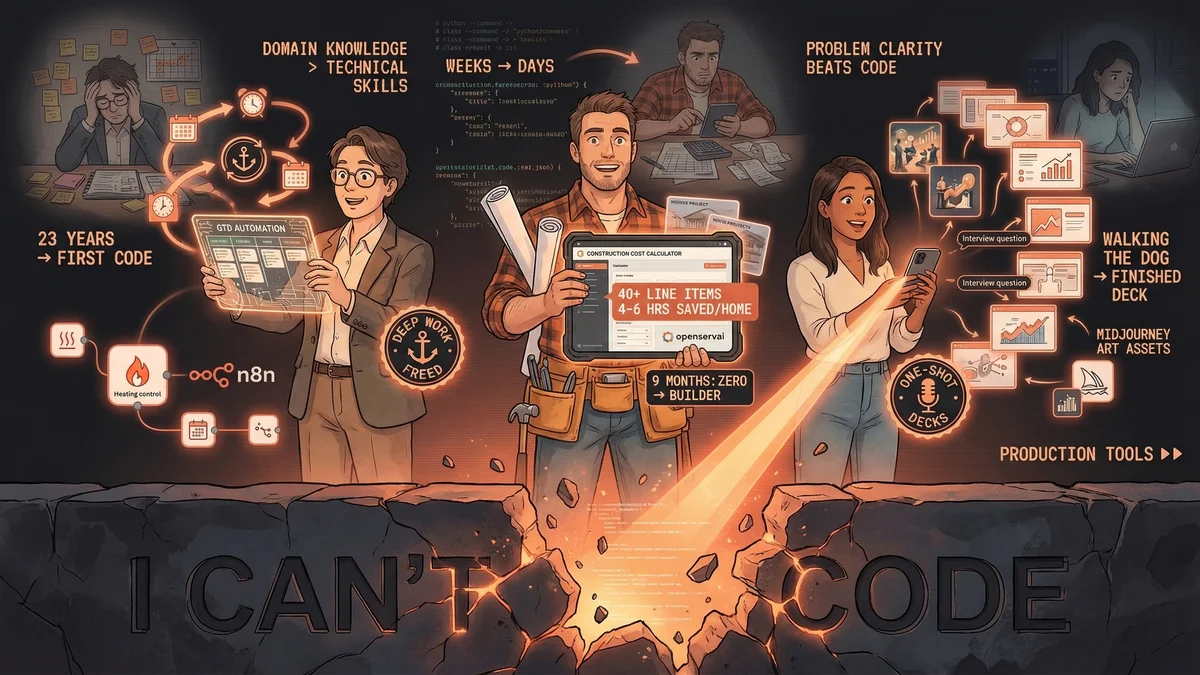
- Healthcare professional with no programming background now manages multiple software projects through Claude Code
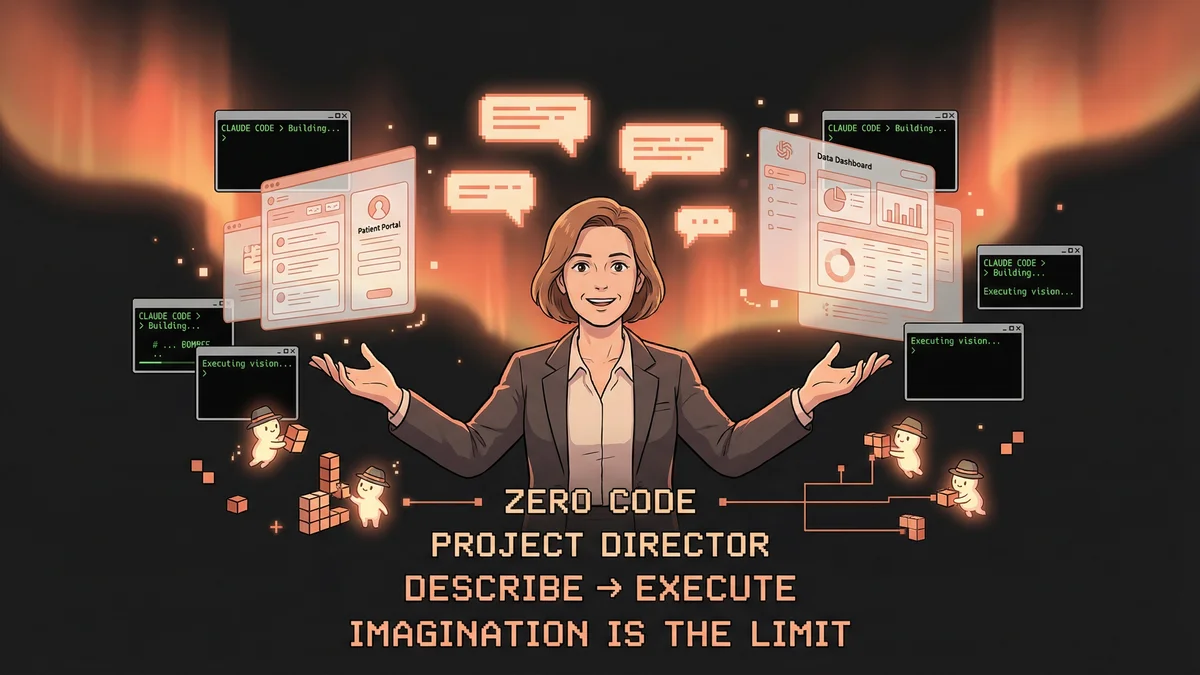
- Workflow shift: from “can I do this?” to “how would I describe this to Claude?” - execution happens at machine speed
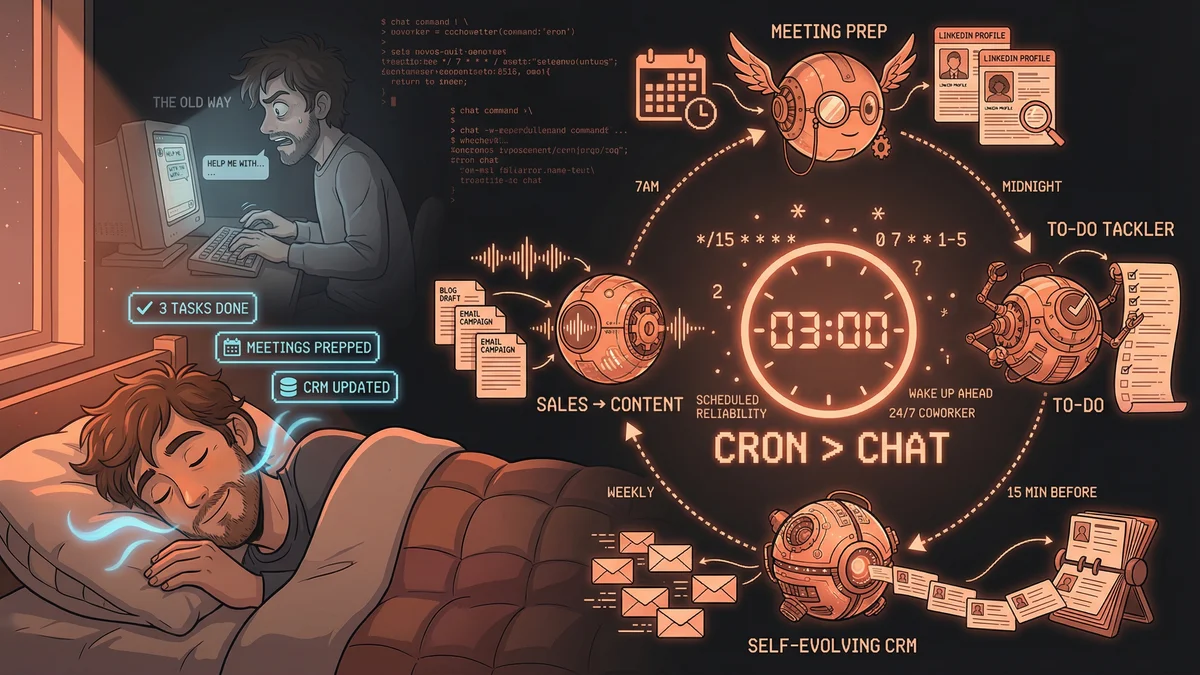
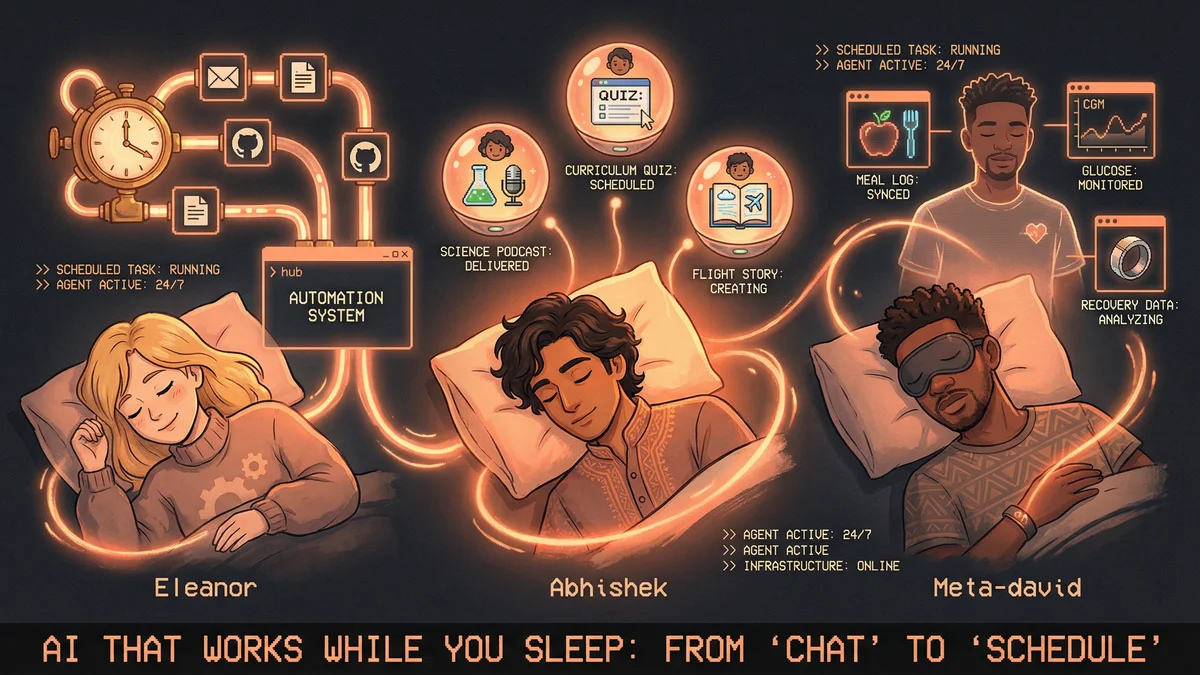
- Morning routine: wake up to overnight outputs, direct new projects midday, quality review in evening
- Best for: Domain experts who want to build tools without learning to code
- Key lesson: The limit isn’t Claude’s capability - it’s your imagination and communication clarity
A healthcare professional who never wrote code discovered that describing projects clearly to Claude Code was all she needed - now she builds apps, automations, and systems that would have required a development team.
Dr. Misty had a realization that changed everything.
“I’m not a coder. Never was. But one day I noticed something: I rarely look at code anymore. I’m basically a project manager now. Claude handles the execution. I handle the direction.”
This wasn’t what she expected when she first tried Claude Code. She expected a helpful tool. She found a new way of working.
The Background
Misty came from healthcare. DNP — Doctor of Nursing Practice. Her days involved patient care, research, documentation. Technical skills meant spreadsheets, not programming.
“When I first heard about Claude Code, I assumed it wasn’t for me. The word ‘code’ was right there in the name. I ignored it for months.”
Then a colleague showed her what Claude Code could actually do.
“They weren’t writing code. They were talking to their computer. Describing tasks. The computer did them. That wasn’t programming — that was delegation.”
The First Projects
Misty started small. File organization. Document reformatting. Simple automations.
“I’d describe what I wanted. Claude would do it. Sometimes it needed clarification. But the cycle was: describe, observe, refine. Not: learn syntax, debug errors, fight with compilers.”
Each success built confidence. Each project revealed new possibilities.
“I realized the limit wasn’t Claude’s capability. It was my imagination. Whatever I could describe clearly enough, Claude could execute.”
The Mental Shift
The transformation came gradually, then suddenly.
“I stopped thinking ‘can I do this?’ and started thinking ‘how would I describe this to Claude?’ Different question. Different possibilities.”
Tasks that seemed technical became conversation problems. Not “do I know how to build a database?” but “can I explain what I need a database to do?”
“Turns out, I could. The domain knowledge was mine. The execution knowledge was Claude’s. Together we could build things neither could alone.”
The Current Workflow
Misty’s daily routine no longer resembles traditional work.
Morning: Review overnight outputs. Claude had been running processes, generating reports, organizing information.
“I wake up to completed work. Things I’d specified the day before, executed while I slept.”
Midday: Direct new projects. Describe requirements. Set Claude working on implementations.
“I’m not doing the work. I’m specifying the work. Then I watch it get done.”
Evening: Quality review. Check outputs. Refine instructions for things that weren’t quite right.
“My job is thinking, planning, reviewing. Claude’s job is doing. We each have our role.”
The Scope Expansion
What started as file management grew.
“Now I manage projects. Real projects. Systems, apps, workflows. Things that would require a development team — I describe them into existence.”
Personal finance tracking. Research automation. Content management systems. Each one built through conversation.
“My friends think I secretly learned to code. I didn’t. I learned to communicate with something that can code. Different skill entirely.”
The Project Management Analogy
Misty frames it explicitly.
“A project manager doesn’t write code. They coordinate. They specify. They review. They approve. That’s what I do now, except my team is an AI that never sleeps.”
The analogy extends further. Good project managers give clear requirements. Good Claude users give clear descriptions.
“Every skill that makes someone a good manager — clarity, specificity, expectation-setting — makes them a good Claude user.”
The Productivity Mathematics
The numbers were hard to believe at first.
“Things that would take days take hours. Things that would take hours take minutes. Not because I got faster — because execution happens at machine speed.”
But more importantly: things that wouldn’t happen at all now happen easily.
“I build tools I wouldn’t have attempted. Automations I wouldn’t have imagined. The threshold of ‘worth doing’ dropped so far that almost everything became worth trying.”
The Autonomy Spectrum
Misty learned to calibrate how much autonomy to grant.
“Some tasks need tight supervision. I want to approve each step. Other tasks, I let Claude run fully autonomous.”
The decision depends on reversibility. Low-stakes, reversible tasks get autonomy. High-stakes, irreversible tasks get supervision.
“But even the supervised tasks are faster. I’m approving steps, not executing them. My time goes to judgment, not labor.”
The Skill Stack
What skills matter in this new paradigm?
“Domain knowledge matters more than ever. Claude can execute anything — the question is what’s worth executing. That requires expertise.”
Communication precision matters. Vague instructions produce vague results.
“I’ve gotten much better at describing things. Every project teaches me what I should have specified but didn’t. That’s transferable knowledge.”
Review capability matters. Trusting outputs without checking them creates problems.
“I don’t audit everything line by line. But I know what to spot-check. I know what failure modes to watch for.”
The Identity Shift
This was the hardest part.
“I used to define myself by what I could do. Now I define myself by what I can direct. That’s a different kind of competence.”
Some people resist this shift. They want to do the work themselves. Manual execution feels more legitimate somehow.
“I had to get over that. The outcome is what matters. If Claude executes the vision perfectly, why does it matter whose hands typed the code?”
The Workflow Library
Misty built up a collection of proven patterns.
“I don’t start from scratch anymore. I have templates. ‘Here’s how I describe research projects.’ ‘Here’s how I specify data processing.’ The patterns work.”
Each successful project becomes raw material for the next one.
“Sometimes I just tell Claude, ‘Build something like project X but for this new context.’ Claude references the old work and adapts it.”
The Limitations Acknowledged
This approach isn’t universal.
“I work on personal and small-team projects. Enterprise systems with compliance requirements? Probably need actual engineers.”
Real-time systems, safety-critical applications, things where errors matter enormously — those still need traditional development.
“But for everything else? I’m not sure why anyone would do it the old way.”
The Future Vision
Misty sees her workflow as early adoption.
“In five years, most knowledge workers will operate this way. Not coding, not delegating to humans — directing AI execution.”
The skills of tomorrow aren’t programming. They’re problem definition, quality assessment, creative direction.
“I’m just early to a world everyone will inhabit. The role of ‘AI project manager’ will become normal. For now, it feels novel.”
The Advice
For others considering this path:
“Don’t think about what you can’t do. Think about what you want done. Then describe it until Claude can do it.”
Start with personal projects. Low stakes. High learning value.
“Build your description skills. Build your review skills. Build your pattern library. The execution capability is already there — you just need to learn to use it.”
The Current State
Misty’s work looks nothing like it did two years ago.
“I manage more projects than I could have imagined. Each one was built through conversation. Each one works.”
The transition from healthcare professional to AI power-user wasn’t planned. It emerged from curiosity and experimentation.
“I still do healthcare work. But I do it with AI assistance for everything ancillary. The actual patient care is mine. Everything else is delegated.”
The word “code” in “Claude Code” still misleads people.
“It’s not about code. It’s about execution. Anyone can become a project manager for an AI. You just have to want to.”