TL;DR
- AI plant apps diagnose diseases and deficiencies in 3 seconds with treatment recommendations
- Transformed a serial plant-killer into a competent gardener over 3 years
- Apps like PictureThis use computer vision trained on millions of plant images
- Best for: beginning gardeners, instant plant ID on walks, early disease detection
- Key lesson: AI provides training wheels that eventually teach you to diagnose plants yourself
AI plant identification apps transformed a frustrated gardener into a competent one, providing instant disease diagnosis and treatment recommendations that finally broke the cycle of plant death.
Marcus had given up on gardening three times.
Each attempt followed the same pattern: enthusiasm, purchase, planting, decline, death, frustration, surrender.
His tomatoes got blight. His roses developed mysterious spots. His lawn grew patchy while weeds thrived. Every problem felt like a riddle he lacked the knowledge to solve.
“I’d see something wrong with a plant and have no idea what it was or what to do. By the time I figured it out — if I figured it out — the plant was dead.”
Then he downloaded PictureThis.
Three years later, his backyard is thriving. Not because he became an expert gardener. Because he got one.
The Knowledge Gap
Gardening has a brutal learning curve. Experienced gardeners accumulate decades of pattern recognition: “That yellowing means nitrogen deficiency.” “Those spots are early blight.” “That wilting is overwatering, not underwatering.”
Beginners see: “Something’s wrong.”
By the time they diagnose the problem — usually through frantic Googling that produces ten possible causes — the plant has declined further. Wrong diagnoses lead to wrong treatments. Wrong treatments accelerate death.
The feedback loop is punishing. You know you’re doing something wrong, but you don’t know what.
The Instant Diagnosis
Plant identification apps changed Marcus’s trajectory.
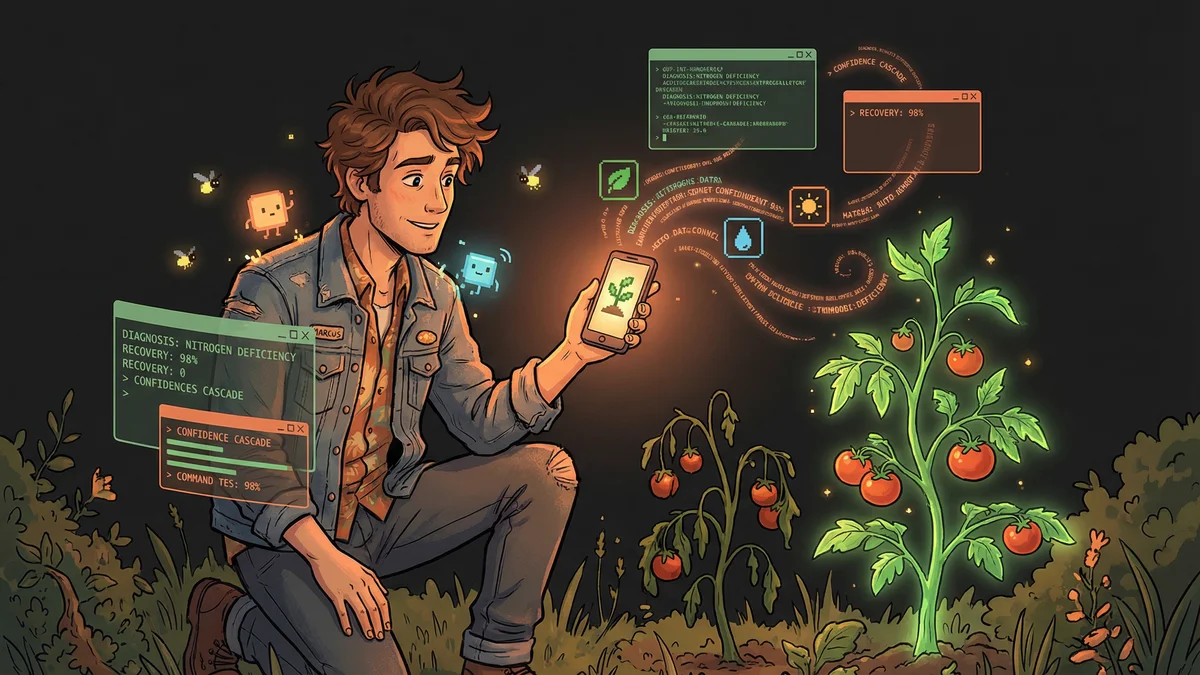
He’d notice yellowing on his tomato leaves. Previously, this would trigger a Google spiral: Is it nitrogen deficiency? Overwatering? Early blight? Fusarium wilt? Magnesium deficiency?
Now he photographs the leaves and waits three seconds.
“Nitrogen deficiency. Lower leaves yellowing while upper leaves remain green. Recommend applying balanced fertilizer or nitrogen-rich amendments like blood meal.”
Action. Not guessing.
How the AI Sees Plants
Apps like PictureThis and PlantIn use computer vision trained on massive image databases.
For plant identification, the AI learned from millions of photographs covering hundreds of thousands of species. It recognizes leaf shapes, flower structures, bark patterns, growth habits.
For disease diagnosis, training included images of healthy and sick plants across common conditions: fungal diseases, bacterial infections, nutrient deficiencies, pest damage, environmental stress.
When Marcus photographs a plant problem, the AI:
- Analyzes the visual patterns (color, texture, location of damage)
- Compares against its database of known conditions
- Suggests the most likely cause
- Provides treatment recommendations
The diagnosis isn’t always right. Complex problems, unusual conditions, and poor photo quality cause errors. But for common issues, accuracy is remarkably high.
The Confidence Cascade
Something shifted after Marcus’s first few successful diagnoses.
He sprayed fungicide on roses at the first sign of black spot — rather than waiting until leaves dropped. The roses recovered.
He adjusted watering when the app identified overwatering symptoms. The plant bounced back.
He fertilized when deficiencies appeared, rather than hoping the problem would resolve itself.
“Every save gave me confidence. I started trusting my ability to handle problems, because I had a tool that told me what the problem was.”
The app became preventive, not just reactive. Marcus now photographs plants routinely, catching issues before they become crises.
Beyond Diagnosis
Marcus discovered the apps offered more than disease identification:
Plant ID While Walking: He’d notice an interesting flower on a walk. Photograph. Instant identification. “That’s a coneflower — native, good for pollinators, drought-tolerant.”
This accumulated into knowledge. Over months, he learned common plants by sight, recognizing them before the app did.
Seasonal Reminders: Some apps integrate with weather data and growing calendars. Marcus gets notifications: “Time to start tomato seeds indoors” or “Frost warning tonight — protect tender plants.”
The reminders match his specific climate zone and growing season. Not generic advice, but timed instructions.
Planting Suggestions: Marcus described his shady side yard to ChatGPT: “Northeastern US, mostly shade, currently struggling with grass. What can I plant?”
The AI suggested hostas, ferns, astilbe, and wild ginger. When Marcus’s spouse — an experienced gardener — reviewed the list, she agreed it was solid.
“The AI basically gave me the advice a knowledgeable friend would give, except I could ask at 11pm without being annoying.”
The Garden Now
Three years of AI-assisted gardening produced results:
Vegetable garden: Tomatoes, peppers, cucumbers, zucchini. Annual yields that actually get eaten.
Flower beds: Perennials that return each year, supplemented with annuals for color. Bloom sequence from spring through fall.
Problem areas: The shady side yard now hosts a thriving shade garden. The corner with drainage issues became a rain garden with appropriate plantings.
Knowledge: Marcus recognizes common plants and problems without the app now. The AI was training wheels that taught him to ride.
“I’m still not an expert. But I’m competent. I can keep things alive. I can fix problems when they appear. That felt impossible four years ago.”
The Limits
AI plant diagnosis has boundaries Marcus learned to respect:
Photo quality matters: Blurry photos produce bad diagnoses. Proper lighting and focus make the AI smarter.
Complex situations confuse: When multiple problems co-occur — say, both pest damage AND nutrient deficiency — the AI might identify one but miss the other.
Local knowledge gaps: The app might say a plant is suitable for his zone, but his specific microclimate (a windy exposed spot, or a frost pocket) might disagree.
Some problems aren’t visible: Root issues don’t photograph well. Soil pH problems show symptoms but can’t be diagnosed visually.
For complex issues, Marcus now starts with the app, then confirms with garden center staff or online communities. AI as first pass, humans as verification.
The Bigger Picture
Marcus thinks about what changed beyond his garden.
“I always felt like gardening required special knowledge passed down through generations. Either you grew up with it or you didn’t. AI broke that barrier.”
He’s not replacing generational knowledge — he’s augmenting his lack of it. Learning at an accelerated pace because every question gets answered immediately.
“My grandmother knew plants by instinct. I know them by app. The end result is similar: healthy gardens. The path there is just different.”
His neighbors have started asking for advice. He usually pulls out his phone and shows them the app.
“I’m just the messenger. The AI is the expert. But my garden looks like I know what I’m doing, which is the point.”