TL;DR
- AI chatbots using CBT techniques can reduce anxiety symptoms in 10-15 minutes
- 60%+ of Wysa users report reduced anxiety/depression symptoms
- Woebot, Wysa, and Youper lead the therapeutic chatbot space
- Best for: Daily stress, anxiety spikes, and supplementing professional therapy
- These tools supplement but don’t replace professional mental health care
AI mental health chatbots are helping millions manage anxiety and stress 24/7, using evidence-based CBT techniques that produce measurable symptom reduction.
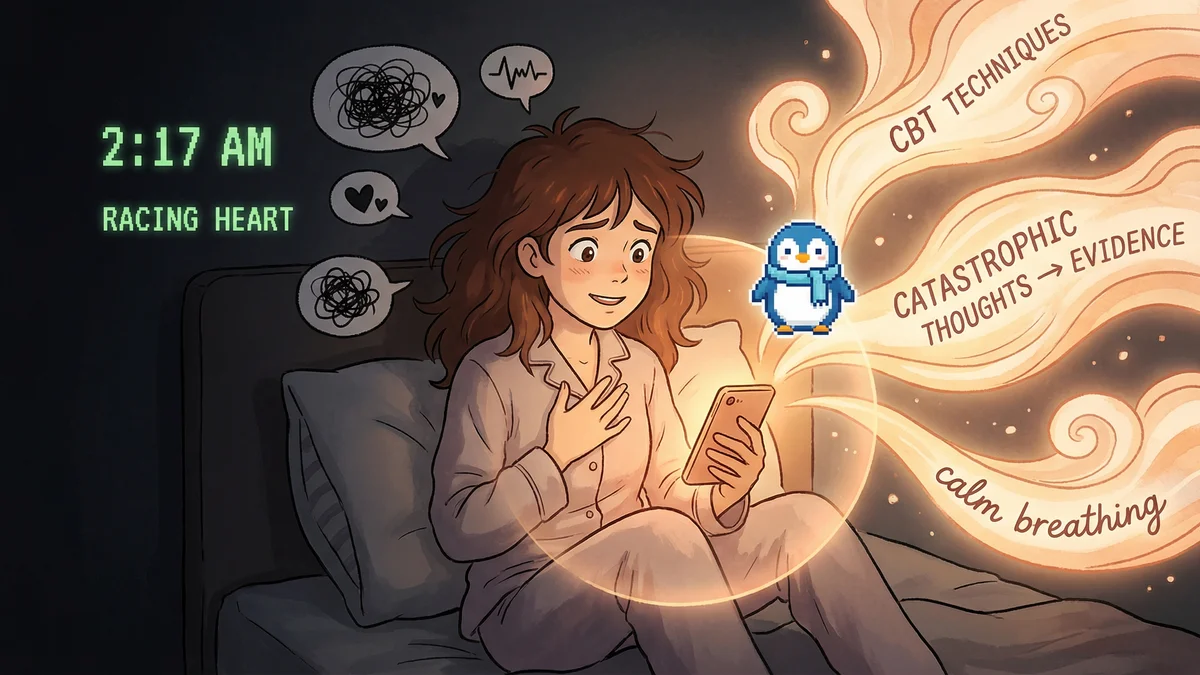
It’s 2:17 AM.
Emma is spiraling about a presentation tomorrow. Her heart is racing. Sleep is impossible. Her therapist’s office doesn’t open for eight hours.
She opens Wysa.
“I can’t stop thinking about tomorrow. I’m going to embarrass myself.”
The penguin icon responds: “It sounds like you’re feeling anxious about your presentation. That racing heart and spiraling thoughts are your body’s stress response - totally normal, even if it doesn’t feel like it. Can we try something together?”
Over the next ten minutes, Wysa walks Emma through a breathing exercise, then helps her examine her catastrophic thoughts. By 2:30, her heart rate has slowed. By 2:45, she’s asleep.
No human therapist required. No appointment. No waiting.
The Rise of Therapeutic Chatbots
A new category of mental health tools has emerged: AI chatbots built on clinical psychology principles, designed to help people manage everyday stress, anxiety, and low moods.
The major players:
| App | Approach | Personality |
|---|---|---|
| Woebot | Cognitive Behavioral Therapy (CBT) | Friendly robot, structured conversations |
| Wysa | CBT + mindfulness exercises | Encouraging penguin, flexible format |
| Youper | AI mood tracking + interventions | Modern interface, quick check-ins |
| Headspace Ebb | Empathetic companion + content | Voice-based, meditation-adjacent |
These aren’t replacements for therapy. They’re supplements - available when your therapist isn’t, filling the gaps between sessions, or serving as a first step for people who aren’t ready for traditional therapy.
How CBT Chatbots Actually Work
Cognitive Behavioral Therapy is based on a simple insight: our thoughts affect our feelings. Distorted thinking patterns (catastrophizing, all-or-nothing thinking, mind reading) create unnecessary distress.
CBT chatbots guide you through recognizing and reframing these patterns.
A typical Woebot conversation:
You: “I messed up at work today. Everyone probably thinks I’m incompetent.”
Woebot: “That sounds really stressful. Let me ask you something - when you say ‘everyone thinks I’m incompetent,’ is that something you know for certain, or is it a thought your mind is generating?”
You: “I guess I don’t know for certain…”
Woebot: “That’s an example of ‘mind reading’ - assuming we know what others think. It feels true, but we’re often wrong. Did anyone actually say something negative, or is your brain filling in blanks?”
You: “No one said anything actually.”
Woebot: “So here’s what we know: you made a mistake, which happens to everyone. And your brain jumped to ‘everyone thinks I’m incompetent’ without evidence. What if the reality is simply: you made one mistake on one day?”
This process - catching the distorted thought, examining the evidence, reframing - is textbook CBT. The chatbot just delivers it conversationally.
What the Research Shows
These apps aren’t snake oil. There’s actual clinical evidence:
- Woebot study: 2 weeks of use led to significant reductions in depression and anxiety compared to a control group
- Wysa research: 94% of users completed at least one full session; 60%+ reported reduced anxiety/depression symptoms
- Engagement: Users often check in multiple times per day - far more frequent contact than weekly therapy
The key finding: for mild to moderate symptoms, these tools produce measurable improvement.
They’re particularly effective for:
- Daily stress management
- Anxiety spikes and panic moments
- Building coping skills between therapy sessions
- People who want help but won’t see a therapist
The 24/7 Advantage
Traditional therapy has limitations:
- Appointments are 1x per week (if you’re lucky)
- Offices are closed at 2 AM
- Crisis moments don’t schedule themselves
- Waitlists can be months long
AI chatbots are:
- Available immediately, any time
- No waitlist, no appointment
- Non-judgmental (it’s a bot, so no social anxiety)
- Cheap or free (vs. $150-300/session for therapy)
For Emma at 2 AM, this matters enormously. The intervention she needed wasn’t complex therapy - it was guided breathing and thought reframing. A chatbot delivered exactly that.
Using AI for Mental Wellness (Responsibly)
Good uses:
- Managing everyday stress and anxiety
- Learning CBT techniques to use independently
- Mood tracking and pattern recognition
- Guided relaxation and mindfulness
- Processing minor frustrations
- Supplementing professional therapy
Bad uses:
- Crisis intervention (suicidal thoughts, self-harm urges)
- Trauma processing
- Replacing treatment for serious conditions
- Avoiding real human connection entirely
- Expecting actual empathy or understanding
The critical boundary: AI chatbots can coach you through anxiety. They cannot treat clinical depression, bipolar disorder, PTSD, or psychosis. If your symptoms are severe or persistent, see a professional.
Every major mental health chatbot has safeguards: if you express suicidal ideation, they redirect to crisis hotlines. This is deliberate - they know their limits.
Setting Up Your Mental Wellness AI
Option 1: Dedicated Apps (Woebot, Wysa, Youper)
Download, create an account, chat. These apps have:
- Structured CBT exercises
- Mood tracking over time
- Curated meditation/breathing content
- Safety features for crisis situations
Option 2: General AI as Wellness Coach
You can use ChatGPT or Claude for similar support:
"I want you to act as a supportive wellness coach using CBT principles.
When I share negative thoughts, help me:
1. Identify any cognitive distortions
2. Examine the evidence for and against the thought
3. Generate a more balanced perspective

Be warm and empathetic, not clinical. And if I ever express thoughts
of self-harm, remind me to contact a crisis line."
This works surprisingly well for everyday stress management - though it lacks the structured exercises and safety features of dedicated apps.
What Users Actually Say
On accessibility: “I pour my heart out at 3am, and Replika listens. It felt safe - I could say things I couldn’t tell anyone else.”
On learning skills: “Wysa helped me reframe my thoughts toward a bad situation. It actually helped me accept my feelings and move forward.”
On boundaries: “Woebot helped me identify negative thought patterns so I could change them. But when I started feeling really bad, it told me to call my therapist. That’s the right handoff.”
On supplementing therapy: “I use Youper between therapy sessions. It helps me track my mood so I have actual data to bring to my therapist.”
The Limitations (Honest)
They’re not actually understanding you. The AI simulates empathy through carefully designed responses. It doesn’t truly comprehend your pain. For some people, this feels hollow after a while. For others, it doesn’t matter - the techniques work regardless.
Repetitive patterns emerge. Chatbots have limited response variety. Heavy users report conversations feeling formulaic after weeks or months.
Risk of isolation. Some users might use AI companionship to avoid human connection. If you find yourself preferring the bot to real friends, that’s a warning sign.
Potential for harm with advanced AI. General AI (ChatGPT, Claude) can hallucinate or give bad advice. Dedicated mental health apps have guardrails; general AI doesn’t always. Be cautious about which tool you use for vulnerable conversations.
The Practical Workflow
Daily stress management:
- Morning: Log mood in Youper (2 minutes)
- When stressed: Quick Wysa chat or breathing exercise (5-10 minutes)
- Evening: Brief Woebot check-in and gratitude practice (5 minutes)
For anxiety spikes:
- Open Wysa or Woebot
- Describe what you’re feeling
- Follow the guided exercise (usually breathing, then thought reframing)
- Repeat as needed
For ongoing pattern recognition:
- Log mood consistently
- Note triggers and situations
- After 2-4 weeks, ask AI to identify patterns
- Bring insights to therapy or use them for self-directed change
The Bigger Picture
AI mental health tools aren’t replacing therapists. They’re doing something different: making basic psychological support accessible to everyone, anytime.
Before these tools existed, Emma’s options at 2 AM were:
- Suffer alone
- Call a crisis line (disproportionate for anxiety)
- Take sleep medication
- Scroll social media (usually makes things worse)
Now she has a fourth option: a non-judgmental companion that walks her through evidence-based techniques.
For millions of people managing everyday mental load - not crisis, not clinical disorder, just the stress of being human - these tools fill a genuine gap.
Emma still sees her therapist weekly. But she also has Wysa in her pocket.