TL;DR
- AI research tools reduce literature review time from 4-8 weeks to approximately 17 hours
- Elicit finds papers by meaning (not keywords), ResearchRabbit recommends related work, Connected Papers visualizes citation networks
- One PhD student completed a 15-page literature review in 5 days using the full tool stack
- Best for: Graduate students, researchers, anyone synthesizing academic literature
- AI accelerates finding and organizing - the analytical thinking must still be yours
AI research tools have transformed literature reviews from months-long slogs into days-long sprints, democratizing access to comprehensive academic research.
When Dr. Chen started her PhD, literature reviews took months.
You’d search databases. Download hundreds of PDFs. Read abstracts. Read papers. Take notes. Organize notes. Find connections. Miss papers. Realize you missed papers. Start over.
Her advisor told her: “The literature review is where most dissertations go to die.”
Three years later, her students were doing lit reviews in days.
The Old Way vs. The New Way
Traditional Literature Review (circa 2020):
- Search PubMed/Google Scholar with keywords
- Download ~200 papers based on titles
- Read abstracts of all 200 (2-3 weeks)
- Full-read ~50 relevant papers (4-6 weeks)
- Take notes in Word/Notion (ongoing)
- Organize by theme manually
- Discover you missed a seminal paper
- Repeat
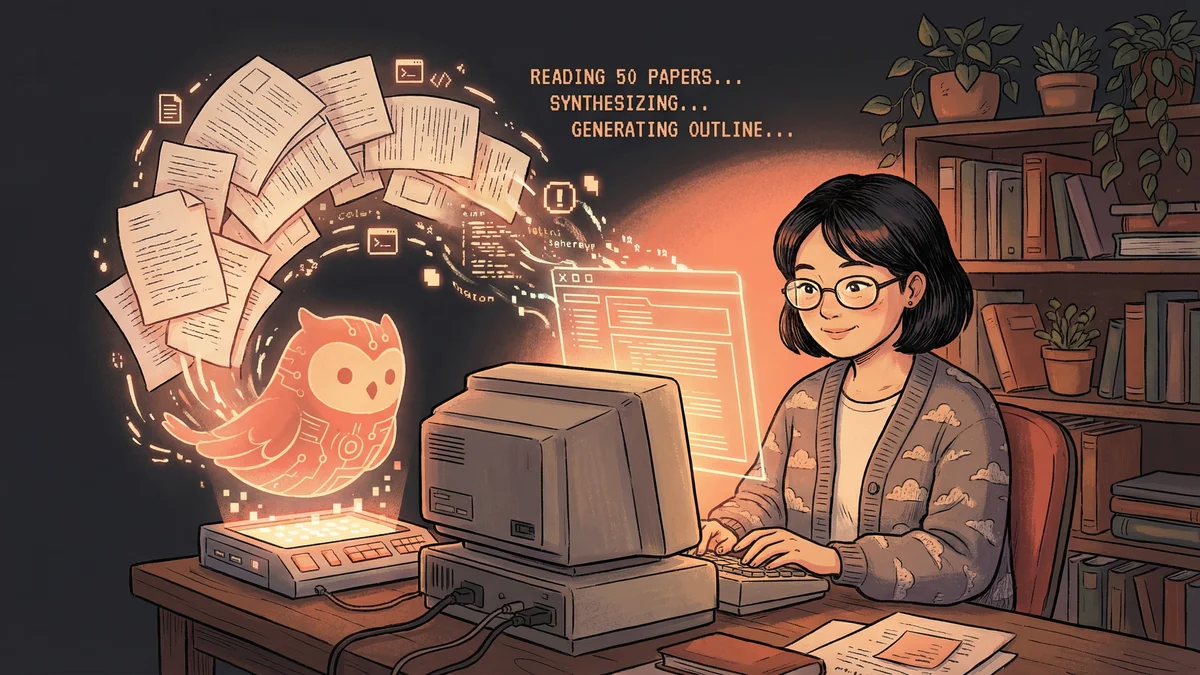
AI-Assisted Literature Review (2025):
- Ask Elicit a research question
- Get relevant papers with AI-extracted summaries
- Load into ResearchRabbit for discovery
- Visualize citation network with Connected Papers
- Synthesize across papers with Claude
- Verify claims with Scite
Same depth of review. Fraction of the time.
The Research Stack
Dr. Chen’s students use a specific combination of tools, each doing what it does best:
Elicit - The Discovery Engine
Elicit doesn’t search by keywords. It searches by meaning.
Ask: “What are the effects of social media on adolescent mental health?”
Instead of matching keywords, Elicit understands what you’re asking and finds papers that address that question - even if they use different terminology.
Then it extracts structured data: study design, sample size, key findings, limitations. You get a spreadsheet of research, not a list of links.
The power move: Elicit’s systematic review workflow can screen thousands of papers based on inclusion criteria you define. What used to require a team of grad students can now be automated.
ResearchRabbit - The Recommendation Engine
ResearchRabbit is “Spotify for papers.”
You add a few papers you know are relevant. ResearchRabbit recommends related work based on citation networks, co-authors, and semantic similarity. It keeps learning as you add more.
It answers: “What papers am I missing?”
Create a collection. Come back weekly. See what’s new in your field.
Connected Papers - The Visualization Engine
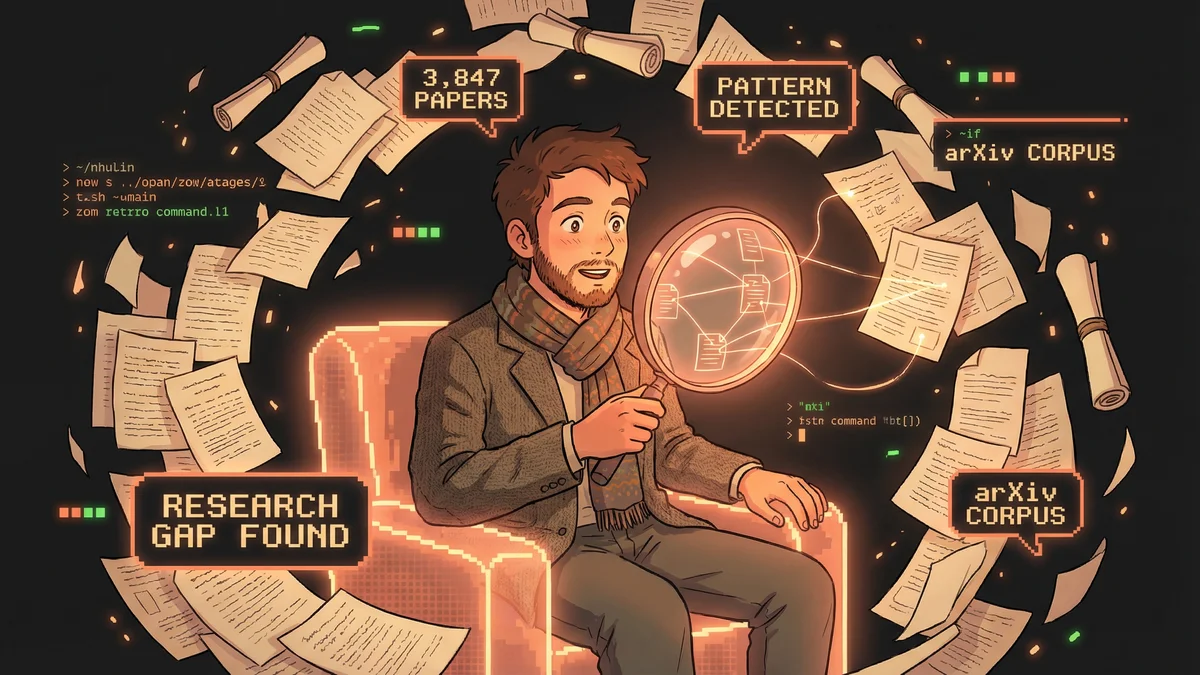
Connected Papers shows you the citation landscape as a graph. Nodes are papers. Edges are citation relationships.
Why this matters: You instantly see:
- Seminal papers (big nodes with many connections)
- Recent papers building on them
- Outlier papers with different perspectives
- Gaps where no connections exist
It’s the bird’s eye view you can’t get from reading abstracts sequentially.
Scite - The Verification Engine
Here’s a problem: papers get cited. But are they cited as supporting evidence or contradicting evidence?
Scite classifies citations:
- Supporting: “Smith et al. (2020) confirmed that…”
- Contrasting: “Unlike Smith et al. (2020), we found…”
- Mentioning: “Smith et al. (2020) studied…”
Before you cite a paper as evidence for your claim, check if it’s been refuted. Scite tells you instantly.
It also prevents the ChatGPT hallucination problem: Scite only surfaces citations that actually exist.
Consensus - The Question Answerer
What if you just want to know: “Does X cause Y according to research?”
Consensus searches the literature and gives you a summary with citations. It even has a “Consensus Meter” showing how much studies agree.
Example query: “Does creatine supplementation affect hair loss?”
Consensus returns: “8 studies found no effect, 2 found possible association, 1 inconclusive” with links to each.
The Workflow in Practice
Dr. Chen’s student Marcus needed to review literature on “AI bias in hiring algorithms” for his thesis.
Day 1: Discovery (2 hours)
- Asked Elicit: “What research exists on bias in AI hiring systems?”
- Got 50+ papers with summaries, sample sizes, findings extracted
- Exported to spreadsheet, filtered to last 5 years
- Identified 25 core papers
Day 2: Expansion (3 hours)
- Added top 5 papers to ResearchRabbit
- Got 40+ recommendations he hadn’t found
- Created Connected Papers graph from seed paper
- Identified 3 seminal papers he’d missed
- Added those to collection, got more recommendations
Day 3: Synthesis (4 hours)
- Loaded 30 most relevant PDFs into Claude
- Asked: “What are the main themes across these papers regarding AI hiring bias?”
- Claude identified: audit studies, disparate impact measurement, algorithmic transparency approaches
- Asked Claude to organize papers by theme
- Got structured outline of literature
Day 4: Verification (2 hours)
- Used Scite to check key citations
- Found one widely-cited paper had since been contradicted
- Removed from “supporting evidence” section
- Used Consensus to answer specific factual questions
Day 5: Writing (6 hours)
- Wrote literature review section using Claude-generated outline
- Filled in with direct quotes and specific findings
- Used Claude for paragraph feedback
- Final: 15-page literature review
Total time: ~17 hours across 5 days.
Traditional method for the same depth? 4-8 weeks.
What AI Can and Can’t Do Here
AI CAN:
- Find relevant papers faster than keyword search
- Extract structured data from abstracts
- Show citation relationships visually
- Summarize across documents
- Identify what you might be missing
- Check if claims have been refuted
AI CANNOT:
- Replace your analytical thinking
- Guarantee completeness
- Catch obscure but important papers
- Understand nuance the way a domain expert does
- Write your synthesis for you (ethically)
Marcus didn’t have AI write his literature review. He used AI to accelerate the finding, organizing, and structuring - then wrote the analysis himself. The insights about how different papers related, the gaps he identified, the argument he built - that was his thinking.
The Citation Trap
One danger: AI can hallucinate citations.
Ask ChatGPT for “papers on X” and it might invent realistic-sounding but non-existent references. Students have been caught citing fake papers.
The workaround: Use AI tools that connect to actual databases.
- Elicit searches Semantic Scholar (200M+ papers)
- Consensus searches peer-reviewed literature
- Scite only shows citations that exist
If you use general AI (ChatGPT, Claude) for research ideas, always verify references exist before citing.
The Ethical Framework
Is this cheating? Here’s how Dr. Chen frames it for her students:
Acceptable:
- Using AI to find papers (like using a library database)
- Using AI to summarize papers you will read (like using an abstract)
- Using AI to identify themes across papers you understand
- Using AI to verify claims (like using fact-checking)
Not acceptable:
- Having AI write your analysis without understanding the papers
- Citing papers you haven’t actually read
- Presenting AI’s synthesis as your original insight
- Using AI-generated text without disclosure (if required)
The literature review’s purpose is demonstrating you understand your field. AI helps you survey the field faster - but the understanding must be yours.
The Democratization Effect
Before these tools, literature reviews favored:
- Students at research universities with library access
- Students with advisors who knew the field
- Students who could afford research assistants
- Native English speakers reading English papers
Now, a first-gen PhD student at a regional university has access to the same discovery tools as someone at Harvard. They can survey literature as efficiently as teams could.
“It doesn’t make research easier,” Dr. Chen says. “It makes research fairer.”
The New Bottleneck
When literature review takes months, it’s the bottleneck. When it takes days, the bottleneck shifts.
Now the limiting factor is:
- Quality of thinking: Can you synthesize what you found?
- Novelty of contribution: What does your work add?
- Writing quality: Can you communicate clearly?
These are arguably more important than “can you spend 6 months reading papers.” AI removes the grunt work so researchers can focus on what matters: generating new knowledge.
Marcus finished his lit review in a week. He spent the time saved designing a better study, collecting more data, and iterating on his analysis.
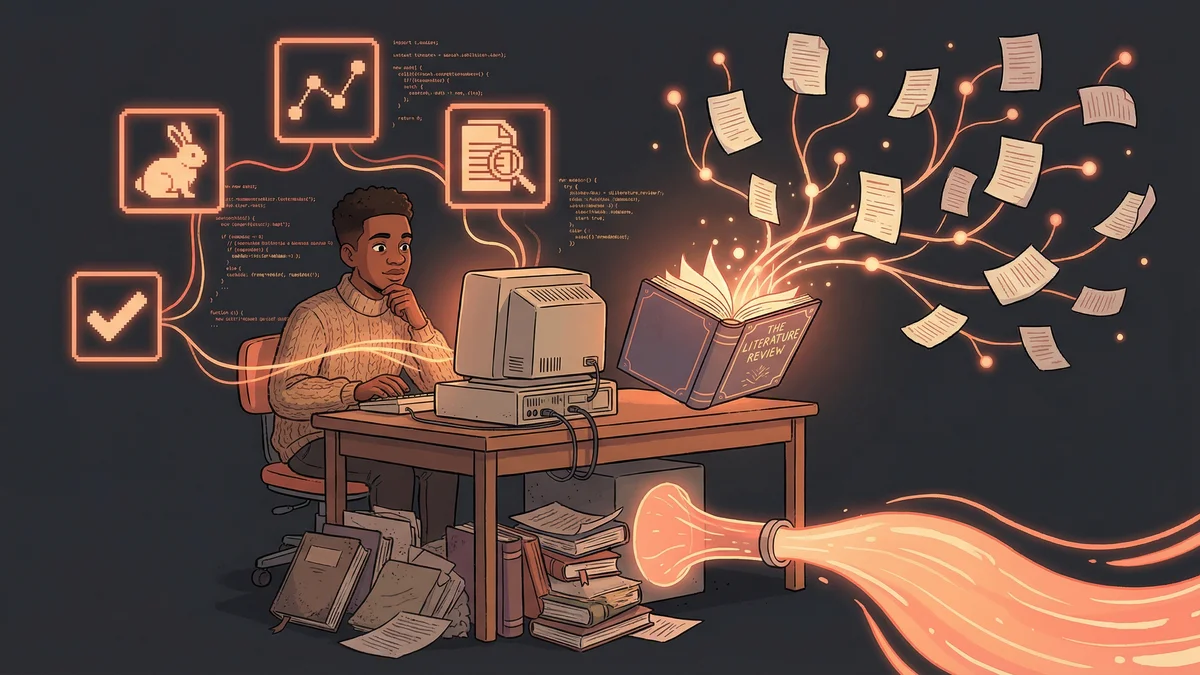
The AI didn’t do his PhD. It just cleared the path.