TL;DR
- Solo e-commerce owner increased conversions 25% and cut cart abandonment from 73% to 58% with AI chatbot
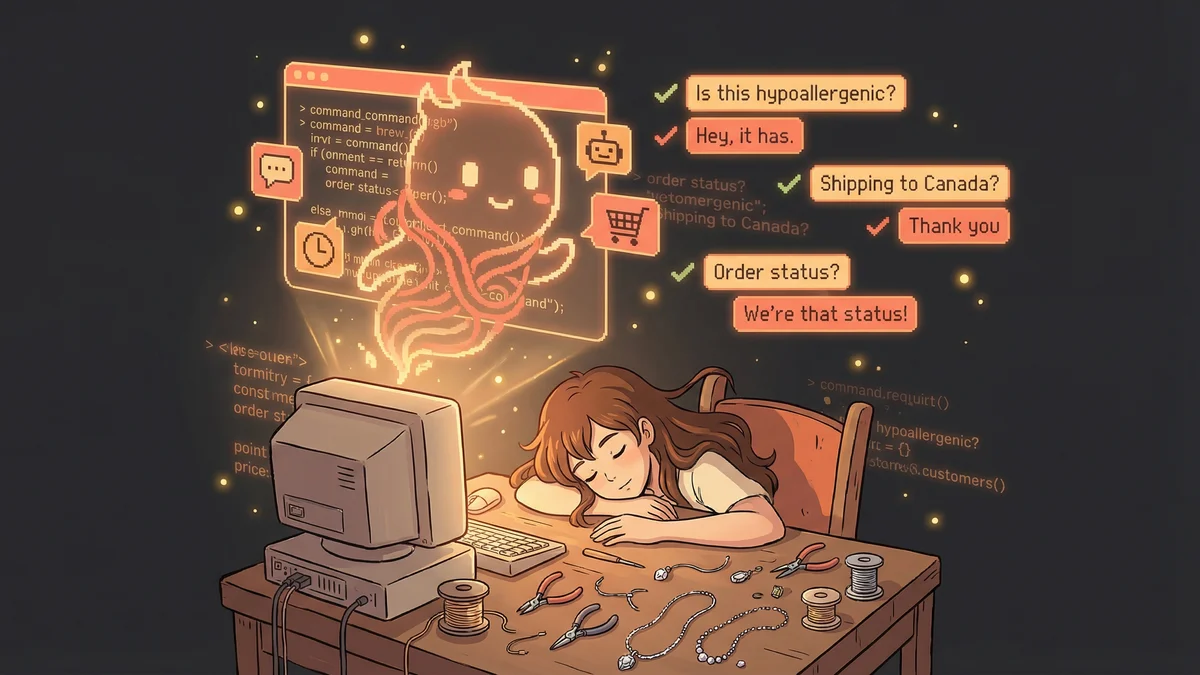
- AI answered questions at 2am that would have been lost sales - like “Is this hypoallergenic?” during checkout hesitation
- Time saved: 8-10 hours per week on repetitive customer service questions
- Best for: Solo/small e-commerce operators who can’t provide 24/7 human support
- Key lesson: Train the chatbot on YOUR specific products and policies, then review conversation logs weekly to fix gaps
A solo Shopify jewelry store added an AI chatbot and saw conversion rates jump 25% - primarily from answering product questions during checkout hesitation at hours when the owner was asleep.
Sarah ran an online jewelry boutique called SparkleCraft.
Everything handmade. Every piece unique. Every order packed personally with a thank-you note.
What she couldn’t do personally: answer customer questions at 11pm on a Tuesday.
“I’d wake up to emails. ‘Is this necklace real sterling silver?’ ‘Can I get this in a different size?’ ‘When will my order ship?’ Simple questions that probably cost me sales because I couldn’t answer fast enough.”
The math was brutal. If a customer asked a question at 10pm and Sarah answered at 8am the next morning, that was ten hours. Ten hours for someone to change their mind, find a competitor, or simply forget about the impulse purchase that originally brought them to her site.
The Abandoned Cart Graveyard
Sarah’s analytics told a story she already suspected.
Cart abandonment rate: 73%.
Some of that was normal. People browse, add items, never intend to buy. But Sarah noticed patterns. Visitors would add a $150 necklace to cart, spend several minutes on the product page, then leave.
“They had questions. I could feel it. ‘Is this going to look good with my skin tone?’ ‘Will this irritate my ears?’ ‘What’s your return policy?’ I just wasn’t there to answer.”
She tried adding a detailed FAQ page. Some visitors found it. Most didn’t.
She tried putting all the information in product descriptions. But descriptions can only get so long before customers stop reading.
The core problem remained: customers had questions at moments when Sarah was sleeping, eating dinner, or making jewelry. And questions unanswered were sales lost.
The Digital Employee
Sarah installed Tidio, a chat widget for her Shopify store.
It came with an AI assistant that could be trained on her specific business. Not a generic chatbot that answered “I don’t understand” to everything — an assistant that actually knew her products.
She spent an afternoon feeding it information:
- All materials used (sterling silver, gold fill, hypoallergenic options)
- Sizing information and adjustment policies
- Shipping timeframes and carriers
- Return policy details
- Answers to questions customers frequently asked via email
Then she connected it to her shipping app so it could actually look up order status in real-time.
The result: a customer could visit at midnight, ask “Is the Luna necklace hypoallergenic?” and get an immediate answer. They could ask “Where’s my order?” and get tracking information pulled from the actual system.
No delays. No waiting for the business owner to wake up.
The Night the Chatbot Saved a Sale
The first real success came within a week.
A customer browsed the site around 2am. Added a $150 custom bracelet to cart. Then sat on the checkout page for several minutes.
The chatbot triggered: “Hi! Let me know if you have any questions about your order.”
The customer responded: “I’m allergic to nickel. Is this safe for sensitive skin?”
The AI answered immediately, explaining that the bracelet was made with nickel-free materials and included a link to the detailed materials information.
Customer completed checkout. $150 sale at 2am while Sarah was asleep.
“In the old world, that customer probably would have abandoned the cart. Maybe emailed me, maybe not. The question would have lingered and the moment would have passed.”
The Time Recovery
Beyond sales, the chatbot recovered time.
Before Tidio, Sarah answered roughly 40 customer emails per week. Many were simple questions the chatbot could now handle automatically.
After Tidio, she answered roughly 12 emails per week. The chatbot handled the rest.
Time saved: 8-10 hours per week.
That was time she could spend making jewelry, photographing new pieces, or designing marketing campaigns. The repetitive question-answering that used to consume her mornings now happened without her involvement.
“I wasn’t just working fewer hours. I was working on the right things. Making things instead of answering ‘What’s my tracking number?’ for the hundredth time.”
The Conversion Lift
Three months after implementing the chatbot, Sarah pulled her numbers.
Response time to customer questions: under 30 seconds, average. (Previously: 6-12 hours depending on when she saw the email.)
Conversion rate: up roughly 25% compared to the previous three months.
Cart abandonment: down from 73% to approximately 58%.
“The chatbot didn’t just save time. It made money. Those quick answers at the moment of consideration — that was the difference.”
The 25% conversion lift on her existing traffic was significant. No additional advertising spend. Same number of visitors. Just more of them completing purchases because their questions got answered immediately.
The Limits
The chatbot wasn’t perfect.
One customer asked about combining elements from two different designs into a custom piece. The AI’s response was generic: “For custom requests, please email us with details!”
Not wrong, but not helpful either. Sarah updated the chatbot’s training to provide more specific guidance about custom orders — what information to include, typical pricing ranges, turnaround times.
Another time, the chatbot confidently answered a question about international shipping to a country Sarah didn’t actually ship to. She’d forgotten to update the restriction list.
“The AI only knows what you teach it. It’s not making things up — it’s working from the information you provide. If that information is incomplete, it’ll have gaps.”
She learned to review the chatbot’s conversation logs weekly, identifying questions it struggled with and updating its knowledge base accordingly.
The Balance
Sarah worried initially about losing the personal touch.
Her brand was handmade, personal, artisan. Would a chatbot feel corporate? Would customers know they were talking to AI?
Her solution: transparency and handoff.
The chatbot identified itself. It handled simple questions. But for anything complex or sensitive, it offered to connect the customer with Sarah directly. The AI was first line of defense, not the entire customer service department.
“Most customers don’t care if a bot answers ‘What are your shipping times?’ They just want the answer. But when they need the personal touch — a gift question, a complaint, something emotional — they reach me.”
This hybrid approach let Sarah scale her availability without sacrificing authenticity. The AI handled volume; she handled relationships.
The New Normal
Sarah still makes jewelry by hand. Still packs orders with personal notes. Still responds to complex customer inquiries herself.
But she’s no longer the bottleneck on simple questions. The chatbot works 24/7, holidays included, never takes breaks, never gets overwhelmed during busy seasons.
“I used to feel guilty about not being available. Now I feel smart about being available when it matters.”
Her solo business operates like it has a customer service team. Customers get instant responses. Questions don’t pile up overnight. The moments when visitors are most ready to buy are the moments they get helped.
“The chatbot isn’t replacing me. It’s representing me when I can’t be there.”