TL;DR
- Custom GPT trained on 5 years of campaign notes reduced DM prep from 15 hours to 5
- AI remembers every NPC, plot thread, and session detail for instant mid-session lookups
- Works as a “co-DM” for consistency, not a replacement for human creativity
- Best for: long-running tabletop campaigns with extensive lore and history
- Key lesson: AI handles the administrative burden that kills DM creativity
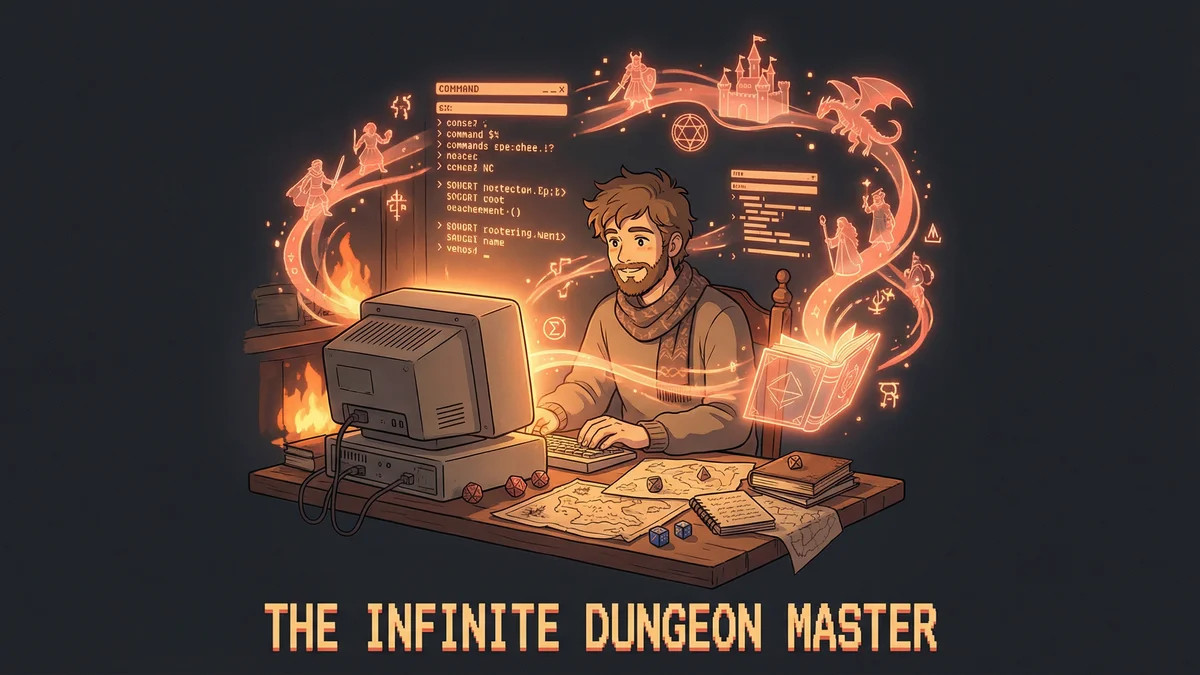
A burned-out Dungeon Master trained a custom GPT on five years of campaign history, cutting prep time by two-thirds and rediscovering his love of the game.
Alex had been running the same Dungeons & Dragons campaign for five years.
Five years of NPCs. Five years of plot threads. Five years of “Remember that shopkeeper from the port city? What was his name again?”
He loved it. He also wanted to quit.
Not because the story wasn’t good. Because keeping track of it all was crushing him. Fifteen hours of prep for a four-hour session. Spreadsheets of character relationships. Notebooks full of lore nobody would ever ask about — until they did.
Then he discovered how to give an AI his campaign’s memory.
The DM’s Burden
Dungeon Masters face a unique creative challenge: they’re improvisers who need encyclopedic memory.
Players can ask anything. “What was that prophecy the blind oracle gave us three years ago?” “Does this symbol match the one on the cultist’s robes from chapter two?”
Most DMs fake it. They make something up and hope players don’t notice inconsistencies.
Alex couldn’t do that anymore. His players were too invested. They took better notes than he did.
The campaign had become richer than he could hold in his head. Which sounds like success. It felt like drowning.
The Custom GPT Experiment
Alex had heard about ChatGPT being useful for D&D — generating NPC names, plot hooks, monster descriptions. Useful but generic. The AI didn’t know his world.
What if it could?
He created a custom GPT and fed it everything: campaign notes, session summaries, character backstories, world lore, relationship maps. Years of accumulated mythology in one AI brain.
Then he tested it.
“Who is the shopkeeper in Port Valeria who always quotes ancient proverbs when haggling?”
The AI responded: “That would be Dormund the Brass, proprietor of Dormund’s Curious Goods. He’s known for greeting customers with ‘The tide waits not for the deliberate fish’ and similar sayings. His daughter married into the Blackwell family in Session 42, which created tension given the Blackwells’ connection to the merchant guild conspiracy.”
Alex stared at his screen. He’d forgotten about the daughter entirely.
What Changed
The custom GPT became Alex’s co-DM. Not the one who runs the game — the one who remembers everything.
Mid-session saves: When players asked about obscure NPCs, Alex could discreetly query the AI. No more fumbling through notes or contradicting established lore.
Prep acceleration: Instead of re-reading old sessions to maintain consistency, Alex could ask: “What unresolved plot threads exist related to the southern provinces?” The AI would list them, with relevant context.
Creative partnership: The AI could suggest how new plot elements might connect to existing lore. “If the plague originated in Thornwood, that could tie to the druids’ corruption arc from Year 2.”
Player handouts: Alex started generating in-character documents — letters from NPCs, prophecies, historical accounts — that maintained voice consistency because the AI knew each character’s speech patterns.
His prep time dropped from fifteen hours to five. The quality went up.
The Joy Returned
“I used to dread Thursdays,” Alex says. “Not because I didn’t love the game — I did. But the weight of keeping everything straight was exhausting. Every session felt like a final exam I hadn’t studied for.”
The AI changed the equation.
“Now it feels like I have a co-DM sitting next to me. One who never forgets, never gets tired, and genuinely seems excited about my world. It sounds weird, but talking through plot ideas with the AI is fun. It riffs. It surprises me with connections I didn’t see.”
His players noticed the difference too. Sessions became more immersive. Callbacks to early campaign moments started appearing naturally. The world felt more alive because someone — something — was helping maintain its consistency.
How Other DMs Are Using AI
Alex’s approach represents the deep end. Other Dungeon Masters use AI for lighter lifts:
The Improviser’s Toolkit
Tools like ChatGPT and Claude excel at real-time generation:
- “Give me five backstory ideas for a tavern keeper in a haunted port city”
- “Describe what this dungeon room looks like — ancient elven, overgrown with vines”
- “Generate a riddle for a sphinx guarding a bridge”
DMs keep these prompts ready during sessions. When players zig instead of zag, the AI fills in the blank spaces.
Visual Enhancement
Image generators like Midjourney transform “theater of the mind” into actual visuals. A DM types “moss-covered stone altar, moonlit forest, fantasy art style” and shows players what their characters see.
For games that rely on imagination, pictures shouldn’t matter. But players love them. Having custom art for NPCs, locations, and items elevates home games to Critical Role production levels.
World-Building Platforms
Tools like World Anvil and LegendKeeper integrate AI into their campaign management features:
- Drop a pin on your map and generate the local lore
- Create template descriptions for kingdoms, magic systems, religions
- Maintain linked wikis that the AI can search and reference
These platforms turn scattered notes into searchable databases. The AI becomes librarian as much as creator.
The Human Element Remains
Despite all the AI assistance, Alex is clear about what matters:
“The AI doesn’t run my game. It doesn’t make creative decisions. It’s infrastructure.”
Players come for the human element — the DM who reacts to their chaos, who genuinely doesn’t know what they’ll do next, who laughs at the table when something unexpected happens.
AI can’t replicate the social experience of tabletop gaming. It can’t feel the tension of a clutch dice roll or share in the triumph of a hard-won victory.
What it can do is handle the administrative burden that kills creative energy.
“I’m not outsourcing my job as DM,” Alex says. “I’m outsourcing the parts that were making me want to quit. The AI remembers so I can create. That’s the deal.”
The Table Keeps Growing
Five years in, Alex’s campaign shows no signs of ending. The AI has become part of his creative process — a collaborator that makes the story richer without taking over.
Last month, a player asked about a minor NPC they’d met once, four years ago.
Alex smiled. For the first time in years, he had the answer.