TL;DR
- Health food store owner reduced excess inventory 15% and increased sales 10% using AI-powered POS analytics
- AI spotted patterns invisible to gut-feel ordering: seasonal spikes, slow movers, stockout frequency
- System analyzed 2 years of sales data to make specific reorder recommendations and bundle suggestions
- Best for: Small retailers with POS systems who want data-driven inventory without hiring an analyst
- Key lesson: 12 years of experience plus AI beats 12 years of experience alone - combine local knowledge with data
A health food store owner with 12 years of experience discovered he was missing obvious inventory patterns - AI analytics reduced his dead stock by 15% and increased sales 10% by ensuring bestsellers stayed in stock.
Jamal had run his neighborhood health food store for twelve years.
He knew his customers. He knew which supplements flew off the shelves and which gathered dust. He knew the rhythms of the business — busy Saturdays, slow Mondays, the January rush of resolution-makers.
What he didn’t know: he was sitting on thousands of dollars in dead inventory while simultaneously running out of bestsellers every month.
“I thought I had a feel for the numbers. Turns out I had patterns I wasn’t seeing.”
The Gut-Feel Ordering System
Small retailers live on instinct.
You walk the store, notice empty spots, make a mental note to reorder. You glance at what’s selling well and stock up. You remember which vendor has good lead times and which doesn’t.
This mostly works. Jamal had kept the store profitable for over a decade using this system.
But “mostly works” has costs.
His expensive probiotics — $40-60 bottles — sat on shelves for months. He’d ordered them because they seemed like “health food store essentials,” but his customer base preferred the more affordable options.
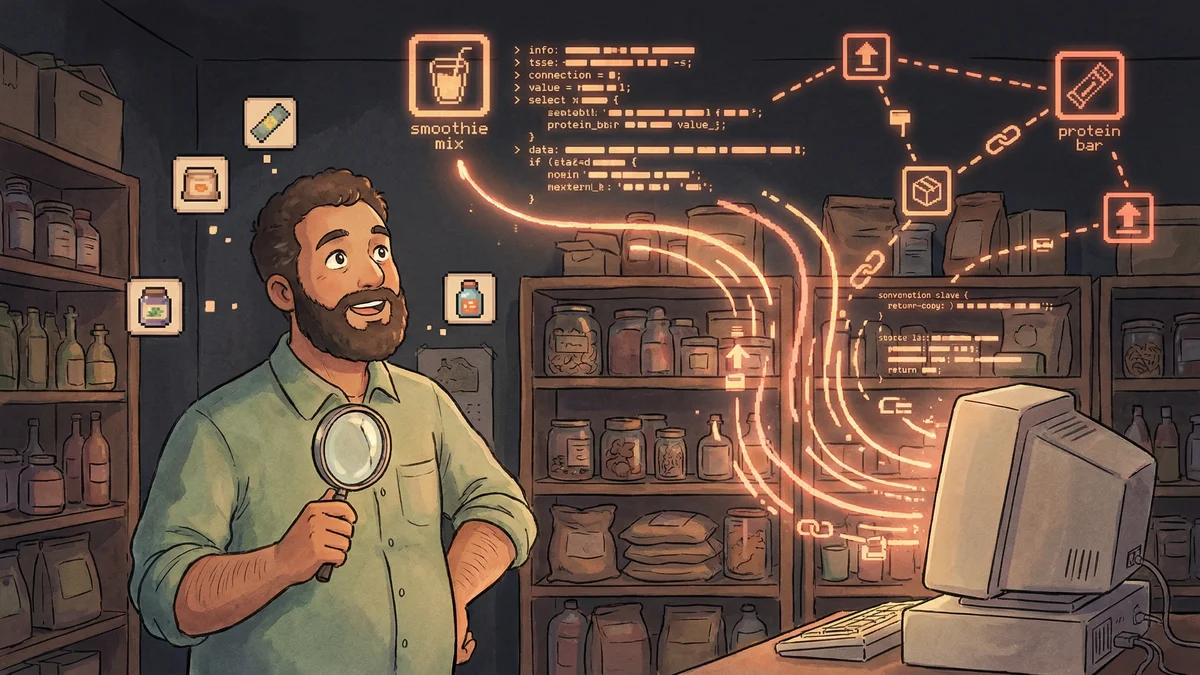
Meanwhile, his top-selling smoothie mix ran out almost every month. He’d reorder, wait for delivery, lose sales during the gap, then repeat the cycle.
“I thought I was being attentive. The AI showed me I was being reactive. Always responding to problems instead of preventing them.”
The Inventory Intelligence
Jamal’s POS system added an AI-powered inventory management feature. He’d been paying for the POS anyway, so he figured he’d try the upgrade.
The AI analyzed two years of his sales data. Not general retail data — his data. What sold, when it sold, how fast it moved, seasonal patterns, the relationships between products.
Within a week, it started making predictions:
January Alert: “Protein bars and vitamin D supplements typically spike 20% in January. Consider increasing order quantities by the third week of December.”
Jamal knew January was busy for health goals. What he hadn’t done was translate that knowledge into specific reorder timing. The AI made it concrete.
Slow-Mover Alert: “These 8 probiotic SKUs have moved less than 6 units each in the past 90 days. Average shelf time: 4+ months.”
He’d been buying those probiotics because he thought a health food store “should” carry them. The data said his customers disagreed.
Stockout Warning: “Smoothie mix has run out 9 times in the past 12 months. Current velocity suggests stockout in 8 days. Recommend reorder now.”
Nine stockouts in a year. He knew they happened. He hadn’t realized how often.
The 15% Reduction
Jamal started following the AI’s suggestions.
He cut orders on slow-moving supplements. Some he stopped carrying entirely. Others he reduced to minimal stock.
He boosted orders on fast movers and timed them earlier in the cycle to prevent gaps.
Six-month results:
- 15% reduction in excess inventory (products sitting unsold)
- Fewer stockouts on popular items
- Sales up approximately 10%
The sales increase surprised him most. He expected inventory optimization to save money on carrying costs. He didn’t expect it to make money.
“Turns out customers were coming in, not finding what they wanted, and leaving. When the bestsellers were actually in stock, they bought them. Simple, but I wasn’t seeing it.”
The Bundle Insight
The AI didn’t just predict — it suggested.
One recommendation: bundle slow-moving cereal with popular almond milk.
The cereal had been sitting. The almond milk was a consistent seller. The AI noticed that other retailers had success pairing them for a discount.
“Free almond milk with 2 boxes of cereal.”
The cereal cleared out in two weeks. Customers felt like they got a deal. Jamal moved inventory that would have sat for months.
“I would never have thought of that pairing. The AI looked at what other stores sold together and suggested what might work for mine.”
The Local Override
The AI wasn’t always right.
It once suggested stocking a trendy new supplement that was selling well nationally. Big social media buzz, influencer endorsements, the whole thing.
Jamal ordered a small quantity. It barely moved.
“My customers are mostly older, established people who come here for reliability, not trends. What’s hot on TikTok isn’t what’s hot in my store.”
He learned to treat AI suggestions as starting points, not commands. The AI saw macro patterns; he knew his specific customers. Together, they made better decisions than either alone.
He also adjusted the AI’s settings to weight his store’s historical data more heavily than general market trends. Post-adjustment, suggestions aligned better with his actual clientele.
The Time Recovery
Beyond inventory accuracy, Jamal got time back.
His old process: walk the store weekly, check every shelf, manually compare to mental notes of what sold, decide what to reorder, call or email suppliers.
His new process: review AI recommendations weekly, approve or adjust, orders flow out.
Time saved: roughly 5 hours per week.
Those hours went back into customer relationships. More time on the floor talking to regulars. More time researching new products that fit his customer base. More time being a store owner rather than an inventory manager.
The Pattern Reader
What changed most for Jamal was how he thought about his own data.
“I’d been running this store for twelve years, looking at the same shelves every day. The AI looked at twelve years of transactions and saw things I’d never noticed.”
Small patterns: certain vitamins sold better on weekends (people shopping for the week ahead). Others sold better on Mondays (customers restocking after a weekend of visitors).
Seasonal patterns: specific products spiked during flu season, during allergy season, during back-to-school.
Customer patterns: when someone bought product X, they often came back for product Y within 30 days.
“I thought I knew my business. The AI showed me I knew part of it. The numbers knew more.”
The New Ritual
Jamal still walks the store. He still talks to customers. He still relies on instinct for some decisions.
But he checks the AI dashboard every Monday morning. He reviews its predictions, compares them to his gut sense, and usually follows the recommendations.
“The AI is like having an analyst on staff who never sleeps and never forgets a transaction. It remembers every sale I ever made and tells me what it means.”
His store runs tighter now. Less cash tied up in products that don’t move. Fewer missed sales from stockouts. Better inventory turns mean better margins.
“Twelve years of experience plus AI makes for better decisions than twelve years of experience alone.”