TL;DR
- Claude Code digitized 400+ handwritten family recipes and stories in 45 minutes
- Saved 80+ hours of manual transcription work
- Used AI OCR to read faded handwriting across 6 different writing styles
- Best for: preserving family documents, recipe collections, handwritten archives
- Key lesson: the real value is preserving context and stories, not just text
One family used Claude Code to digitize 125 years of handwritten recipes, preserving not just ingredients but the stories behind each dish.
The box had been sitting in his grandmother’s attic for decades.
Inside: 125 years of family recipes. Handwritten index cards, yellowed newspaper clippings, notes scrawled in margins. Great-grandmother’s pie crust. Aunt Edna’s holiday stuffing. That casserole everyone asked about at reunions but nobody remembered who invented.
And scattered between the recipes: stories. Who brought this dish from the old country. What was served at which wedding. The time Uncle Harold substituted ingredients and created a family legend (or disaster, depending on who you ask).
The problem: These treasures were deteriorating. Fading ink. Brittle paper. Recipes only readable by people who knew the handwriting. Soon, it would all be gone.
The Scale of the Problem
The box contained over 400 items:
- Recipe cards in at least 6 different handwriting styles
- Newspaper clippings with recipes circled
- Letters with recipes embedded in paragraphs of family news
- Scribbled modifications (“Mom’s version - less sugar”)
- Photos of dishes (unlabeled, of course)
Digitizing this manually would mean:
- Scanning each item
- Transcribing handwritten text
- Separating recipes from stories
- Organizing by category
- Creating something the family could actually use
Conservative estimate: 80+ hours of tedious work.
And even then, the result would be a folder of text files. Not something grandma could actually navigate or anyone would want to browse.
The Claude Code Approach
First, every item got scanned. A tedious weekend of feeding paper through a scanner. But that was the only manual part.
Then Claude Code took over:
"I have 400+ scanned documents in my /family-recipes folder.
They contain handwritten recipes and family stories.
Please:
1. Read each document (OCR the handwriting)
2. Extract any recipes (ingredients + instructions)
3. Capture any family history/stories mentioned
4. Note whose handwriting it is if identifiable
5. Organize everything into a structure I can use"
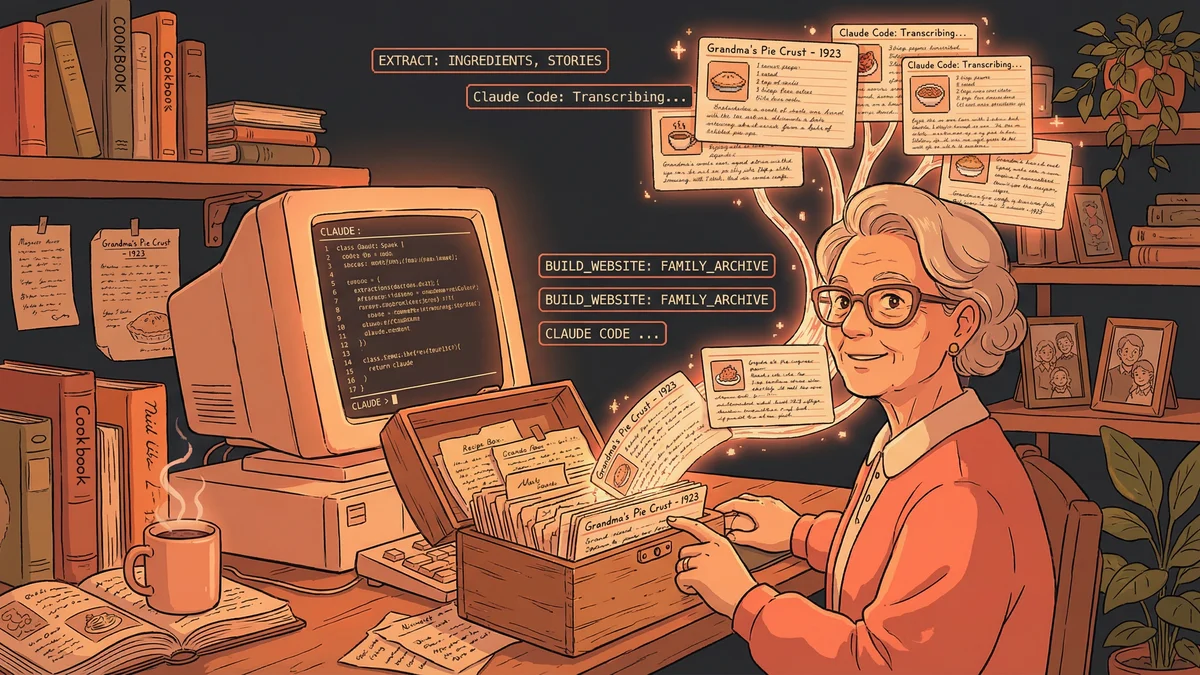
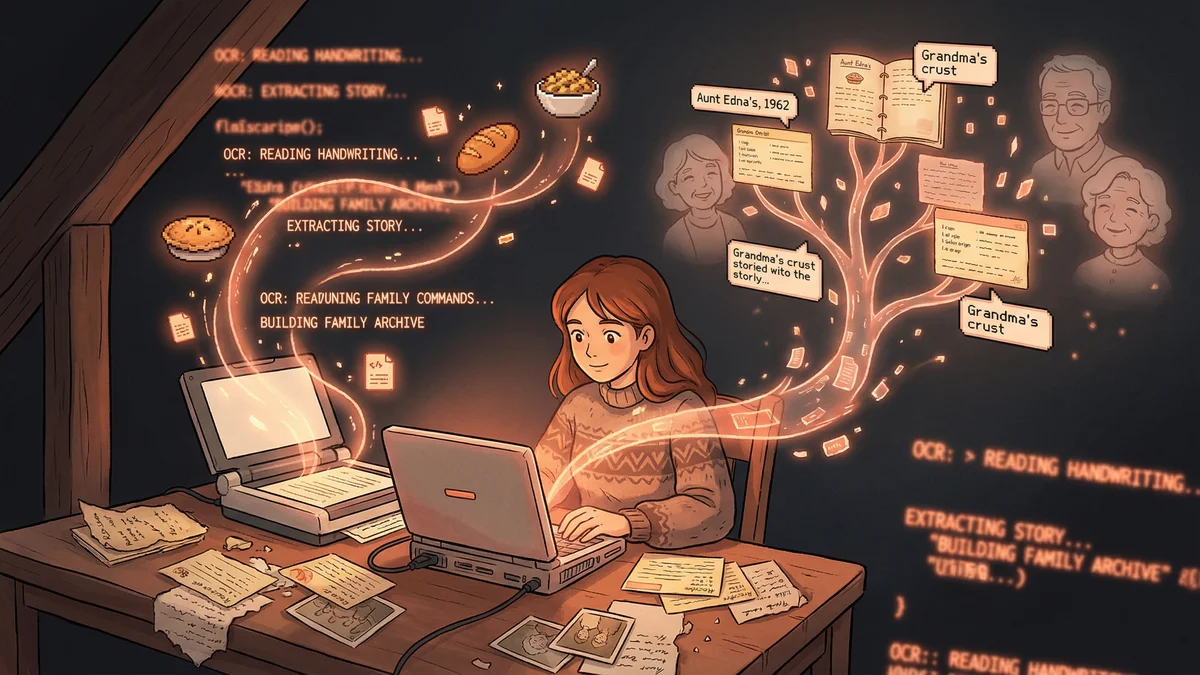
Claude’s OCR read the handwriting - even the faded, cramped, cursive stuff. It distinguished between “1 cup” and “1 cup?” (tentative notes). It caught when someone had crossed out an ingredient and written something else.
The Magic: Stories Separated from Recipes
What made this project special wasn’t just the recipes. It was the context.
Claude recognized when a recipe had a story attached:
Example output:
# Aunt Edna's Stuffing

## The Recipe
- 1 loaf day-old bread, cubed
- 1 onion, diced
- 3 stalks celery, chopped
- 2 eggs, beaten
- Sage "to taste" (family notes suggest generous)
- Chicken broth as needed

Instructions: [...]

## The Story
"Edna always made this for Thanksgiving starting 1962.
She insisted the bread had to be from Marchetti's bakery
specifically - 'regular bread won't do.' When Marchetti's
closed in 1989, she declared all future stuffings 'inferior'
even when using her exact recipe. - Note from Carol, 1992"

## Source
Handwritten card in Edna's handwriting, with annotation by Carol.
Scanned from: file_247.jpg
The recipes were usable. The stories were preserved. The connection between them was maintained.
The Website No One Expected
But the project didn’t stop at transcription.
"Now take all these organized recipes and stories
and build a simple website the family can browse.
Categories by type (desserts, mains, sides, etc.)
Searchable by ingredient
Each recipe shows the story and who submitted it
Include the original scan as an image"
Claude built a static website. Nothing fancy - no login required, no database to maintain. Just a clean, browsable archive of family culinary history.
The domain: familyrecipes.example.com (private, family only)
At the next reunion, the laptop got passed around. People found recipes they’d forgotten. Discovered stories about relatives they’d never met. Saw their grandmother’s handwriting on screen and got emotional.
The Unexpected Discoveries
Claude found things the family didn’t know was in the box:
Hidden recipes: Notes tucked inside Christmas cards. Recipes mentioned in letters (“remind me to give you mom’s soup recipe”) with the actual recipe two pages later.
Family disputes resolved: Three different versions of “grandma’s cookies” from three sisters - each claiming theirs was authentic. Claude documented all three with their differences noted. (The argument continues, but now with evidence.)
Historical context: Recipes from rationing periods that used weird substitutions. Dishes that appeared after certain relatives immigrated. A timeline of family food history emerged naturally.
How to Do Your Own Recipe Rescue
Phase 1: Scan Everything
- Use a document scanner or phone scanning app
- Don’t worry about organization yet
- Name files sequentially (scan_001, scan_002…)
- This is the slow part - everything after is fast
Phase 2: Let Claude Extract
"Read all scans in /recipes-raw folder.
For each document:
- Transcribe any handwritten text (OCR)
- Identify if it contains a recipe
- Extract ingredients, instructions, and any notes
- Capture any stories or context mentioned
- Create a structured markdown file for each recipe"
Phase 3: Organize and Enrich
"Organize all extracted recipes by:
- Course type (appetizer, main, dessert, etc.)
- Occasion (holiday, everyday, special)
- Family member who contributed
- Decade it appeared in our collection

Create an index page linking to everything."
Phase 4: Make It Shareable
"Build a simple static website for these recipes.
Include search by ingredient and category.
Show original scan images alongside transcriptions.
Keep it simple - this is for family, not the public."
What This Project Was Really About
The recipes mattered. But what really mattered was the stories.
Who made this. When they made it. What gathering it appeared at. The joke that gets told every time someone bakes it.
That context - the human layer - is what makes family recipes different from internet recipes. And it’s exactly what gets lost when handwritten cards crumble in an attic box.
Claude Code didn’t just digitize recipes. It preserved culture. Captured voices. Made sure the next generation would know not just what to cook, but why it matters.
Time spent manually: 6 hours (scanning) Time Claude spent: 45 minutes Family arguments reignited: 3 Tears at the reunion: Multiple