TL;DR
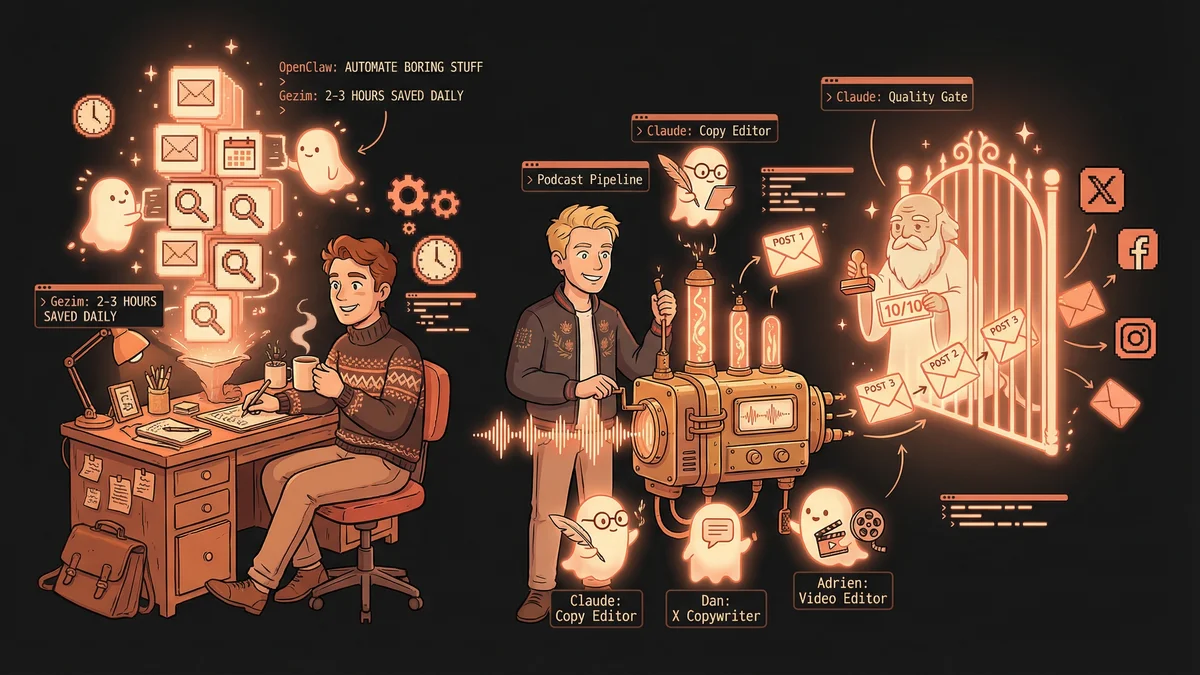
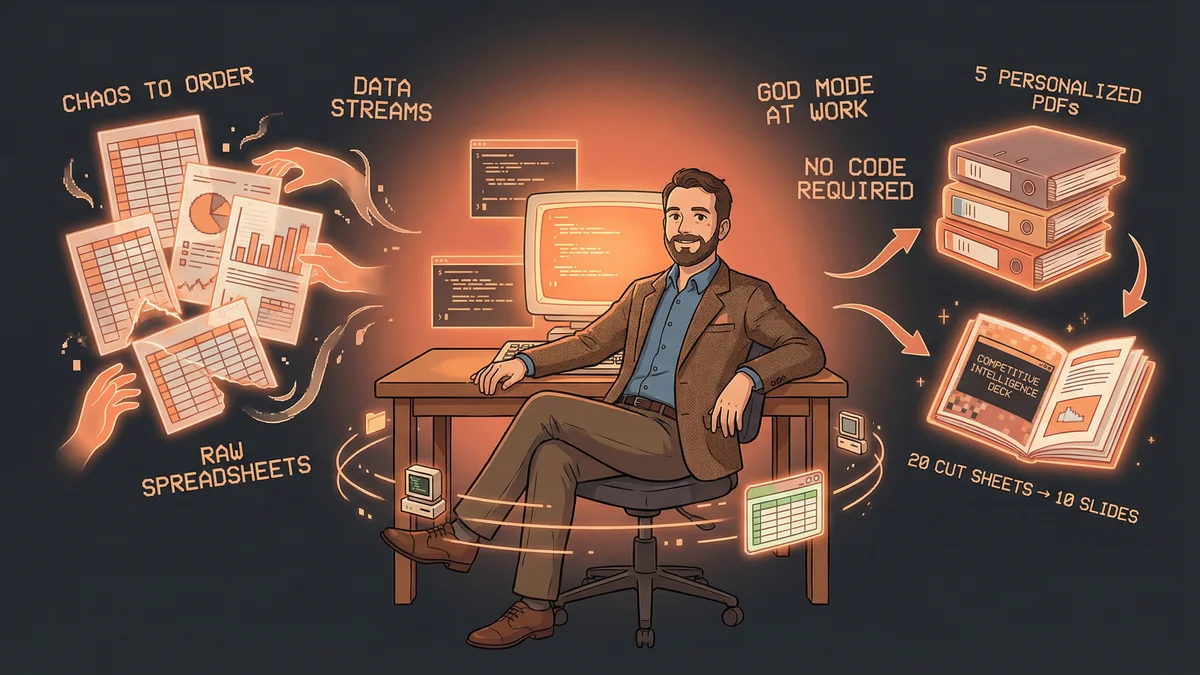
- One blog post becomes 20+ distribution pieces: LinkedIn, Twitter, newsletter, Slack
- Time: 8 minutes with Claude vs 2-3 hours manually (96% time savings)
- Secret: create a voice guide in CLAUDE.md for platform-specific tone consistency
- Bonus: Claude finds content angles you missed in your own writing
- Workflow: write once, run /distribute command, review and schedule
One blog post should become 20+ social media pieces - Claude Code makes it happen in 8 minutes. Mira published the blog post at 9am. It was good - 2,500 words on a topic her audience cared about.
Then came the part she dreaded.
The Distribution Death Spiral:
- Rewrite the intro for LinkedIn (professional tone)
- Pull quotes for Twitter (punchy, under 280 characters)
- Summarize for the newsletter (teaser style)
- Extract key points for Instagram (casual, visual)
- Maybe something for the company Slack?
By the time she finished adapting one piece for multiple platforms, she could have written another piece. The math never worked.
So most blog posts just… sat there. Posted once. Never repurposed. The effort wasted because who has time for all that reformatting?
The Copy-Paste Tax
Content marketers know this pain intimately. One piece of content should theoretically become:
- 5-7 social posts
- 2-3 email snippets
- 1 newsletter summary
- Image captions
- Discussion prompts
But manually transforming content for each platform? That’s what the community calls the “copy-paste tax” - the hidden cost of distribution.
Most creators pay it by simply not distributing. The content underperforms. Reach stays limited. And the time spent creating feels wasted.
The One-Command Transformation
Mira discovered she could eliminate the tax entirely:
"Read my new blog post at /content/blog/latest.md

Create from this single source:
- 5 LinkedIn posts (professional tone, insights-focused)
- 3 Twitter/X threads (punchy, conversational)
- 1 newsletter summary (300 words, teaser style)
- 1 Slack announcement (casual, with a question to prompt discussion)

Save each to /content/social/[platform]/[date]/ as separate files.
Maintain my voice throughout - casual authority, not corporate."
One command. Multiple formats. Files ready to schedule.
The first time it worked, she sat there staring at her screen. Five LinkedIn posts. Three Twitter threads. All written. All in her voice. All correctly formatted.
Time to create the original blog post: 4 hours. Time to create distribution content manually: 2-3 hours. Time to create distribution content with Claude: 8 minutes.
Why This Works Differently Than AI Chat
You might think: “I can just paste my blog into ChatGPT and ask for social posts.”
You can. But there’s a difference.
When Claude Code reads your source file directly:
- It maintains complete context (not truncated)
- It can reference your other writing for voice consistency
- It creates multiple output files (not one text wall you copy-paste)
- It organizes everything automatically
The “last mile” problem - getting output into usable files in the right places - is solved. You’re not copying from a chat window into five different documents.
The Voice Consistency Secret
Generic AI social posts sound like… generic AI social posts. Mira solved this:
CLAUDE.md voice guide:
# My Writing Voice

Tone: Conversational authority. Like explaining something at a dinner party.

LinkedIn: Professional but not stiff. I share opinions, not just information.
Examples:
- "Here's what nobody tells you about [topic]..."
- "I changed my mind about something..."

Twitter: Punchy. First line hooks. Threads tell a story.
Examples:
- "Most advice about [X] is wrong. Here's why:"
- "Thread: The thing I wish I knew about [Y] years ago..."

Newsletter: Like writing to a smart friend. Assume familiarity.

NEVER: Corporate jargon, passive voice, "utilize" or "leverage"
Claude reads this file and adapts the source material to match each platform’s voice expectations - while staying consistent with her overall style.
The Multi-Platform Matrix
Here’s what one blog post can become:
| Platform | Format | Count | Purpose |
|---|---|---|---|
| Insight posts | 5 | Professional audience, thought leadership | |
| Twitter/X | Threads | 3 | Engagement, discussion |
| Twitter/X | Single quotes | 7 | Easy shares, quick hits |
| Newsletter | Summary | 1 | Drive traffic to full post |
| Teaser | 1 | Personal outreach option | |
| Slack | Team share | 1 | Internal announcement |
| Carousel captions | 5 | Visual-first platform |
From one 2,500-word blog post: 23 pieces of content.
Not by copying and editing 23 times. By running one command.
The Scheduling Pipeline
Mira went further. She created a weekly automation:
/content-distribute-weekly

This command:
1. Checks /blog for any posts published this week
2. Generates social content for each
3. Organizes into platform folders
4. Creates a scheduling calendar (which post, which platform, what day)
5. Exports to Buffer/Hootsuite format (CSV)
Her Monday now starts with:
- Review generated content
- Minor edits where needed
- Bulk schedule everything
- Done before lunch
What used to consume half her week now takes an hour.
The Unexpected Benefit
Something Mira didn’t expect: Claude found angles she missed.
When processing one blog post, Claude generated a Twitter thread that approached the topic from a completely different angle than the original article. Same insights, different framing.
It performed 3x better than her usual posts.
“Claude read the same content I wrote and found a hook I didn’t see. The AI saw what resonated in a way I was too close to notice.”
Now she deliberately asks:
"What angles does this content support that I didn't explicitly write about?
Generate social posts for those hidden angles too."
Setting Up Your Multiplication Machine
Step 1: Create your voice guide
Write a CLAUDE.md that describes:
- Your overall voice and tone
- How that changes per platform
- Examples of good posts (yours or ones you admire)
- Words/phrases to use and avoid
Step 2: Test with one post
"Read [your blog post].
Create 3 LinkedIn posts from this content.
Match the voice described in my CLAUDE.md."
Step 3: Expand to full distribution
Once you’re happy with one platform, add others:
"Read [blog post].
Generate distribution content for all platforms:
- LinkedIn (5 posts)
- Twitter threads (3)
- Newsletter summary (1)

Save to organized folders.
Include a distribution calendar suggesting optimal posting times."
Step 4: Automate the trigger
Create a slash command that runs automatically when new content is published. Your workflow becomes:
- Write the blog post
- Type
/distribute - Review and schedule
The Math That Changed
Before:
- 1 blog post = 1 blog post
- Reach: only people who visit the blog
- Time efficiency: 100% creation, 0% distribution
After:
- 1 blog post = 20+ pieces of content
- Reach: everywhere your audience exists
- Time efficiency: 80% creation, 20% distribution review
Same effort creating. Massively multiplied impact.
The Platform-Specific Prompts
LinkedIn (thought leadership):
"Turn this into a LinkedIn post.
Start with a counterintuitive insight or personal admission.
End with a question to prompt discussion.
Professional but not corporate. Under 300 words."
Twitter thread:
"Create a Twitter thread.
First tweet must hook immediately - no 'I want to talk about...'
One idea per tweet. Build to a conclusion.
End with a clear takeaway or call to action."
Newsletter teaser:
"Write a 200-word newsletter section that:
- Hints at the main insight without fully revealing it
- Creates curiosity to click through
- Feels personal, like a note from a friend"
Instagram carousel:
"Create 5 carousel slide captions.
Each slide = one key point.
Visual-first thinking - what would make someone stop scrolling?
Last slide: clear call to action."
The New Normal
Mira used to publish monthly because distribution was so painful.
Now she publishes weekly. Same writing time. But the reach multiplied.
Her blog traffic tripled. Not because the posts got better. Because each post actually got distributed.
“The content was always good. It just wasn’t going anywhere. Now one piece of content works as hard as I do.”