TL;DR
- AI tools like Goblin.tools break overwhelming tasks into tiny, achievable steps for ADHD students
- Student graduated with 3.5 GPA after using AI as “executive function prosthesis”
- Free tools: Goblin.tools (task breakdown), ChatGPT/Claude (structure), Whisper (transcription)
- Best for: Students with ADHD, autism, or executive dysfunction who know the material but struggle with organization
- Key lesson: AI doesn’t do the thinking - it provides scaffolding so your intelligence becomes accessible
AI tools are transforming how ADHD students tackle academic work by handling the task breakdown and organization their brains struggle with - one student used these free tools to graduate with a 3.5 GPA.
Sophia stared at her assignment.
“Write a 10-page research paper on the economic impacts of climate policy.”
Her brain translated it as: “Do an impossible, infinite, terrifying thing with no clear first step.”
She’d been diagnosed with ADHD in college, after years of wondering why tasks that seemed simple for everyone else felt like climbing Everest. Not because she couldn’t do them - she was smart. But because her brain couldn’t break them into steps. Couldn’t sequence. Couldn’t start.
Then she found Goblin.tools.
The Magic To-Do
Goblin.tools is a simple website created specifically for neurodivergent brains. Its flagship feature: Magic To-Do.
You type in an overwhelming task. It breaks it into tiny, manageable steps.
Sophia typed: “Write a 10-page research paper on economic impacts of climate policy.”
Goblin.tools returned:
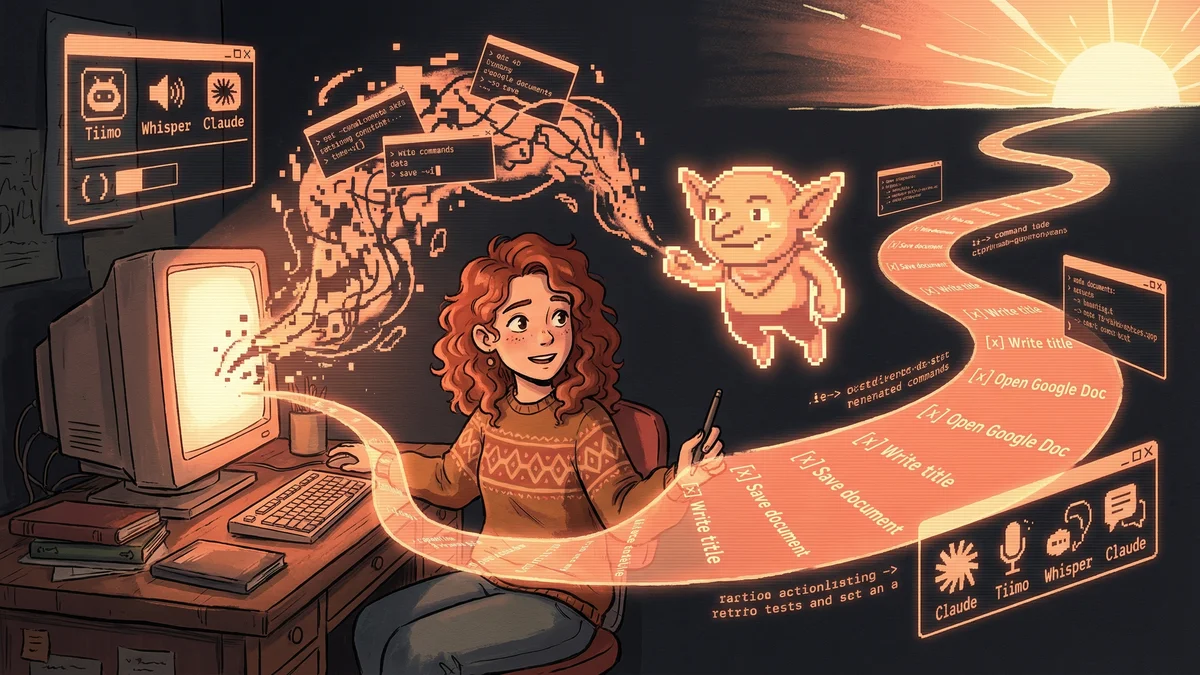
- Open a new Google Doc
- Write the title and your name
- Save the document
- Search “economic impacts climate policy” in Google Scholar
- Open 3-5 promising article titles in new tabs
- Skim the abstract of the first article
- Write one sentence about what it says
- Repeat for remaining articles
- List 3 main themes you noticed across articles
- Write a thesis statement using one of those themes
- …
The list continued. Thirty-two steps. Each one stupidly simple. Each one achievable.
Sophia started crying. Not from overwhelm - from relief.
“For the first time, I could see the path,” she said. “It wasn’t ‘write a paper.’ It was ‘open a Google Doc.’ I can open a Google Doc.”
Why This Matters for ADHD
ADHD isn’t about not being able to focus. It’s about executive dysfunction - difficulty with:
- Task initiation: Starting things (even things you want to do)
- Task sequencing: Knowing what order to do things
- Time estimation: Understanding how long things take
- Working memory: Holding multiple steps in your head
- Emotional regulation: Managing the panic when facing big tasks
Traditional productivity advice (“just break it into steps!”) assumes you can break things into steps. For many with ADHD, that’s exactly what doesn’t work. The task decomposition itself is the barrier.
AI removes that barrier by doing the breaking-down for you.
The Tool Stack for Executive Dysfunction
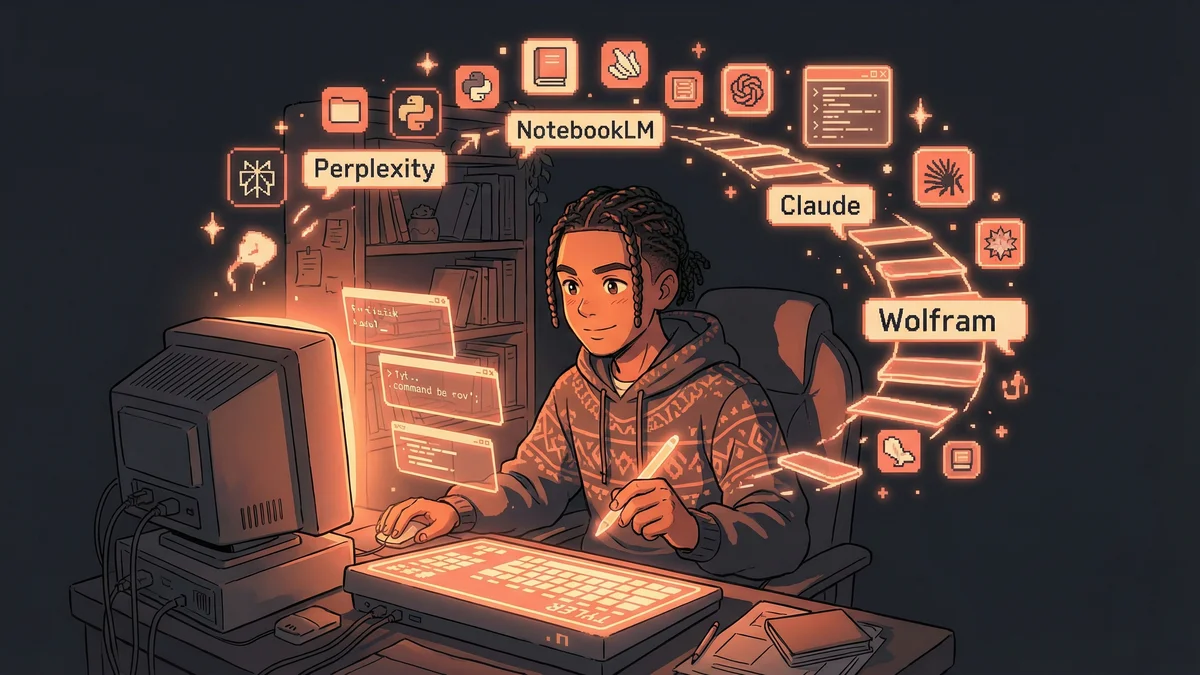
Sophia eventually assembled a collection of AI tools that compensated for what her brain couldn’t do:
Goblin.tools - Task Decomposition
Magic To-Do: Paste in any overwhelming task, get a granular step list.
Formalizer: Adjusts the tone of text (useful for writing emails to professors without agonizing over phrasing).
Estimator: Estimates time for tasks - helpful for time-blind brains that think everything takes either “5 minutes” or “infinity.”
Judge: Tells you if a text sounds friendly, aggressive, professional, etc. - helpful for anxiety about social communication.
All free. All minimal interface. All designed for brains that get overwhelmed by complex apps.
ChatGPT/Claude - The External Working Memory
Sophia’s working memory couldn’t hold the structure of an essay while writing it. So she used AI as external storage:
"I'm writing a paper about climate policy economics. So far I've
written [paste existing content]. My thesis is [thesis].

What should the next paragraph cover to maintain logical flow?"
The AI became her outline-keeper, her structure-rememberer, her “what was I doing again?” answer machine.
“Normal brains hold the whole essay shape in their head while writing,” Sophia explains. “Mine can’t. So I outsourced that to Claude.”
Tiimo - Visual Time Management
Tiimo is an app that creates visual schedules - blocks of color showing what you’re supposed to do when. Built specifically for neurodivergent users.
AI features are being integrated, but even the basic visual approach helps: seeing time as shapes rather than numbers combats time blindness.
Voice Notes + Whisper Transcription
Sophia often thought better by talking than writing. She’d ramble voice notes about her paper ideas, then use AI transcription (Whisper, built into many apps) to convert them to text, then ask ChatGPT to organize the ramble into coherent points.
“My brain doesn’t think in paragraphs. It thinks in tangents. The AI catches all my tangents and makes them make sense.”
The Non-Linear Brain Meets Linear Tools
Traditional education is designed for linear thinkers:
- Read chapter 1, then chapter 2
- Take notes in order
- Write introduction, then body, then conclusion
- Plan before executing
ADHD brains often work non-linearly:
- Read whatever section catches interest
- Take notes in scattered bursts
- Write the conclusion first because that’s what’s clear
- Execute before planning (or while planning, or instead of planning)
AI bridges this gap. Non-linear input can go in; linear output comes out.
Example workflow:
- Sophia dumps chaotic, half-formed ideas into ChatGPT
- AI organizes them into structured outline
- She writes whatever section feels alive right now
- AI helps her see what’s missing
- She fills gaps in random order
- AI suggests transitions between sections she wrote out of sequence
- Final product is cohesive despite chaotic creation
“My process looks insane from outside,” she says. “But the end result looks normal. AI is the translator between my brain and what professors expect.”
The Accessibility Angle
This isn’t about cheating or shortcuts. It’s about accessibility.
A student with dyslexia uses text-to-speech. A student with mobility impairments uses voice typing. A student with ADHD uses AI for task decomposition and structure.
Same principle: using tools to access learning that would otherwise be blocked.
Some universities are starting to recognize this. Disability services offices are increasingly listing AI tools as potential accommodations. The argument: if the learning objective is “understand economics of climate policy,” not “demonstrate executive function,” then tools that support the latter don’t compromise the former.
What This Doesn’t Fix
AI isn’t a cure for ADHD. It’s scaffolding. Some things it can’t address:
- Hyperfocus on wrong things: AI can help you structure work, but can’t stop you from falling down a Wikipedia rabbit hole
- Motivation/dopamine: Breaking tasks into steps doesn’t create motivation to do them
- Distraction during execution: AI can’t keep you off your phone
- Medication needs: Tools supplement treatment, not replace it
Sophia still takes her medication. Still has hard days. Still sometimes paralysis wins.
But the baseline has shifted. Tasks that used to be impossible are now merely hard. Hard she can work with.
The Study Routine That Works
Sophia’s ADHD-adapted study routine:
Before class:
- Use Goblin.tools to break “prepare for lecture” into steps
- Actually do the steps (now possible because they’re visible)
During class:
- Record audio (ask permission first)
- Take whatever scattered notes happen
After class:
- Feed recording to Whisper for transcript
- Feed transcript to Claude: “Summarize the key points from this lecture”
- Compare AI summary to her scattered notes
- Add anything she missed
Before exams:
- Upload notes to NotebookLM
- Generate Audio Overview to study by listening
- Have ChatGPT generate practice questions
- Use Goblin.tools to schedule study sessions with realistic time estimates
“The whole thing sounds like I’m outsourcing learning,” she says. “But I’m not. I’m outsourcing the scaffolding around learning. The actual thinking, understanding, remembering - that’s still me. AI just makes the container my brain can’t build.”
The Bigger Picture
An estimated 4-5% of college students have ADHD. Many more are undiagnosed. Even more have other conditions affecting executive function - autism, depression, anxiety, PTSD.
For all of them, AI tools represent something new: cognitive accessibility at scale.
You don’t need an expensive tutor to break down tasks. You don’t need a patient friend to check your email tone. You don’t need a parent to help you sequence your study plan.
You have an AI that never gets tired of helping.
Sophia graduated with a 3.5 GPA. Not because AI did her work - her papers were definitely her own thinking, her own arguments, her own voice.
But because AI did the work her brain couldn’t: the organizing, sequencing, structuring work that neurotypical brains do invisibly, and that her brain simply doesn’t.
“AI didn’t make me smarter,” she says. “It made my intelligence accessible. Finally.”