TL;DR
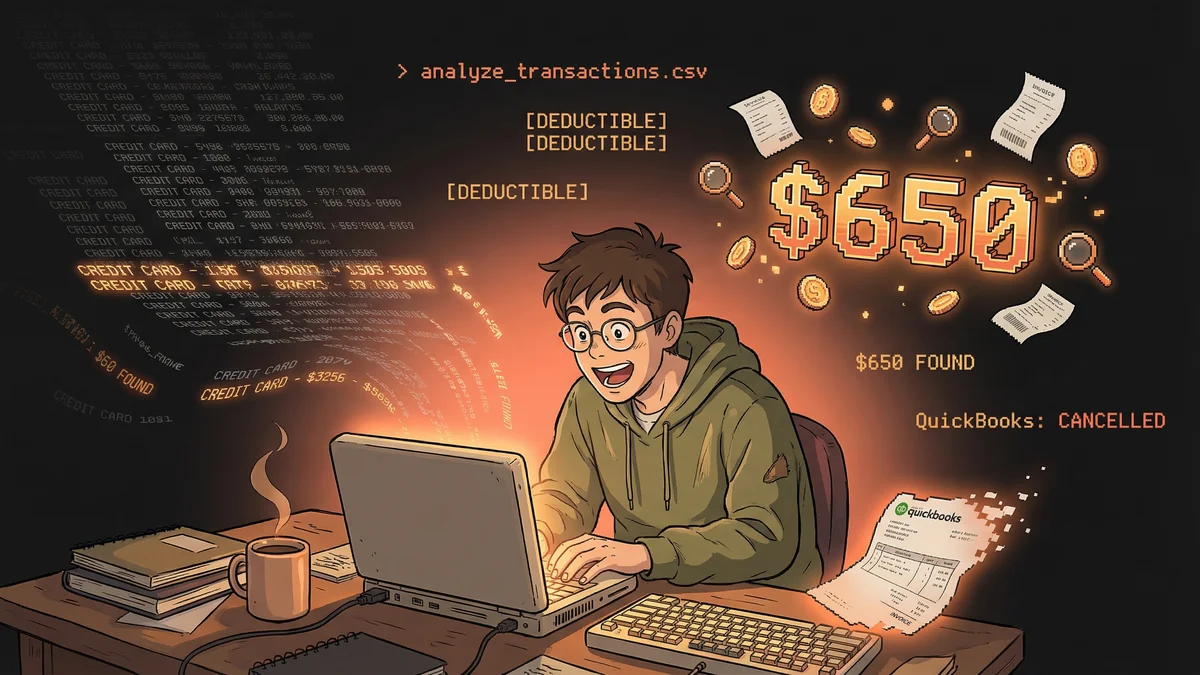
- @augmentedcamel uploaded credit card transactions to Claude — found $650 in tax deductions he’d missed.
- @AwesumWassum sorted business expenses and income with Claude and is cancelling his QuickBooks subscription.
- The pattern: Your financial data already exists. AI just reads it faster and more thoroughly than you do.
Two things are certain: death and taxes. AI can’t help with the first one, but the second is surprisingly doable.
@augmentedcamel found $650 in taxes he didn’t know he’d saved
The tip is almost embarrassingly simple:
“Pro tip: let Claude read your credit card transactions and tell you which transactions have business purposes. Just saved me $650 in taxes.”
Export your statement, upload it to Claude, ask which transactions could be business deductions. That’s it.
The difference between a tax professional and Claude here isn’t expertise — it’s attention. Claude will review every line without getting tired or skipping the small ones. It also knows what categories qualify (home office, professional tools, travel, meals with clients) and applies them consistently.
$650 found in one upload. No accountant scheduled, no spreadsheet built.
→ Source
@AwesumWassum is laying off QuickBooks
“I just sorted out my business expenses and income with Claude. About to cancel tf out of QuickBooks. Laying it off due to AI lol”
QuickBooks starts at $15-30/month and gets significantly more expensive for features most small business owners actually need. The core job — organizing income and expenses, knowing what’s what — is something Claude handles in a conversation.
He’s not alone. There’s a growing cohort of solo operators and small business owners who’ve realized their accounting needs don’t require dedicated software. They need organized data and clear answers. AI provides both.
The tools staying: Shopify, their actual business stack. The tool leaving: the $30/month subscription that mostly sat there looking official.
→ Source
The pattern: Both started with data that already existed — transactions they’d made, records they’d kept. They didn’t build a system or hire anyone. They just asked AI to read what was already there and tell them what it saw.
Your financial records are sitting in your bank app right now. What would $650 mean to you?